Friedrich Joachim Stengel – Architect of Saarbrücken’s Baroque
Friedrich Joachim Stengel – Architect of Saarbrücken’s Baroque
Anyone walking through Saarbrücken today moves – whether consciously or not – through a work that sprang from the mind of a single man: Friedrich Joachim Stengel. Hardly any other architect has shaped the appearance of an entire region as profoundly as he did. Between 1735 and 1775, Stengel transformed a war-ravaged small town into a Baroque residence of European standing – with clear street axes, symmetrical squares and an elegance that unites French lightness with German rigour. The Ludwigskirche, the castle, the Basilica of St. Johann and many other buildings remain to this day as stone testimonies to his vision of Saarbrücken as a stage for Baroque order and beauty. Even modern urban structures – from the course of Mainzer Straße to the layout of the city centre – still follow the lines that Stengel once drew. His work is therefore far more than architectural history: it is a foundation of Saarbrücken’s identity.
Origins and Early Career
Friedrich Joachim Stengel was born on 29 September 1694 in Zerbst (Anhalt). His father was the chief mining inspector Johann Joachim Stengel, originally from Bohemia, who served at the Anhalt court. [1] Stengel received training in mathematics, architecture and surveying, presumably in Anhalt service and under the supervision of experienced civil engineers. [2]
After his studies (1708 to 1712) and military service from 1712 to 1715, Stengel began his first civilian position as a surveyor for the chief building director of the Duchy of Saxe-Gotha. In 1719 he moved to Saxe-Eisenach in the same role. After his marriage to Catharina Hoffmann, he was appointed architect to the Prince-Abbot of Fulda in 1722 and promoted to building inspector in 1727. [3] Later study trips took him through southern Germany and possibly as far as Italy – stylistic elements of his later works point in this direction. [4]


The “Stengel System”: The Architect Who Invented Saarbrücken
In 1733, Princess Charlotte Amalia appointed him architect of the House of Nassau-Usingen; her son, Prince Wilhelm Heinrich of Nassau-Saarbrücken, made him building director in 1735 for his small but ambitious principality on the river Saar. At that time Saarbrücken, after the wars of the 17th century, was economically and structurally severely devastated. [5] Over the following decades, Stengel was to fundamentally reshape the cityscape of Saarbrücken.
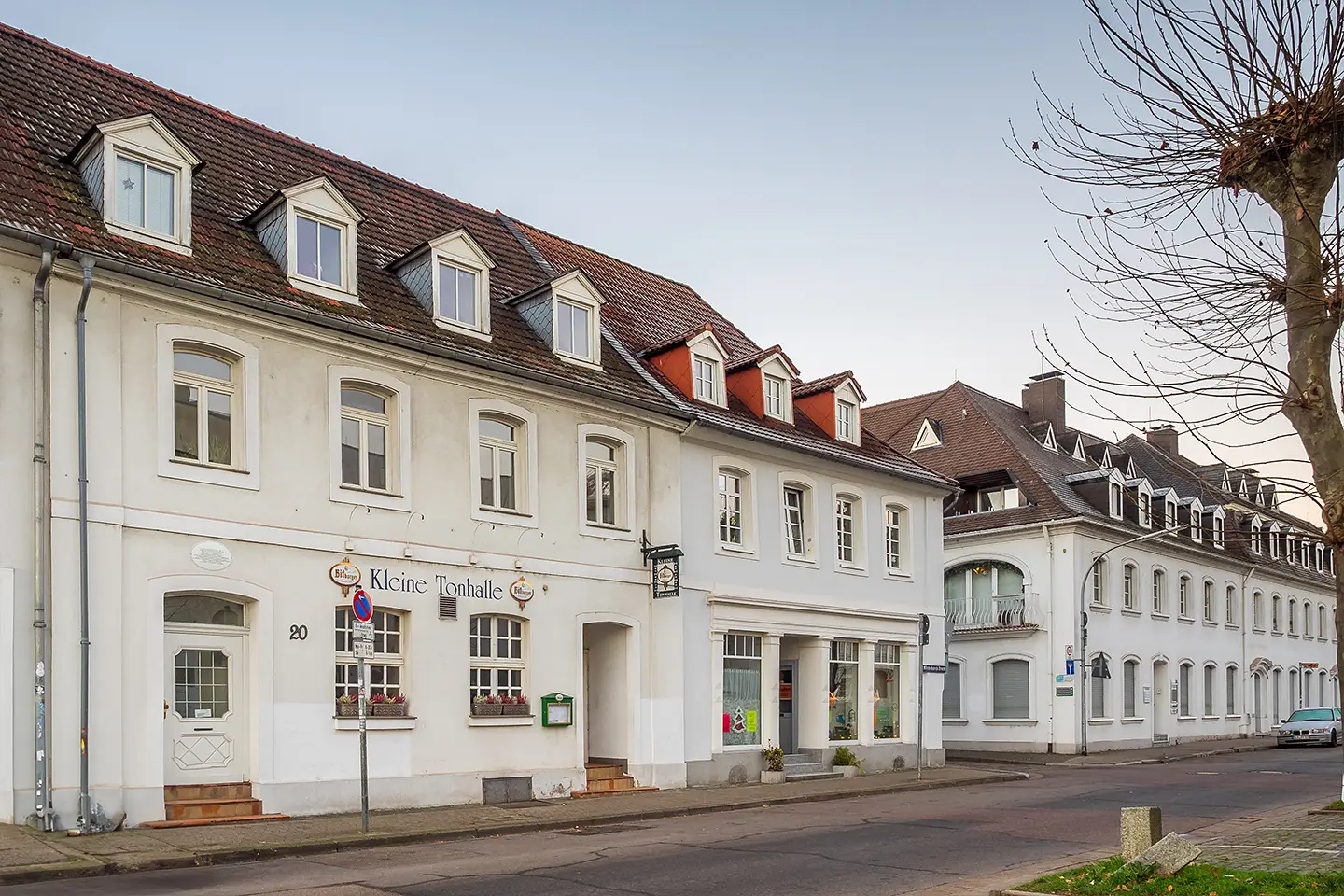
Between 1735 and 1775, Stengel developed an overarching urban design concept for Saarbrücken. It encompassed the castle district, the Baroque system of axial streets, the Schlossplatz (castle square) and the connection to the town of St. Johann. [6] In current research, this overall concept is referred to as the “Stengel System”. [7]
Major Works
Saarbrücken Castle (1739–1748)
The conversion of Saarbrücken Castle into a representative residence was carried out on behalf of Prince Wilhelm Heinrich. The plans envisaged a three-wing complex with an honorary courtyard, a central risalit and a mansard roof – a synthesis of French elegance and German severity. [8] On the rear side, a spacious terraced castle garden was created, sloping downwards. Already with the castle, Stengel chose the grey-and-white colour scheme that would become the distinctive hallmark of many buildings in the city. [9]
Triggered by the French Revolution, fighting broke out in August 1793 between French and Prussian-German troops in and around Saarbrücken. French artillery fire hit the castle and caused a fire that spread rapidly and destroyed large parts of the building complex. Reconstruction began in 1810 based on plans by Stengel’s youngest son, Balthasar Wilhelm Stengel, and Johann Adam Küpper. This altered the appearance of the castle, as no original plans had survived – a consequence of the fire.
In 1944, the castle was once again destroyed during a bombing raid on Saarbrücken. It was only from 1982 that reconstruction and restoration began, creating the castle building with glass architecture familiar to us today, based on designs by Gottfried Böhm et al. [10]


Ludwigskirche (1762–1775)
In 1760, Prince Wilhelm Heinrich instructed his general building director to erect a new, magnificent Lutheran church, together with buildings around a large square designated for this purpose, with 26 surrounding houses. This entire ensemble, the Ludwigplatz, is today considered one of the outstanding Baroque architectural monuments in Germany, and the central Ludwigskirche is regarded as Stengel’s main work. The combination of church and square is seen as a model example of Baroque urban composition. [11]
The Ludwigplatz differs in one essential respect from other Baroque squares: at its centre stands a church. The building is designed as a centralised hall church with four equivalent façades and a unified square layout – the Ludwigplatz. [12] The naming of this total work of art is due to the fact that Prince Wilhelm Heinrich did not live to see its completion. Under his son, Prince Ludwig of Nassau (1745–1794), the church was completed together with Stengel and the entire ensemble finished – it was then named after him.


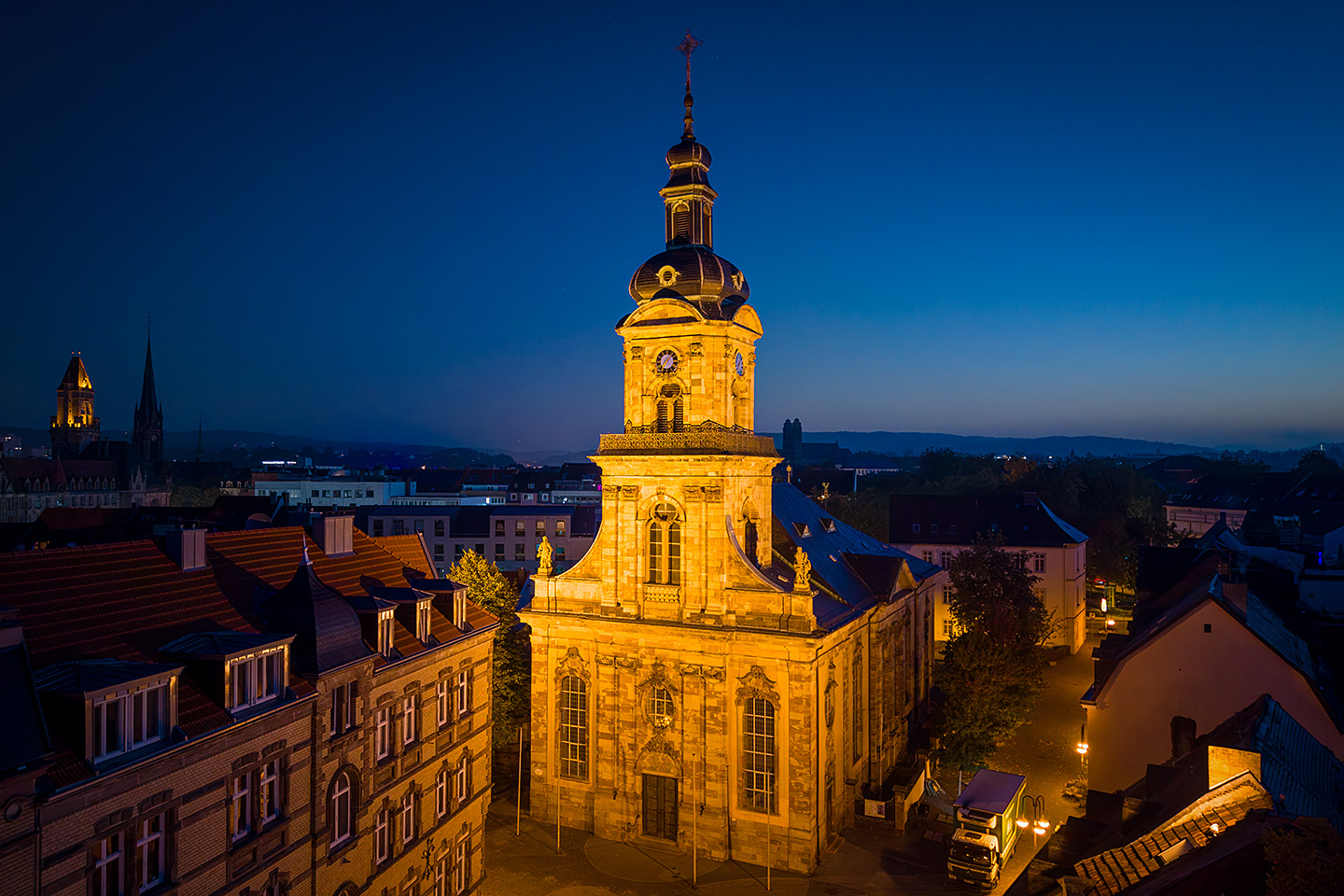
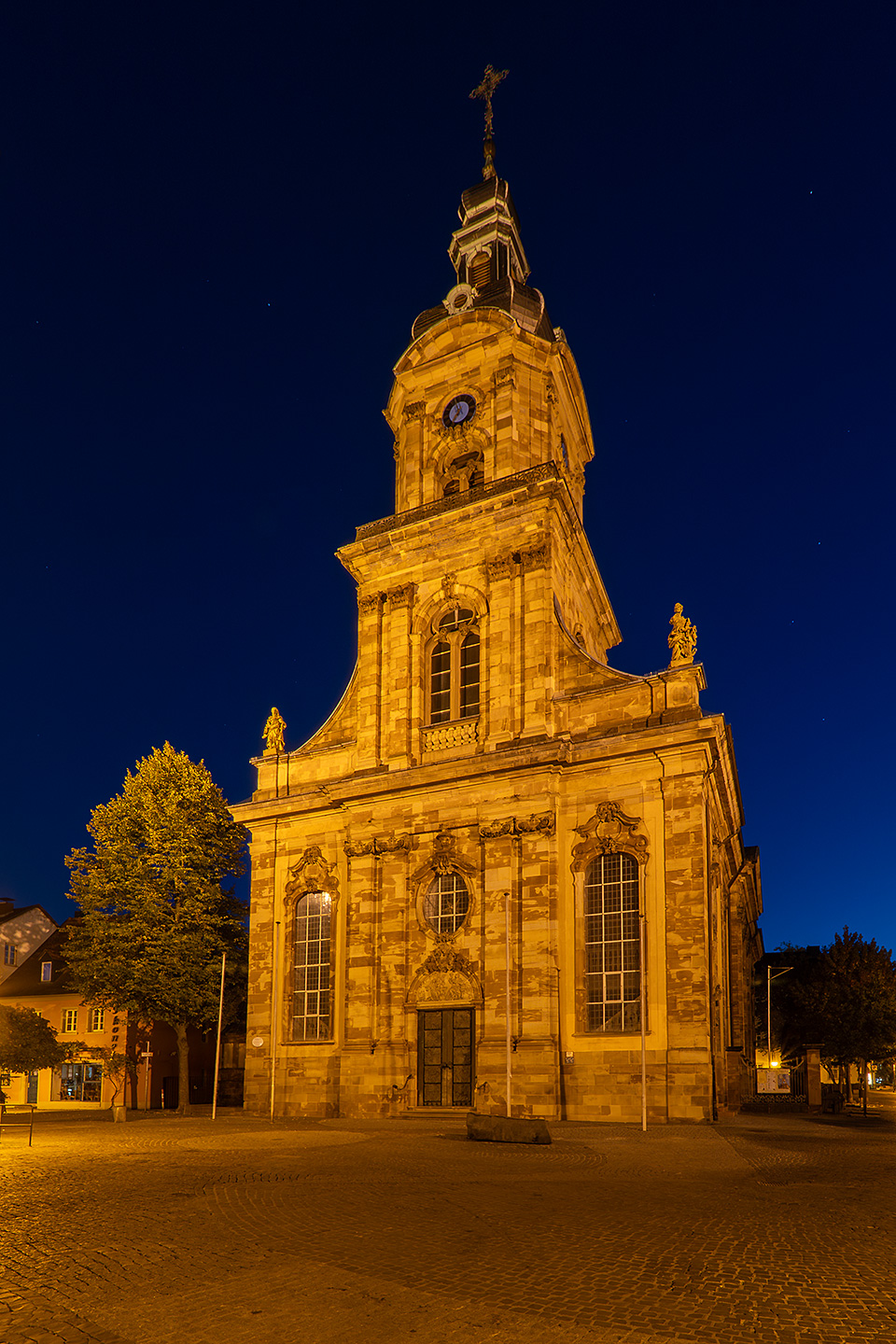
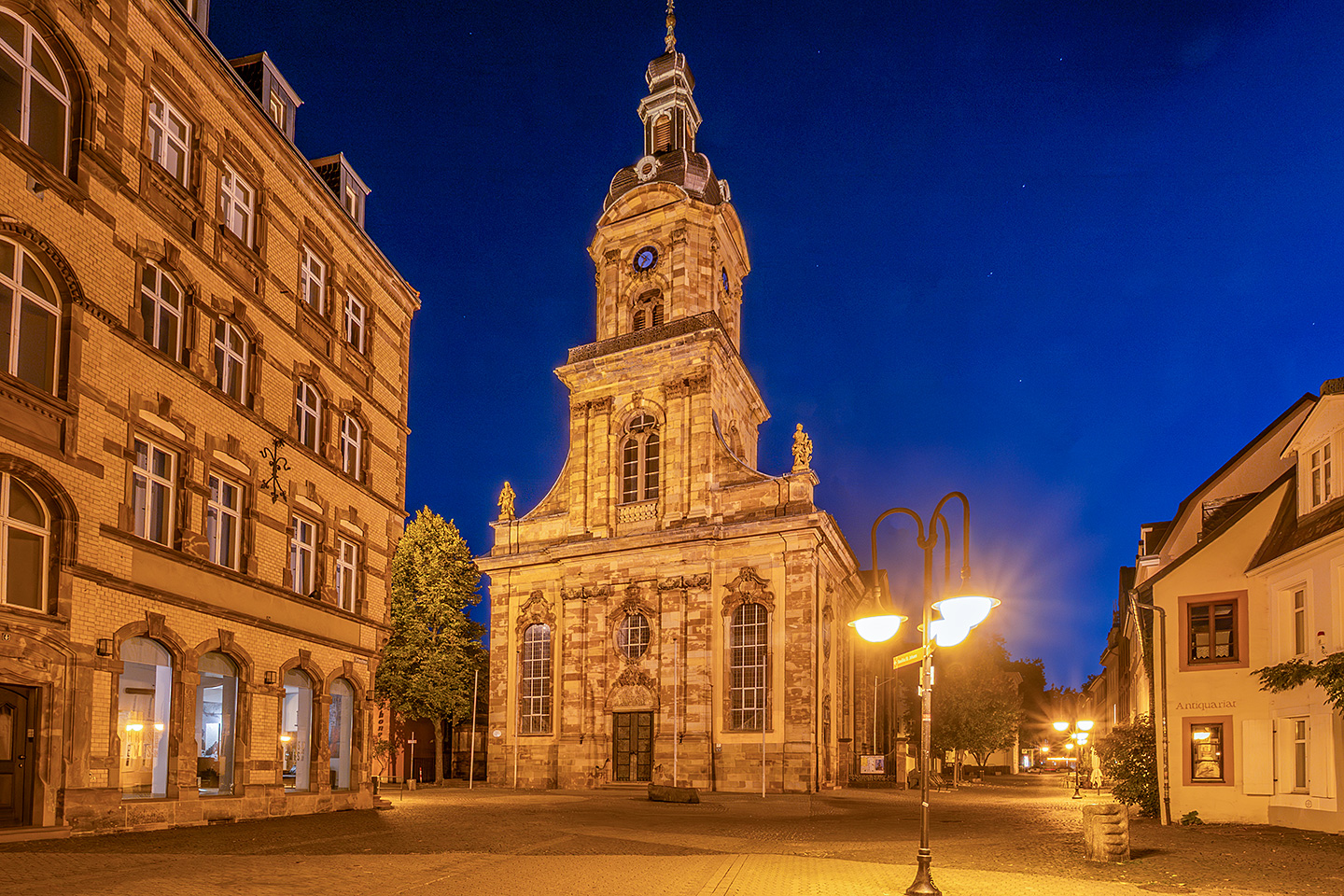
Basilica of St. Johann (1735–1758)
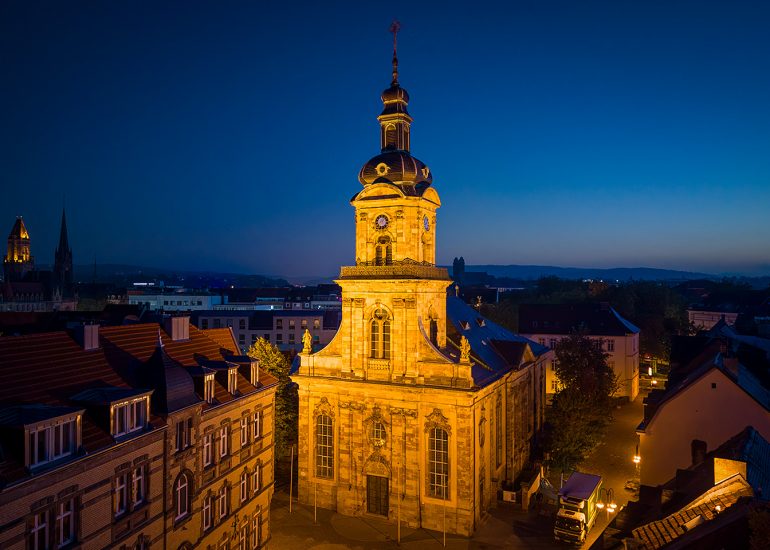
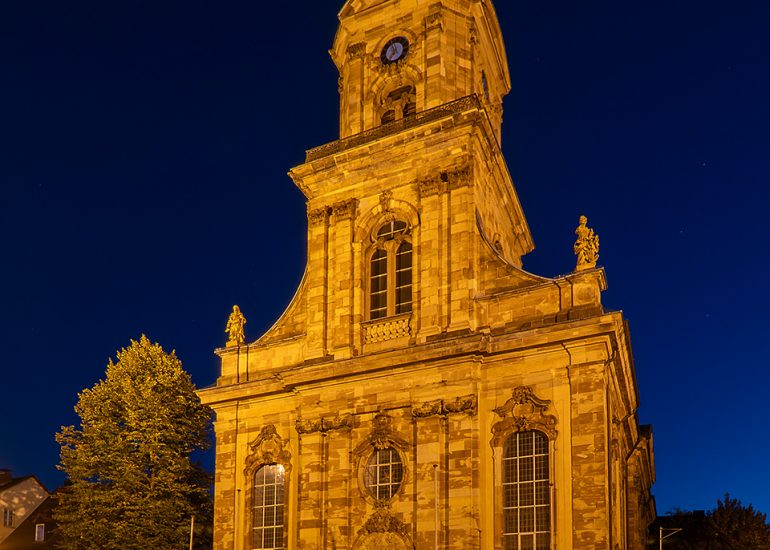
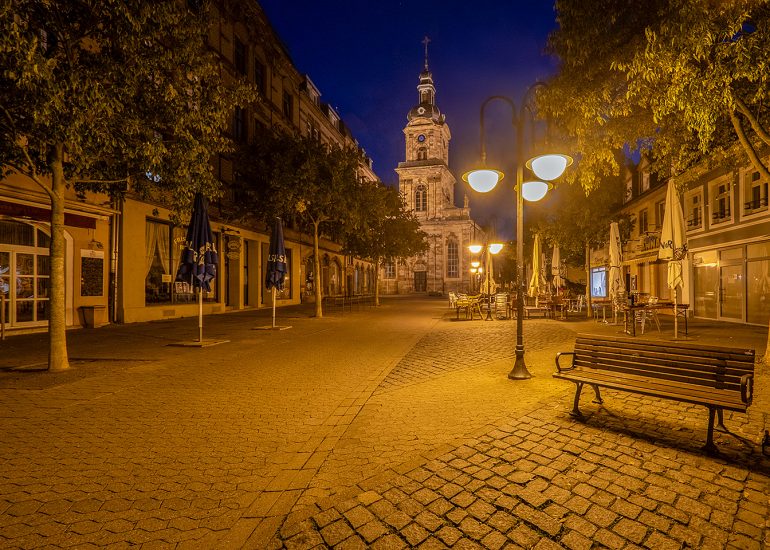
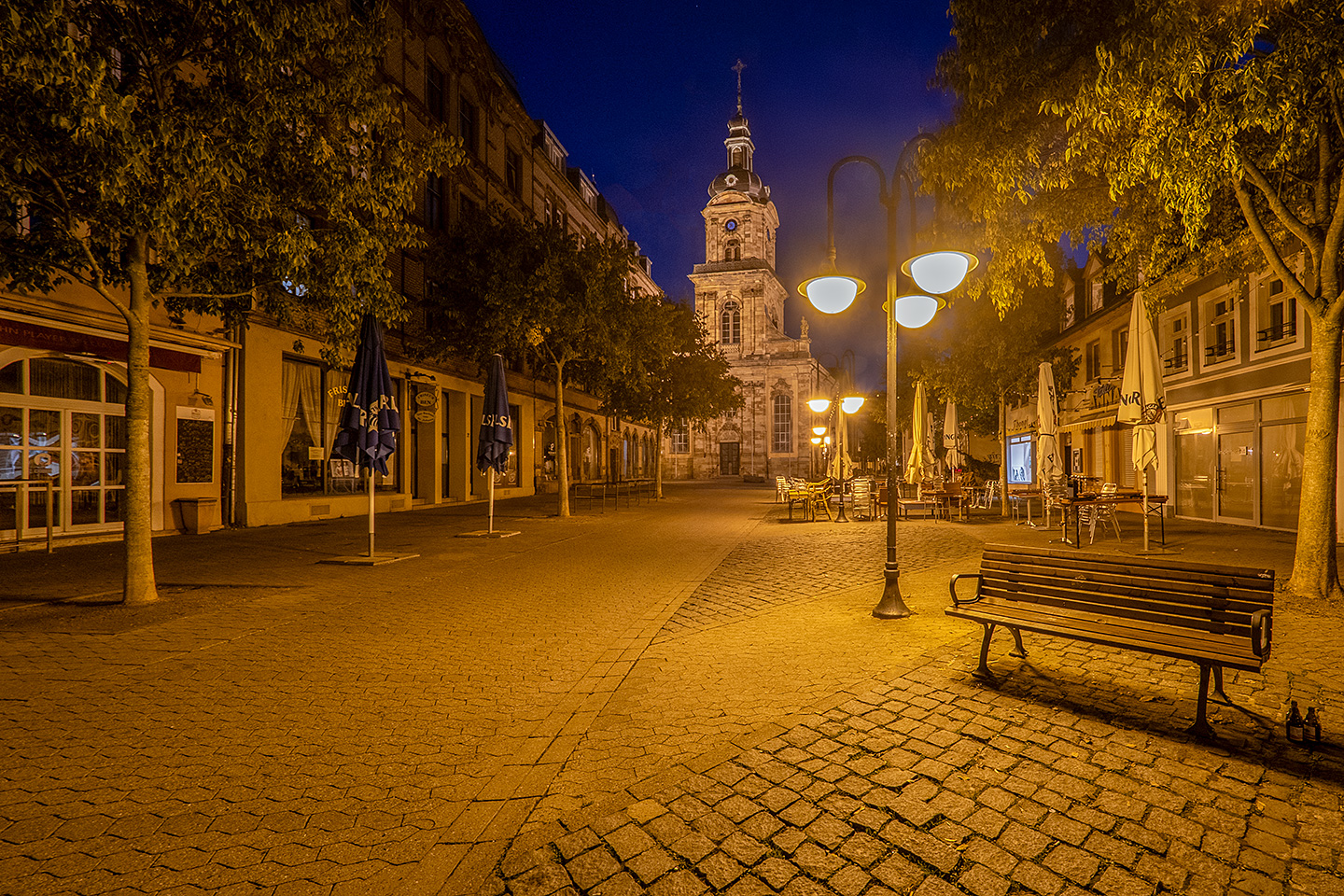
The main Catholic church of Saarbrücken was redesigned on the prince’s orders for the growing Catholic community. Stengel combined French façade elements with a south-German spatial character. The church was elevated to the rank of a minor basilica in 1953. [13]
You can find a more in-depth look at the Basilica of St. Johann here on my blog.

Other Works
Further well-known works by Stengel include:
- Jägersfreude Castle (1749–1755, demolished in the 19th century)
- St. Arnual administrative building (Amtshaus, 1743–1745, today an annex of the city archives)
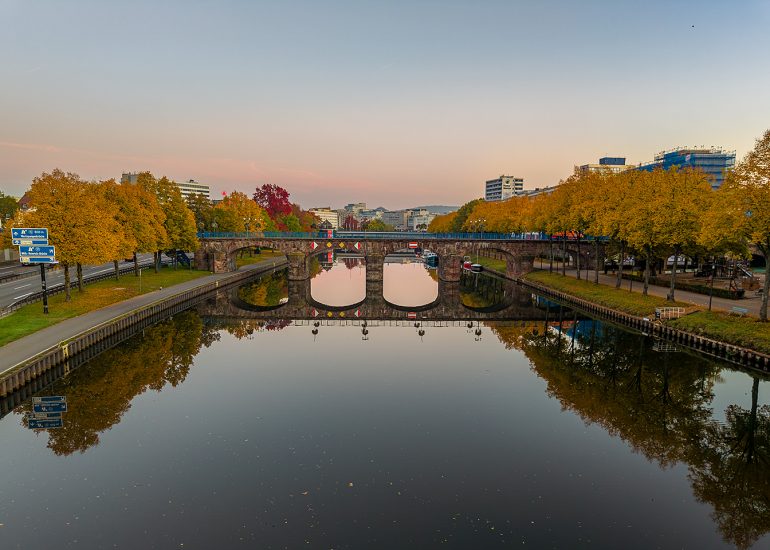
- Old Bridge in Saarbrücken (reconstruction in the 1730s according to Stengel’s plans) [14]
Architectural Style, Legacy and Significance
Far more important than individual buildings is the architectural style that can be found throughout Old Saarbrücken and St. Johann. There is an almost countless number of further buildings in Old Saarbrücken and St. Johann, always recognisable by their uniform architecture with grey-and-white façades. Whether built by Stengel himself, under his guidance, or simply in imitation of his style – today’s Saarbrücken city centre is dotted with typical Stengel architecture.
Stengel’s architecture combines French classicism (as in the work of Jacques-François Blondel) with south-German Baroque. Its hallmarks are clear ground plans, strict symmetry and a “representative sobriety”. [15] He is regarded as a representative of late Rhenish Baroque, transitioning into early Classicism. [16]


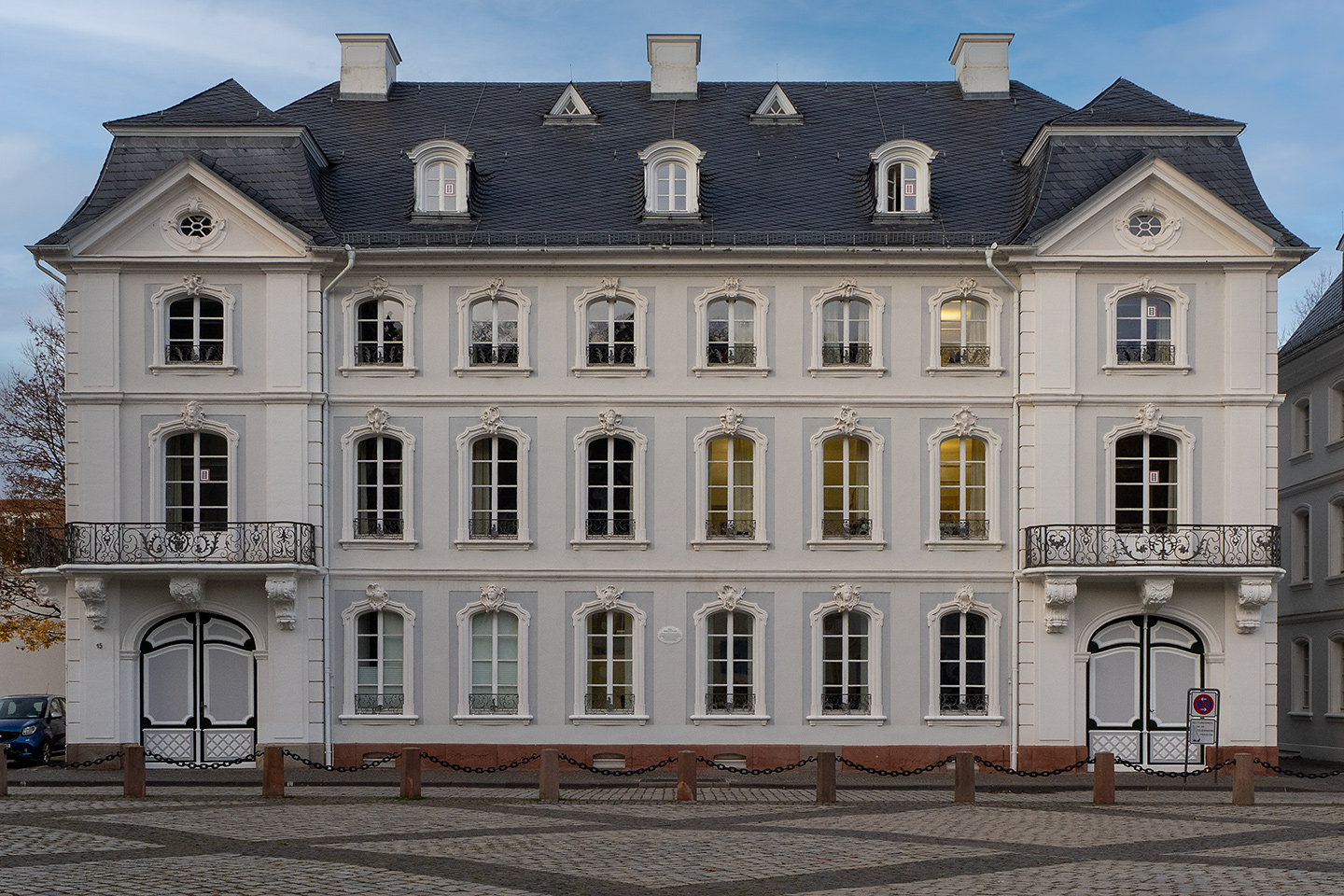
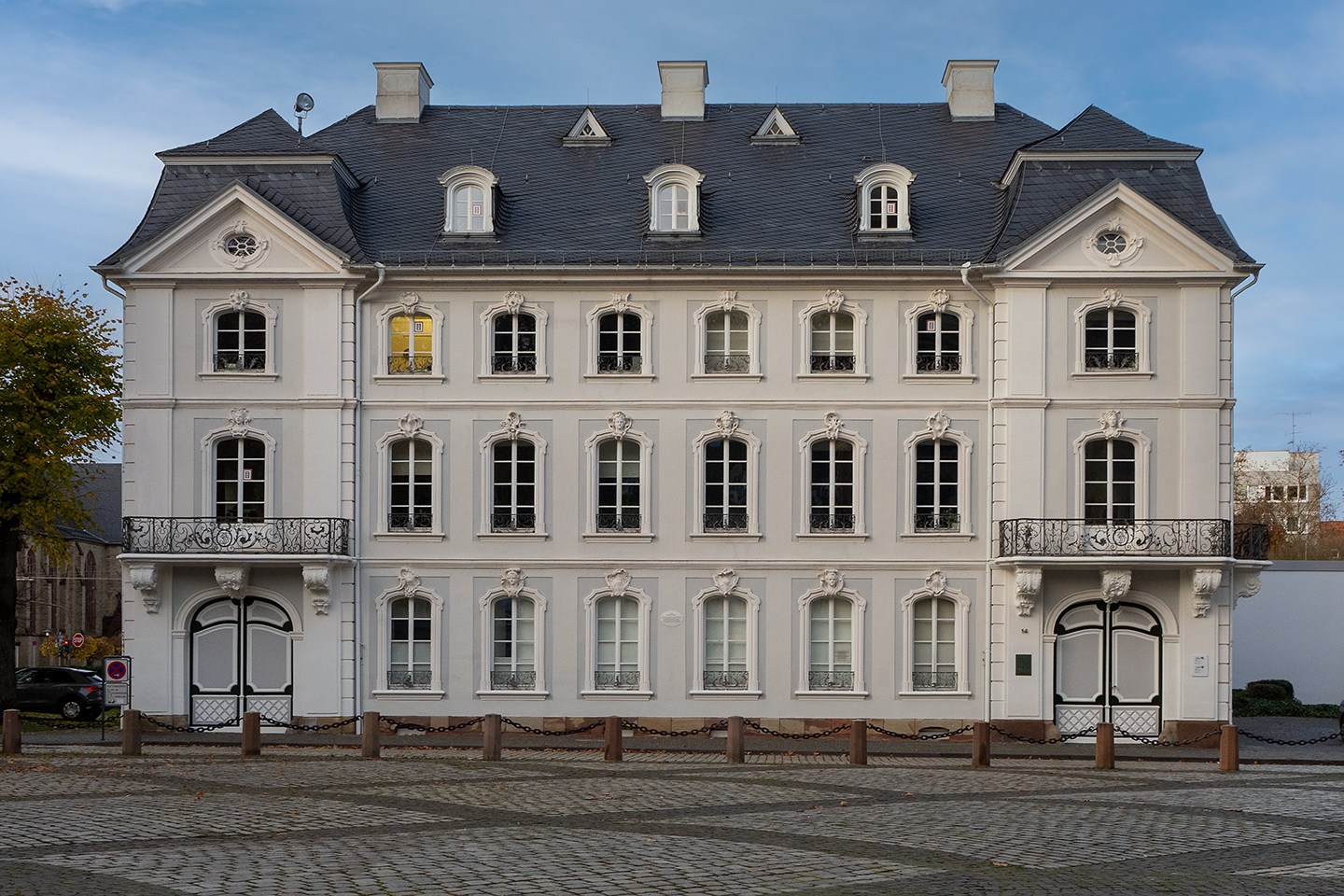
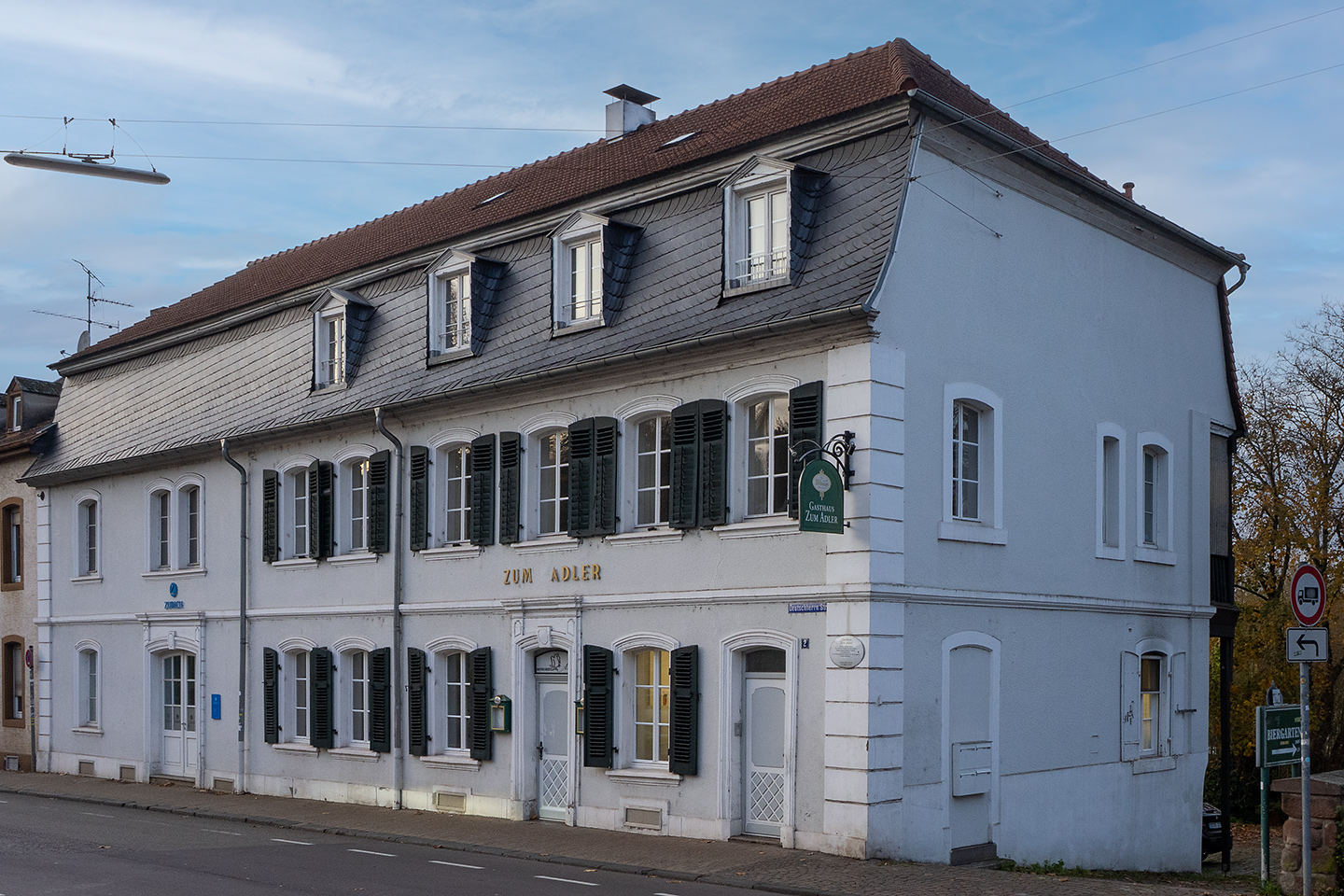
After the deaths of Prince Wilhelm Heinrich (1768) and Prince Ludwig (1775), court-sponsored construction largely came to a halt. Stengel retired in Saarbrücken and died on 10 January 1787, at almost 93 years of age. [17] Stengel’s urban planning, the castle and the Ludwigskirche continue to shape the cityscape to this day. The UNESCO monuments commission described the Ludwigskirche and the Ludwigplatz as a “unique example of Protestant town-church architecture of the 18th century”. [18]
The Legacy: Balthasar Wilhelm Stengel (1748–1824) – A Second-Generation Master Builder
Balthasar Wilhelm Stengel, born in 1748 in Saarbrücken as the second son of Friedrich Joachim Stengel, continued his father’s architectural legacy and helped shape the cityscape of the region in the final decades of the 18th century. [19]
After studying law, he finally turned to architecture and construction; from 1780 onwards he headed the building administration in the Oberamt Harskirchen (County of Saarwerden), marking the beginning of more intensive building activity. In 1785, Balthasar Wilhelm was officially appointed chief building director and chamber councillor, thereby assuming his father’s role as leading master builder of the Principality of Nassau-Saarbrücken. [20]
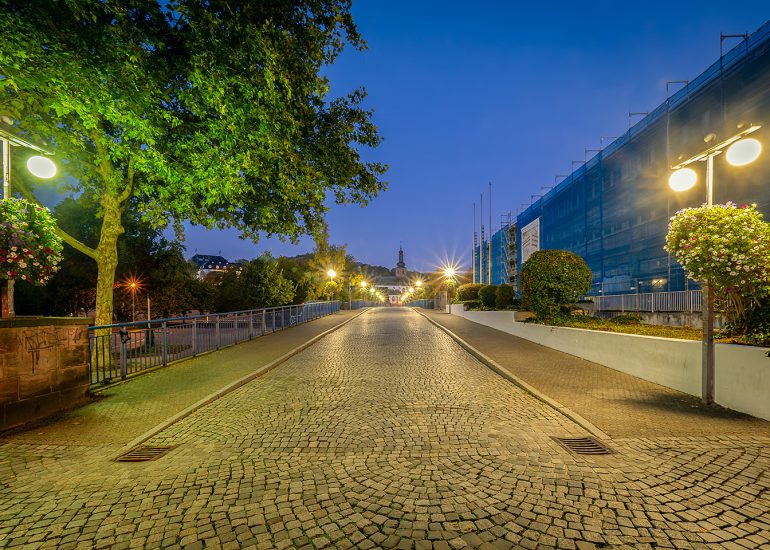
In the following years, numerous building, bridge and urban development projects came under his direction. Particularly important is his contribution to continuing and extending Baroque urban planning: he was responsible for the rebuilding of the bridge over the Saar (after the collapse of the old bridge in 1784), the expansion of the development plan for the “Upper Suburb” in St. Johann (today roughly Mainzer Straße), as well as for secular buildings, churches and castle complexes in the wider area – including castles, parsonages, garden layouts and bridges.
Guardian and Further Developer of the Stengel Legacy
With Balthasar Wilhelm, the region’s building culture seamlessly entered a second generation that not only preserved the architectural spirit and urban ideas of his father, but also adapted them to the changing needs of a growing town. Under his leadership, Saarbrücken’s Baroque master plan was extended and supplemented – the basic structural order remained recognisable but was flexibly further developed. [20]
The Eldest Son: Johann Friedrich Stengel (1746 – ca. 1830)
Stengel also had another son who followed in his footsteps. Johann Friedrich Stengel was born on 5 August 1746 in Saarbrücken. He was the eldest son of Friedrich Joachim Stengel and his wife Clara Elisabeth Storch. [21]
Around 1769, Johann Friedrich entered the service of the Principality of Nassau-Saarbrücken, initially working as a building conductor (technical draughtsman and site manager), later as a master builder under his father’s supervision. In the 1770s, Johann Friedrich Stengel was involved in several building projects, mostly in a supervisory or executive capacity. According to entries in the artists’ lexicon and the Wikipedia article [22], these included:
- Protestant church in Jugenheim (Rheinhessen) – construction management presumably between 1769 and 1772
- Protestant church in Berg (Lower Alsace) – 1770–1773 under his supervision
- Protestant parsonage in Heusweiler (Saarland) – up to 1774 under his responsibility as site manager
- Design of the Protestant church in Niederlinxweiler (1774) – the building was executed by another master builder, but based on Stengel’s design
In this way, he took on many projects built on his father’s design principles – clearly structured, symmetrical, with a Protestant-Reformed understanding of space.
Move to Russia
In January 1776, Johann Friedrich Stengel entered the service of the Russian Empress Catherine II (Catherine the Great). There he Russified his name to Fyodor Fyodorovich Stengel (Фёдор Фёдорович Штенгель) and initially worked in Tver, later in St Petersburg. According to Russian sources, he was involved in the imperial bronze foundry, which later supplied parts of the furnishings for St Isaac’s Cathedral. He was also, at times, involved in building and restoration work on the tsarist residences (ibid.).
The end of his life is not precisely documented; most sources give “after 1830” as an approximate year of death in St Petersburg.
Johann Friedrich Stengel was not a brilliant innovator like his father, but a precise, technically skilled architect who carried forward the high standards of Nassau-Saarbrücken Baroque and ultimately became an internationally active civil engineer in the service of Catherine II.
Sources
[1] cf. Wolfgang Götz: Friedrich Joachim Stengel. Der Baumeister des Saarbrücker Barock, Saarbrücken 1987, p. 11 ff.
[2] cf. Hans-Jürgen Schwartz: “Stengel, Friedrich Joachim”, in: Neue Deutsche Biographie, vol. 25, Berlin 2013, pp. 397–399.
[3] cf. Ulrike and Manfred Jacobs: Saarbrücken und sein barockes Erbe: Ein Spaziergang auf den Spuren von Friedrich Joachim Stengel, Geistkirch Verlag, Saarbrücken 2019, p. 21.
[4] cf. [1], p. 18.
[5] cf. Stadtarchiv Saarbrücken, Fürstlich-Nassauischer Hausarchivfonds, file 1733/04.
[6] cf. Landesdenkmalamt Saarland, Denkmaltopographie Saarbrücken, vol. 1, 1993, pp. 45–52.
[7] Dieter Kimpel: “Stengels Stadt. Saarbrücken im 18. Jahrhundert”, in: Saarländische Heimatblätter 1980, issue 2, pp. 37–48.
[8] Hans-Joachim Kühn: Das Saarbrücker Schloss und sein Architekt Friedrich Joachim Stengel, Saarbrücken 1981, pp. 64–79.
[9] Ulrike and Manfred Jacobs: Saarbrücken und sein barockes Erbe: Ein Spaziergang auf den Spuren von Friedrich Joachim Stengel, Geistkirch Verlag, Saarbrücken 2019, p. 26.
[10] Landesdenkmalamt Saarland, restoration report 1990.
[11] Kiesow, Gottfried: Barocke Stadtanlagen in Deutschland, Munich 1985, p. 156 ff.
[12] Barbara Cersowsky: Die Ludwigskirche in Saarbrücken. Architektur und Ausstattung, Saarbrücken 1992.
[13] Klaus Kell: “Die St. Johann-Kirche in Saarbrücken”, in: Saarländische Beiträge zur Kulturgeschichte, 1975, pp. 88–102.
[14] cf. Landesdenkmalamt Saarland 1993, pp. 75–88.
[15] cf. [7], p. 41.
[16] cf. [1], p. 44.
[17] cf. [2], p. 399.
[18] cf. ICOMOS Deutschland: Bericht zur Denkmalpflege im Saarland, Berlin 2005, p. 23.
[19] cf. https://de.wikipedia.org/wiki/Balthasar_Wilhelm_Stengel
[20] cf. https://institut-aktuelle-kunst.de/kuenstlerlexikon/stengel-balthasar-wilhelm
[21] cf. https://institut-aktuelle-kunst.de/kuenstlerlexikon/stengel-johann-friedrich-fjodor-fjodorowitsch
[22] cf. https://de.wikipedia.org/wiki/Johann_Friedrich_Stengel




Comments are closed.