Namibia – A Journey Through Light and Landscape
Namibia – A Journey Through Light and Landscape
Namibia is considered one of the most photogenic countries in the world — a land of light, silence, and endless horizons. Between desert and Atlantic, rock formations and savanna, old farmhouses and modern lodges, unfolds a landscape that feels as if it were created solely for the interplay of sun and shadow. Anyone traveling through Namibia with a camera embarks on an expedition through color: from the deep reds of the dunes to the pale dust of the salt pans, from the cool blues of the Atlantic to the golden glow of Damaraland.
From Windhoek to Sossusvlei – Following the Path of Light
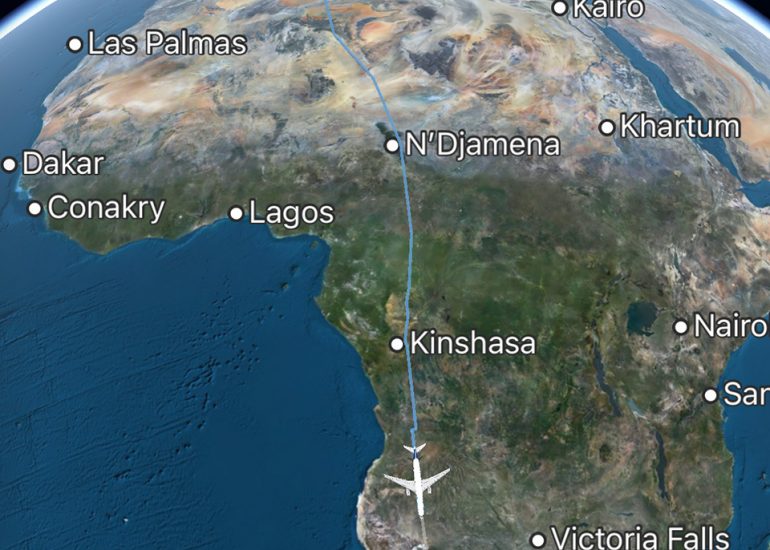
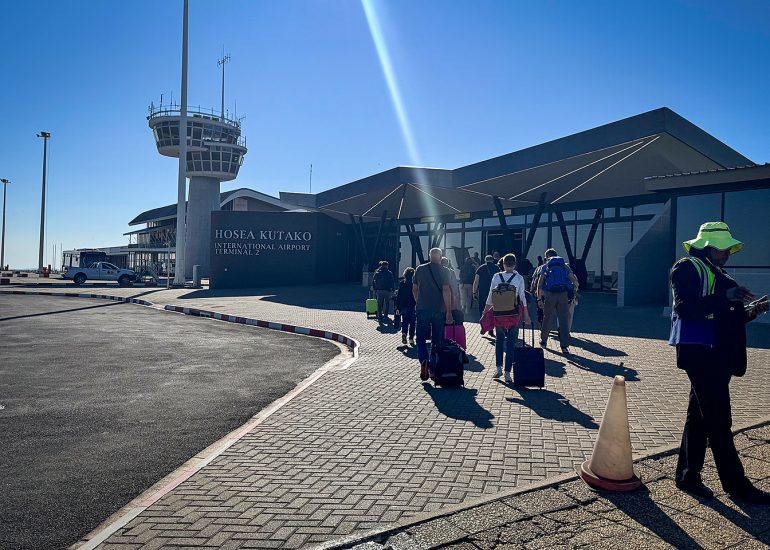
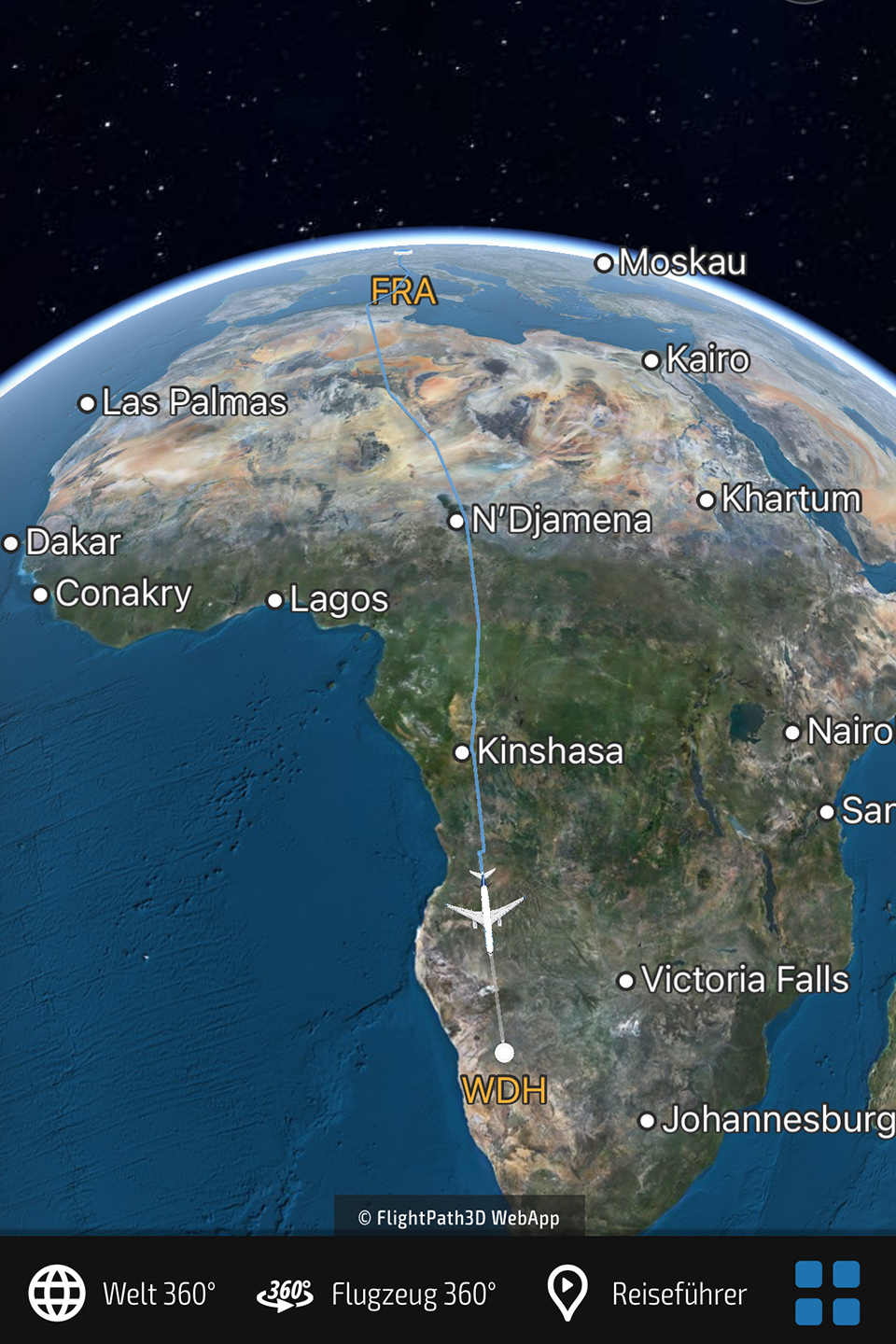
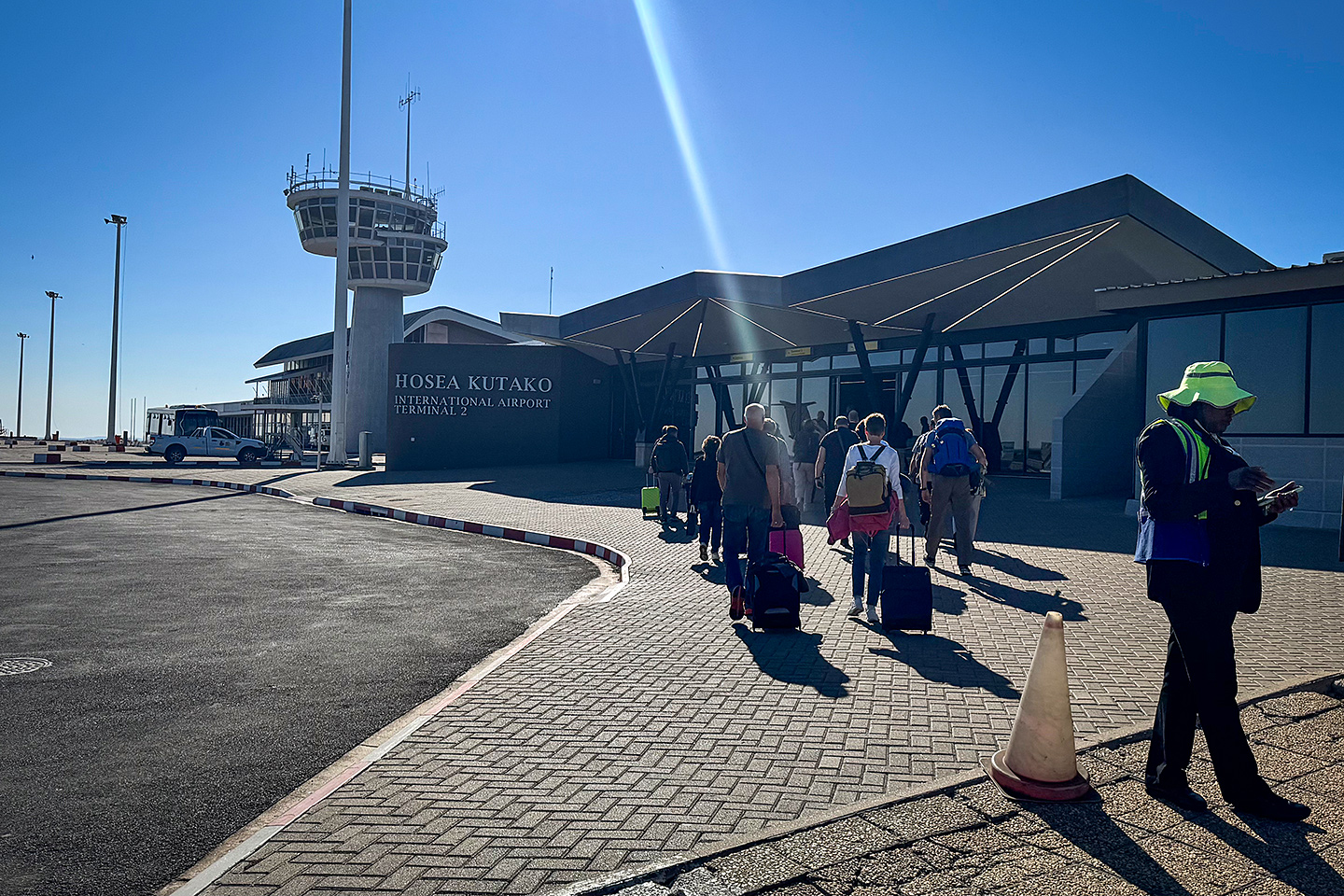
Namibia doesn’t greet its visitors with noise, but with light. It’s that dry, glass-clear glow over the highlands that sharpens everything — colors, contours, even the exhaustion after the long flight. As the plane from Frankfurt descends toward Hosea Kutako Airport in the early morning hours, endless stretches of desert, sand, and dust unfold beneath the wings.
Arrival in Windhoek
The landing takes place shortly after eight in the morning. Despite having applied for our visas electronically, the immigration process takes longer than expected. The officer behind the counter yawns like a hippo while the line moves only reluctantly — welcome to Africa, where time flows differently. Two hours later, we finally stand in the arrivals hall: baggage, scanner, ATM, SIM card, rental car. Anyone smart withdraws cash right away — card payments don’t work everywhere in Namibia, and the ATM dispenses a maximum of 3,000 Namibia dollars, roughly 150 euros.
At the rental car counter, patient staff members are still filling out the paperwork by hand. After a quick briefing at the Avis pickup point — spare tire, fuel policy, emergency number — we roll out. Outside, shimmering heat hangs over the plains, and the sun is already high.
Forty kilometers later, Windhoek rises gently out of the hills, a city that doesn’t impose itself. Colonial-era façades mixed with modern buildings — the perfect place to stock up for the journey. At the Superspar inside The Grove shopping mall, you can find everything you need for the coming days: bread, water, wine, fresh takeaway meals. After loading up, the road leads straight out into nothingness.
Heading Toward the Namib
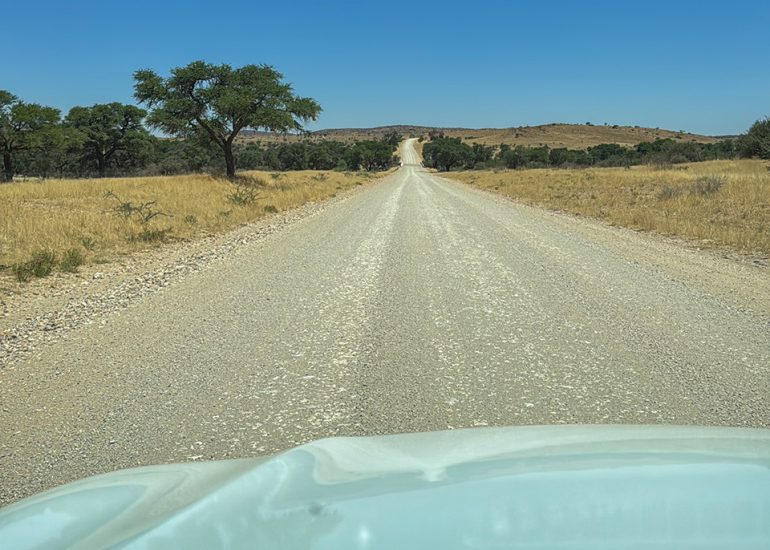
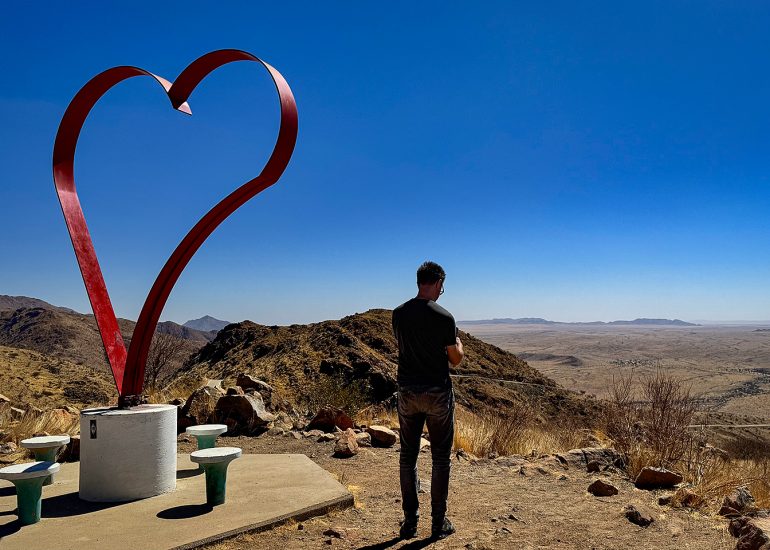
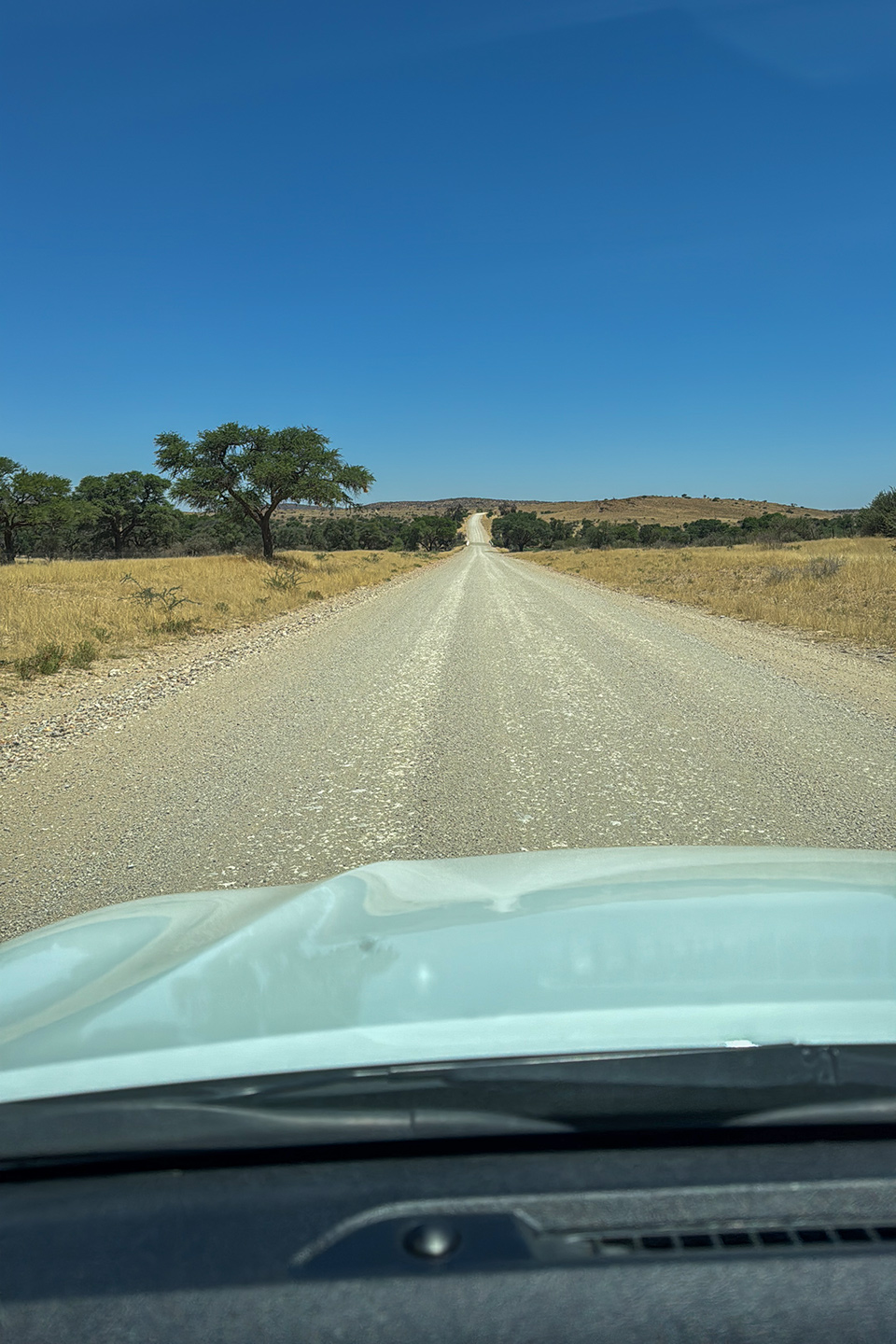
The drive south takes longer than expected. Asphalt becomes gravel, gravel becomes dust. Speed is relative here — anyone who rushes will miss the rhythm of the land. Acacia trees cast thin shadows, monkeys and warthogs appear briefly, and the first antelopes cross the plains in the distance. After a good four hours, the first dunes appear on the horizon — soft, sandy, monumental. Shortly before sunset, we reach our first destination: the Sossusvlei Lodge in Sesriem
The lodge lies directly at the gate of Namib-Naukluft National Park. In the warm evening light, the sand hills glow in copper and gold while the first star appears above the terrace. A sundowner on the terrace bar, the clinking of beer bottles, the relief after a long day on the road — this is the moment you realize Namibia is not a country for rushing. Later, at the outdoor buffet, the wind cools the night. Conversations soften; cameras rest ready for the next morning.
The Play of Light — In the Realm of the Dunes
Guidebooks recommend arriving at the park gate before sunrise, when the gates open and the race for the best light begins. We choose a different path. After an early breakfast, we leave in a relaxed manner — the 78th car of the day, as the ticket shows. 650 Namibia dollars for four people and one vehicle — a fair price for one of the greatest natural spectacles in the world.
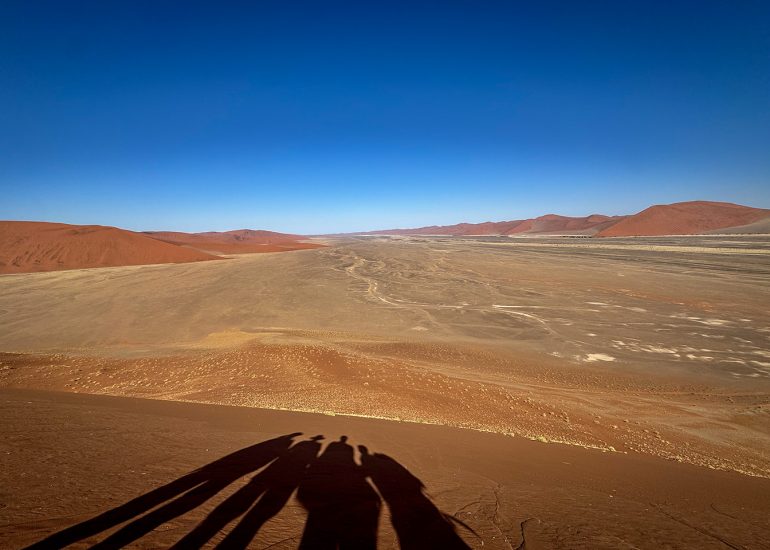
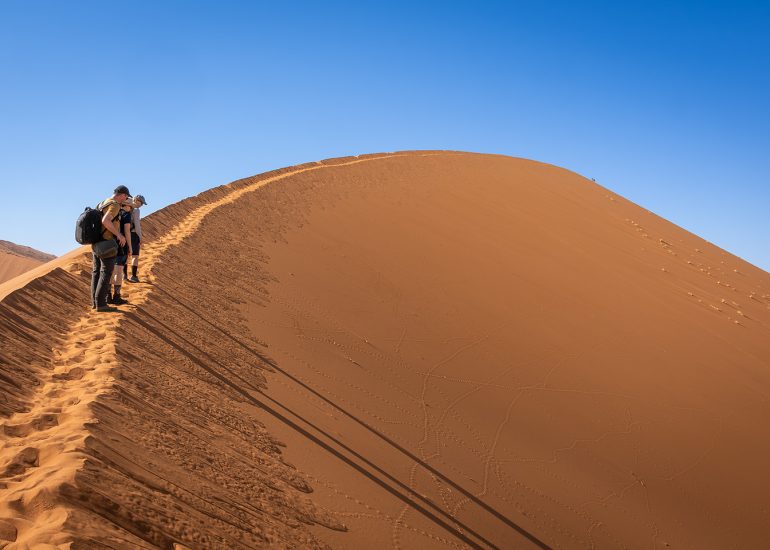
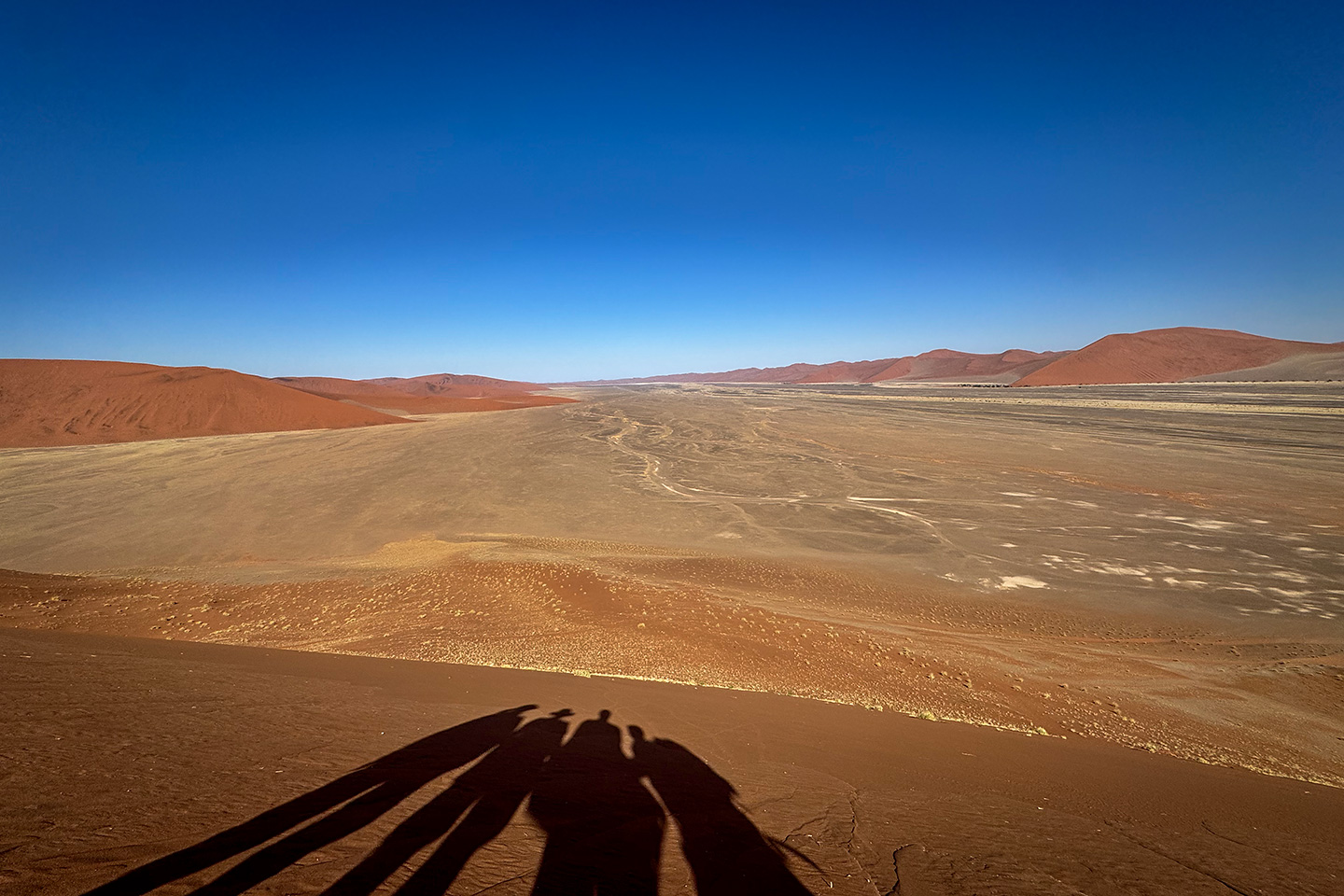
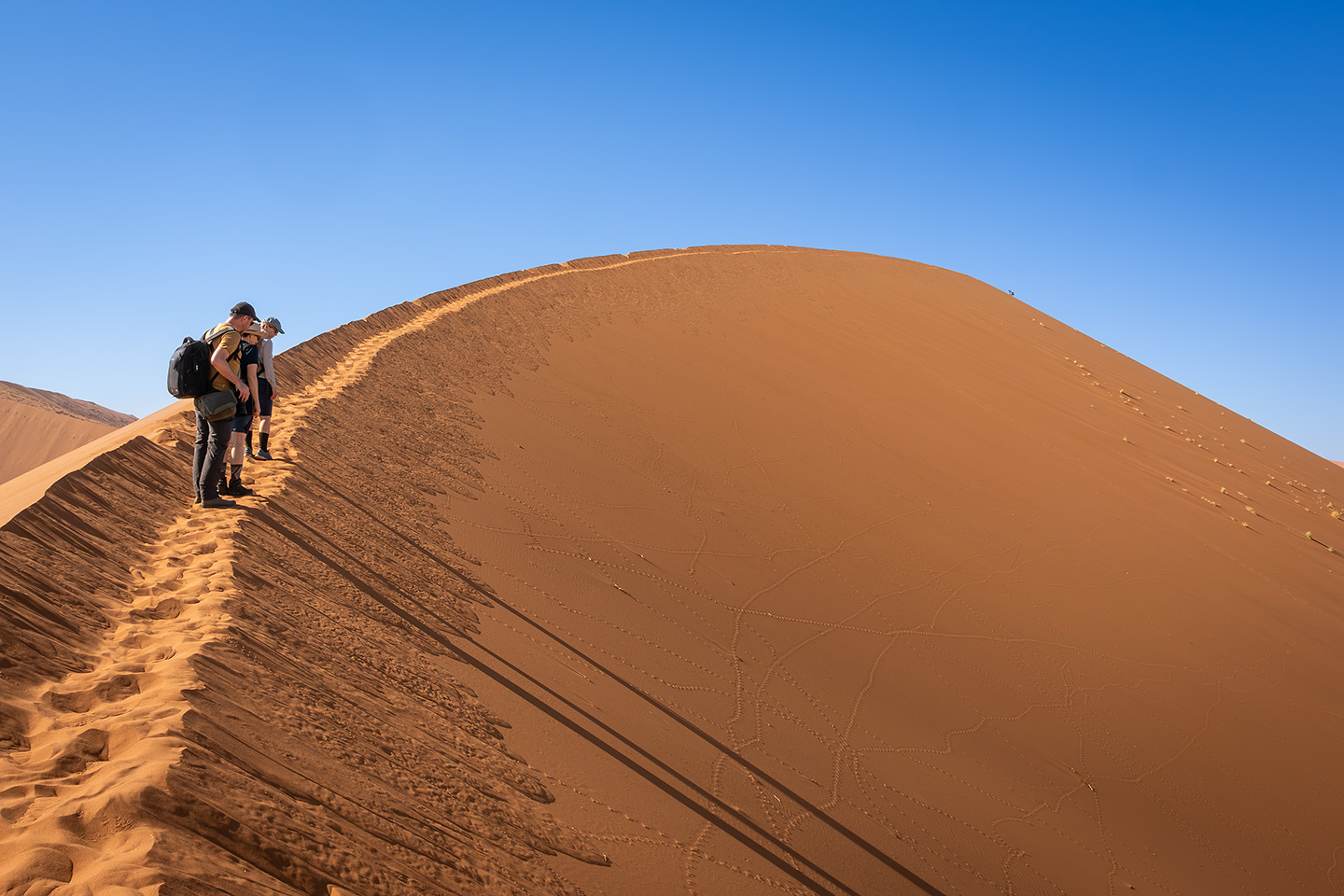
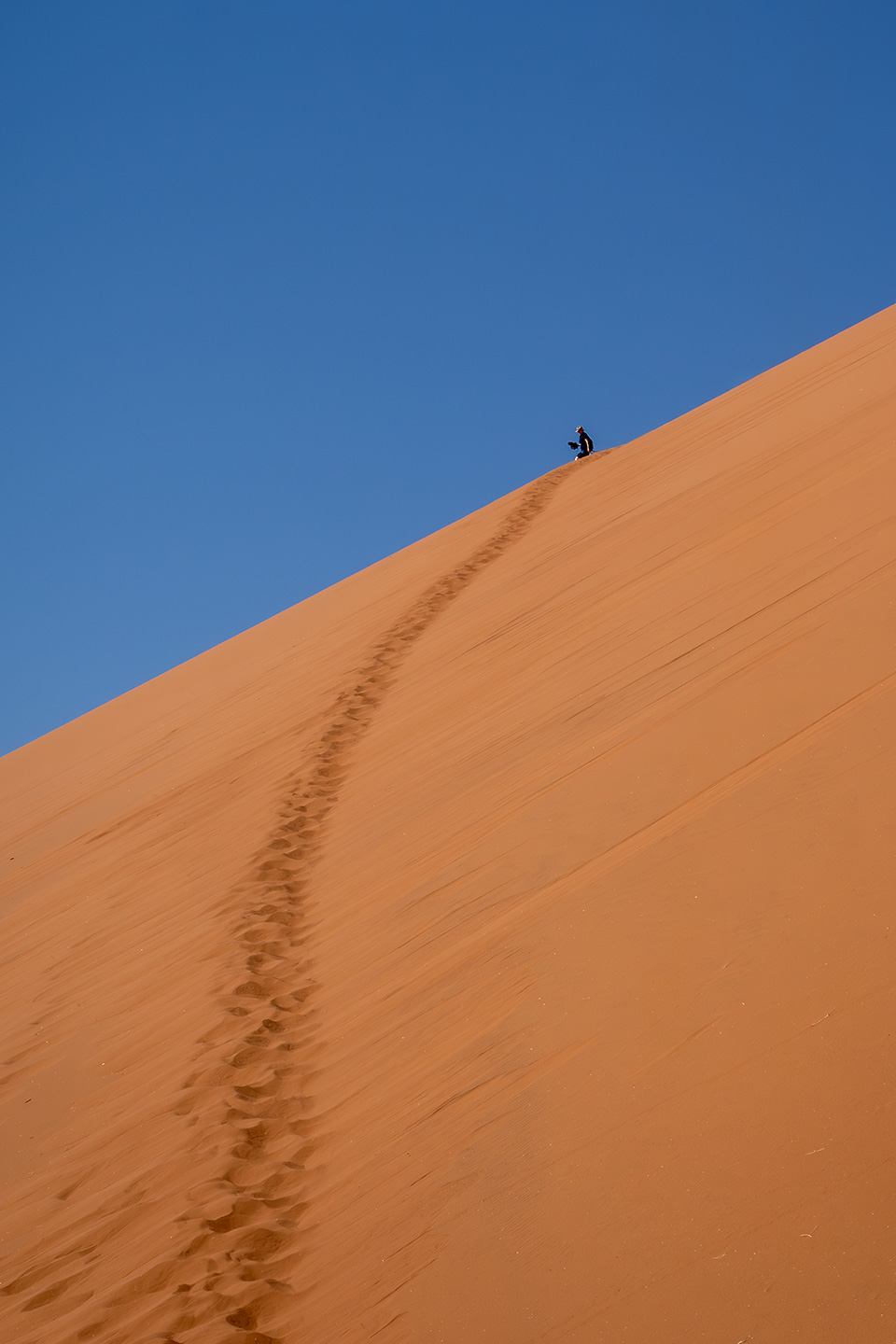
The paved road stretches sixty kilometers through a landscape that intensifies with every mile. At kilometer 45, Dune 45 appears — a majestic wave of red sand shaped as though carved from pure light. The parking lot is already lively, yet anyone lifting a camera will still find moments of absolute stillness: footprints dissolving in the wind, shadow lines forming perfect geometric patterns. The climb is strenuous; the run down is pure joy — sand slipping through fingers and hiking boots, laughter, dust, backlight.
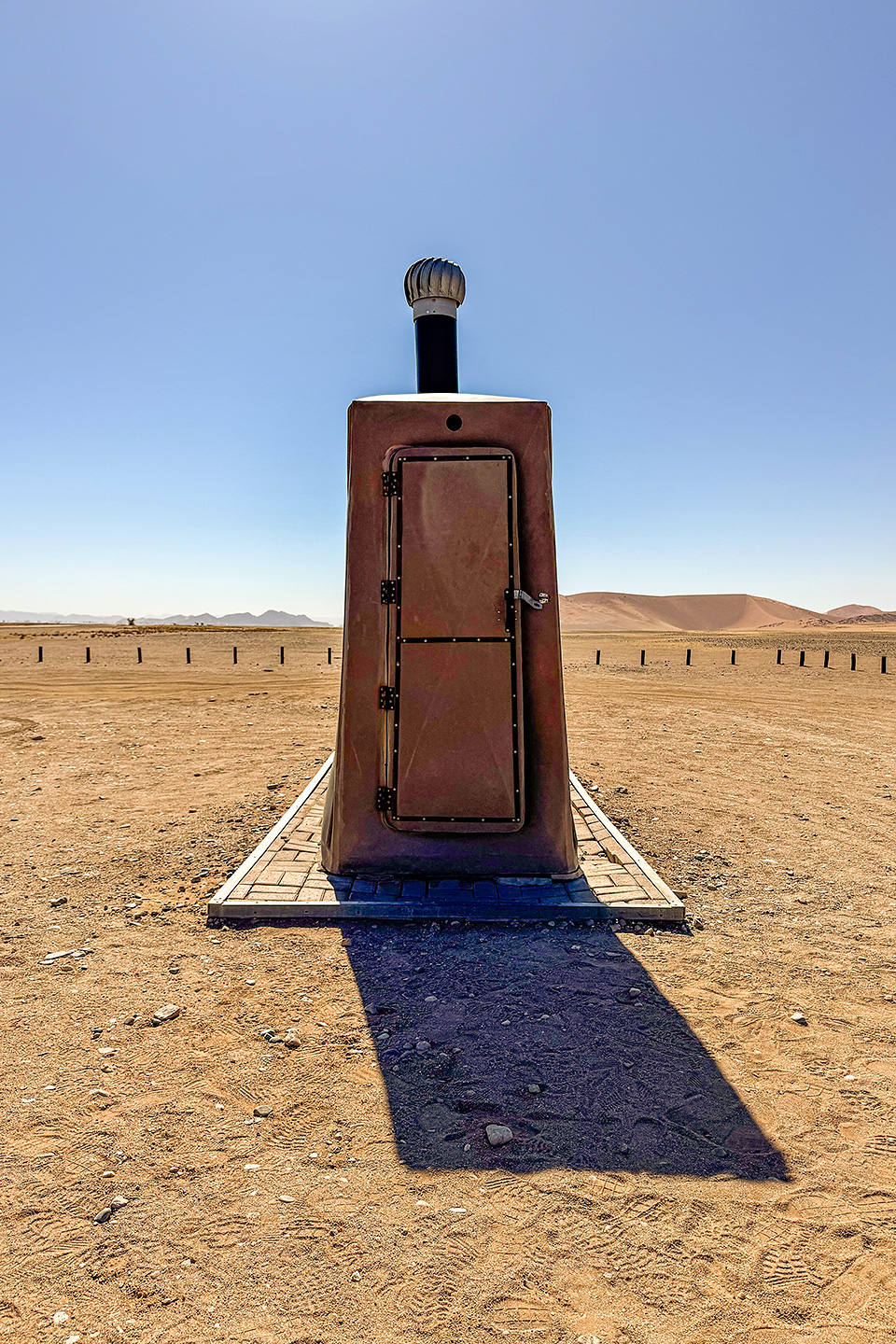
At the end of the road lies the main Sossusvlei parking area. Anyone without a 4x4 takes the shuttle (200 Namibia dollars for four people). We let ourselves be driven — the sand is simply too deep for standard tires. Where the shuttle drops us off, Big Daddy, the tallest dune in the region, rises nearly 350 meters into the sky.
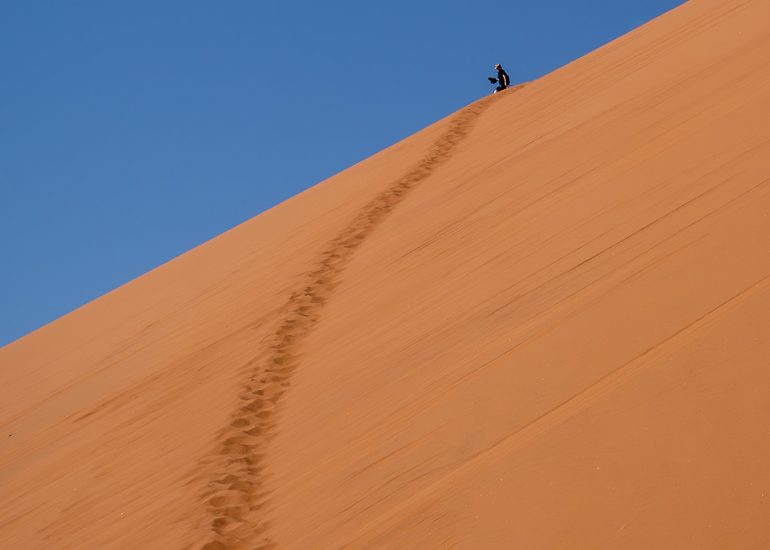
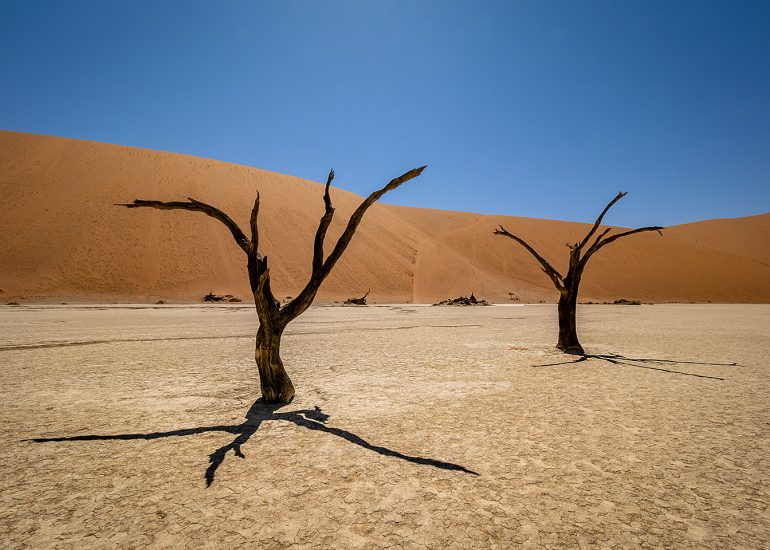
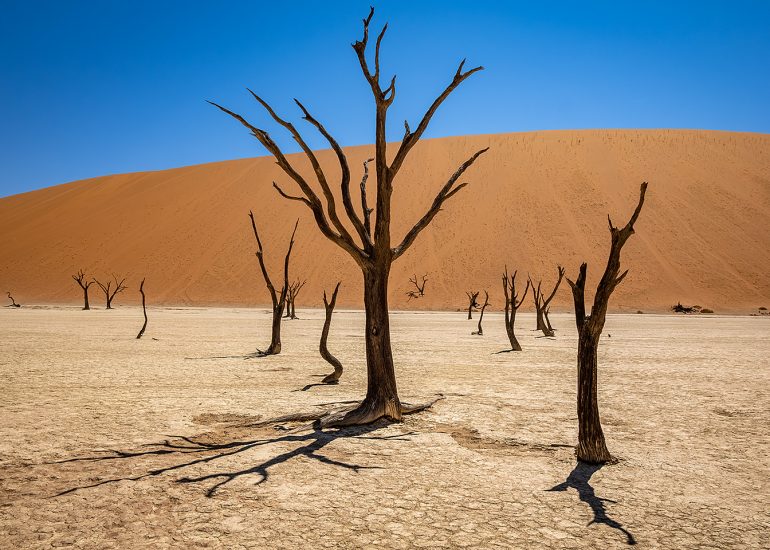
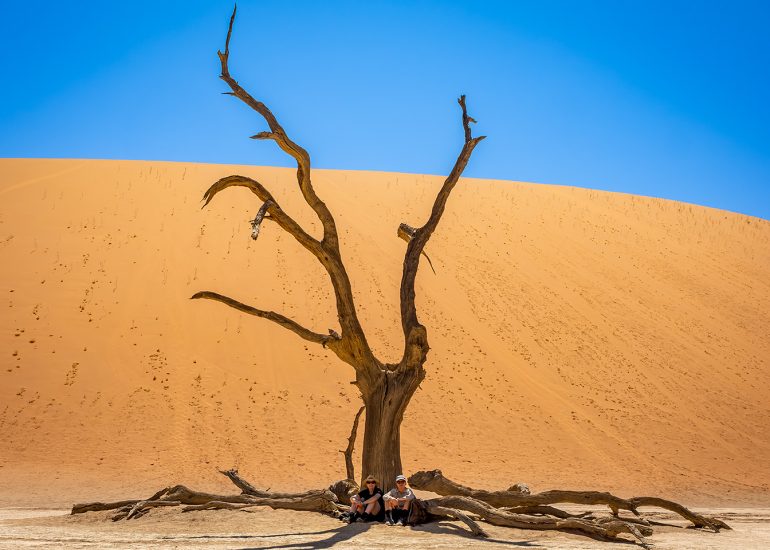
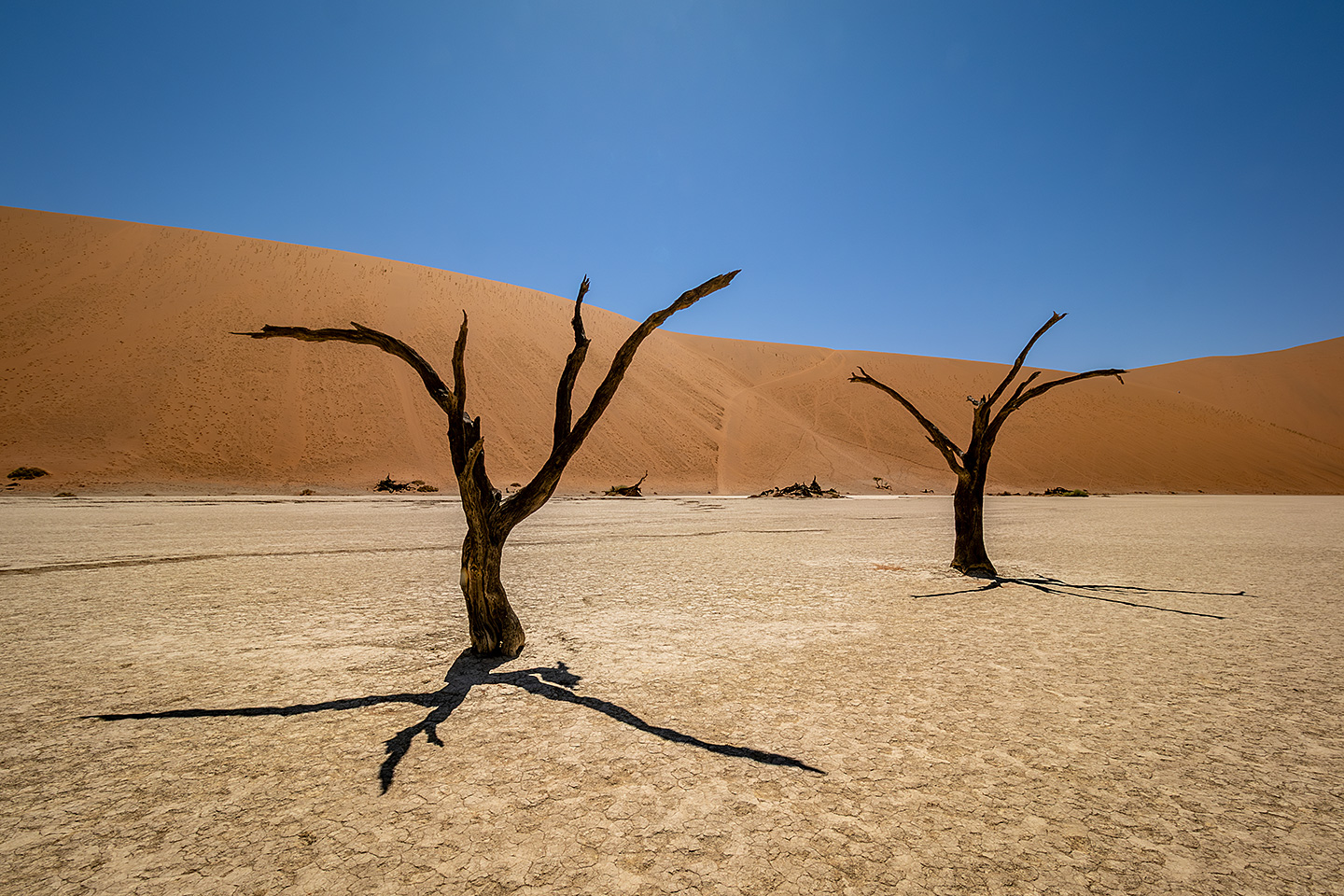
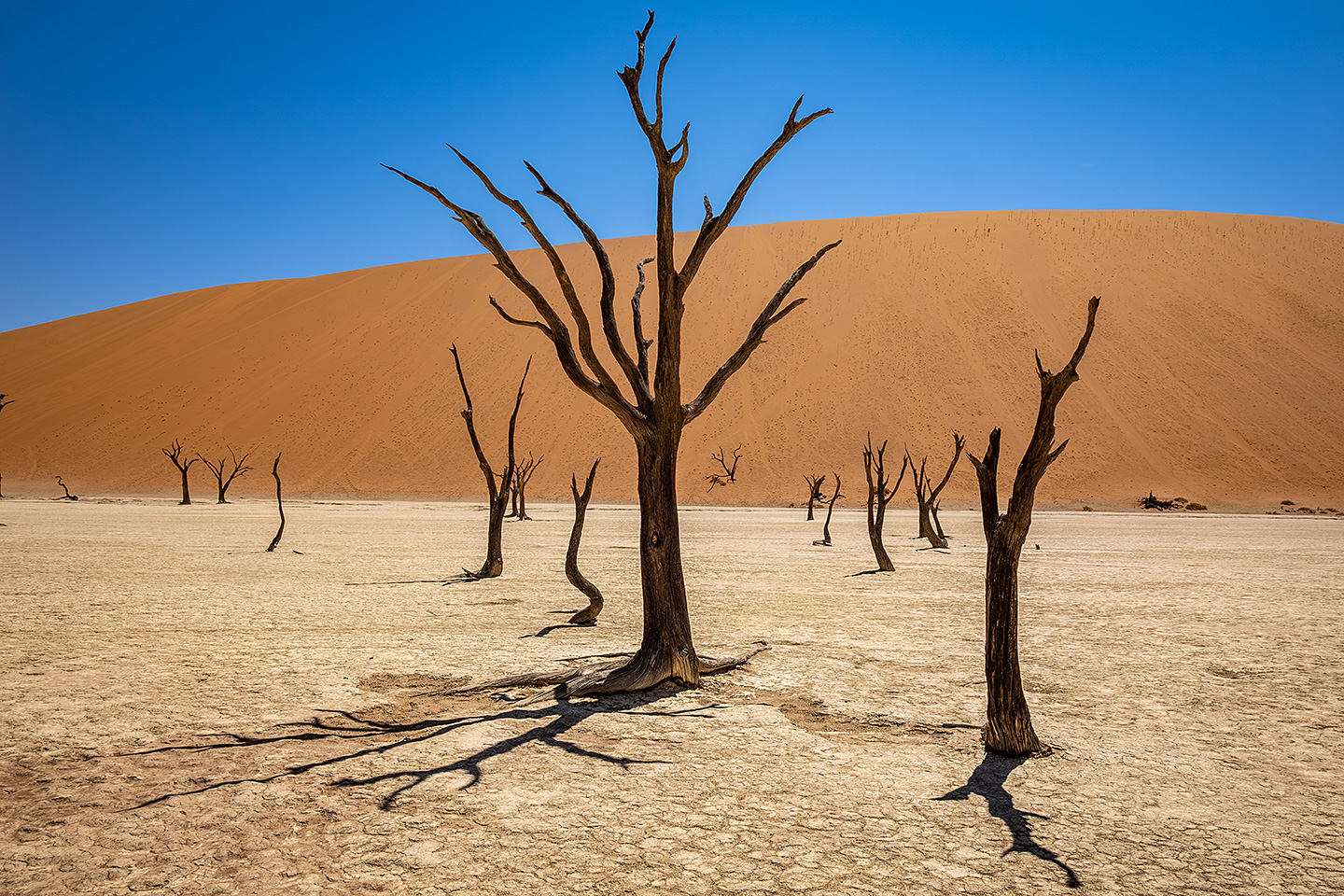
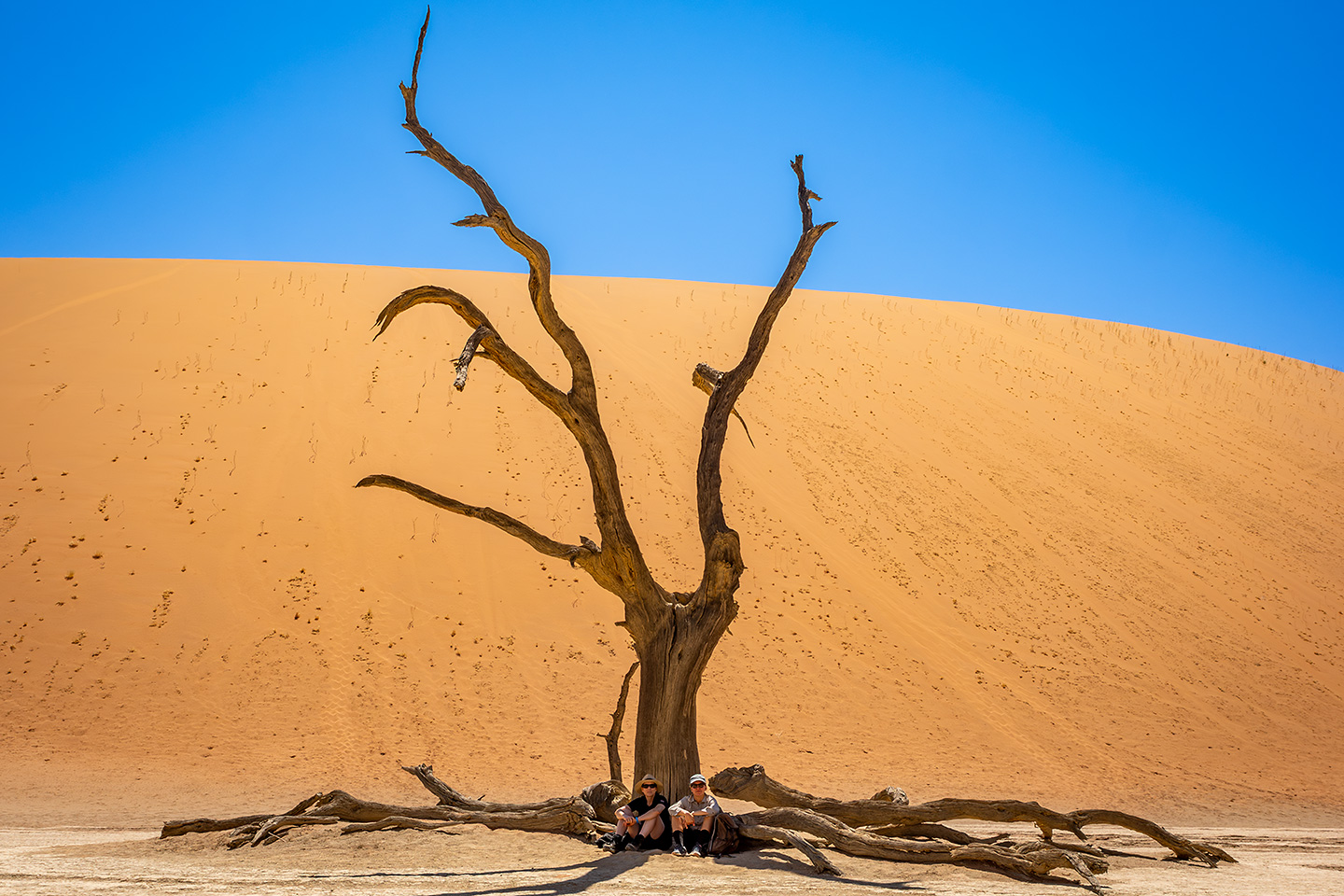
The earliest visitors of the day are already on their return, their silhouettes cutting black shapes against the bright sky. For us, the climb is now too hot — the sun is merciless. Instead, we walk parallel to the dune through the valley until, behind a small ridge, Deadvlei suddenly opens up — a surreal bowl of white clay where centuries-old camel thorn trees stand like black sculptures. The light is harsh but not unforgiving. With patience, one can always find frames without people — pure compositions of form, color, and time.
On the way back, the shuttle briefly stops at the dried-out Sossusvlei pan, another clay bowl with views of Big Mama, a massive dune overlooking the valley. The landscape is still, moved only by the wind.
Namib Naukluft
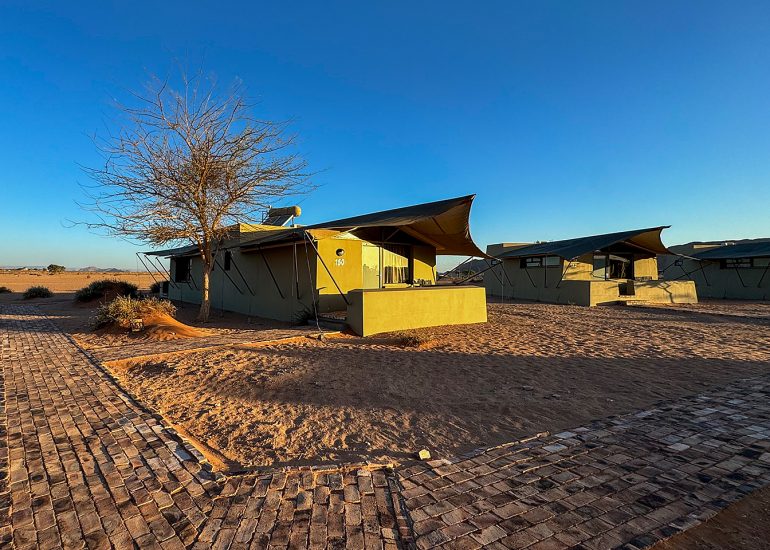
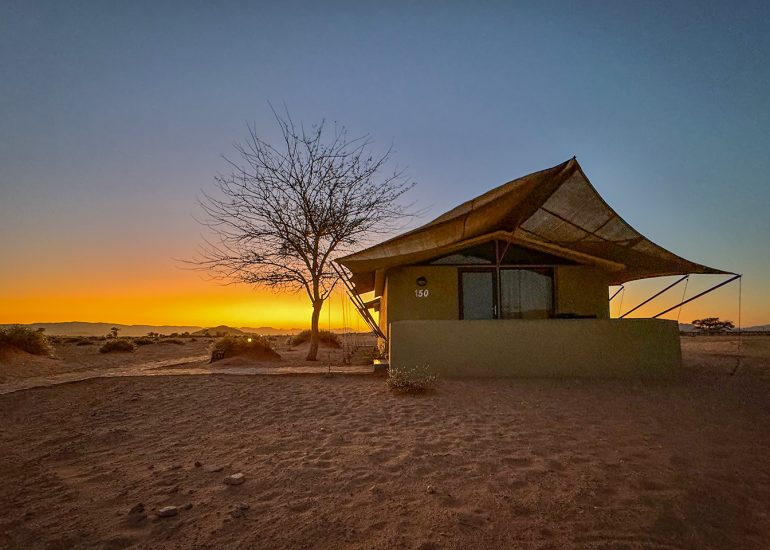
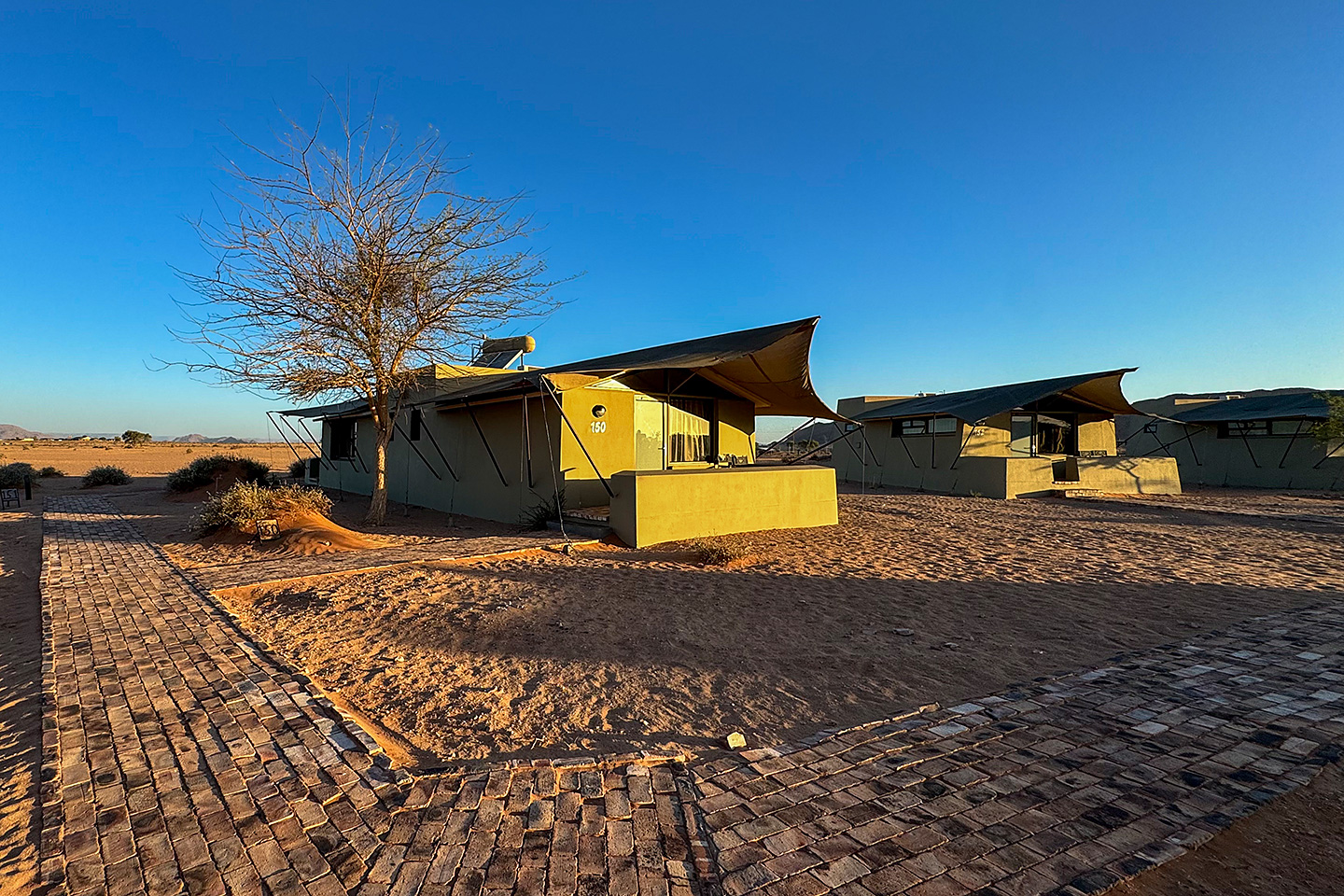
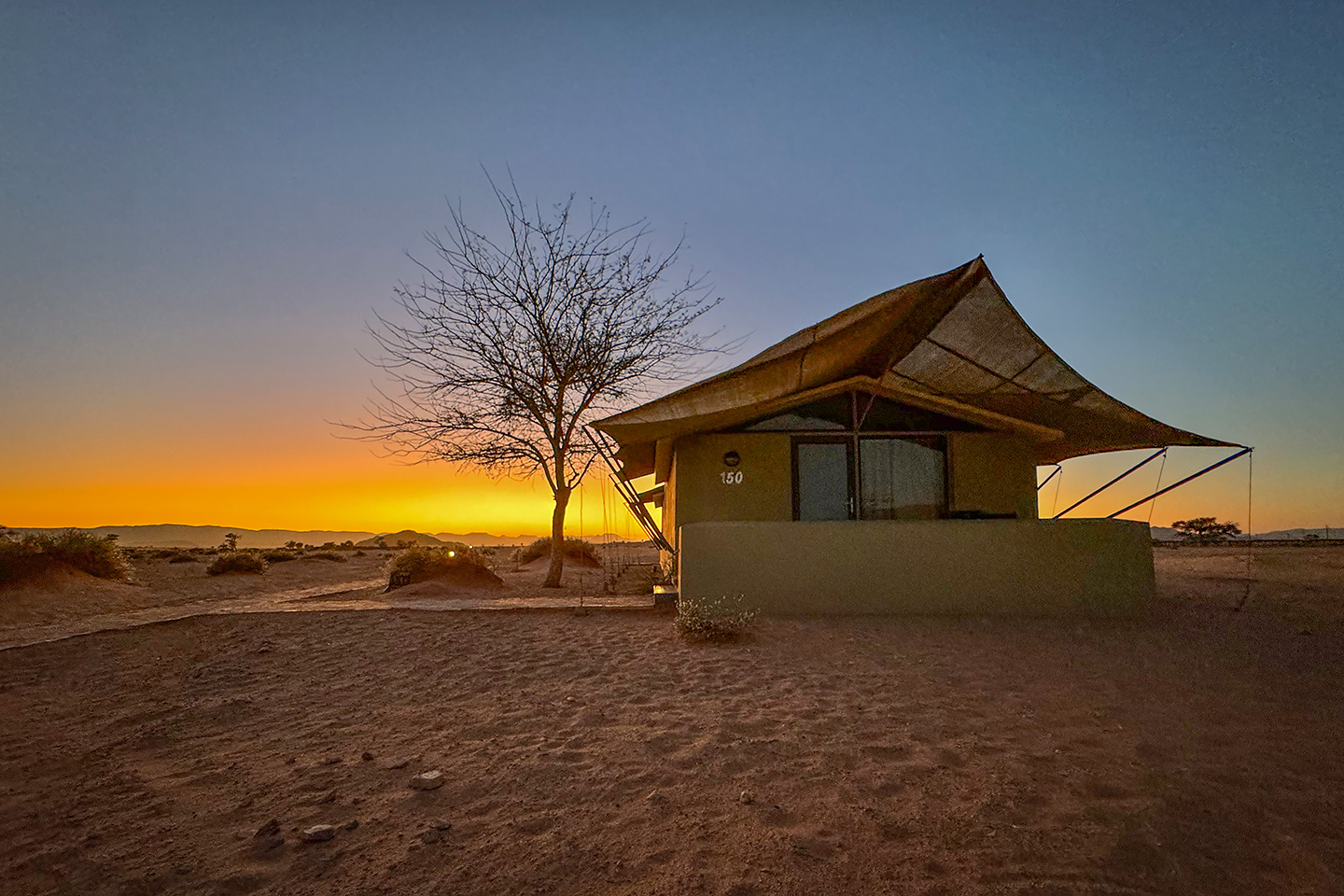
We begin the return drive and pass the lodge from the first night. From here, we continue about an hour back toward Solitaire, where the Namib Naukluft Lodge is located, 18 kilometers south of Solitaire. The hosts speak German, despite never having visited Germany — a quirky, charming encounter. Dinner is excellent, breakfast just as good.
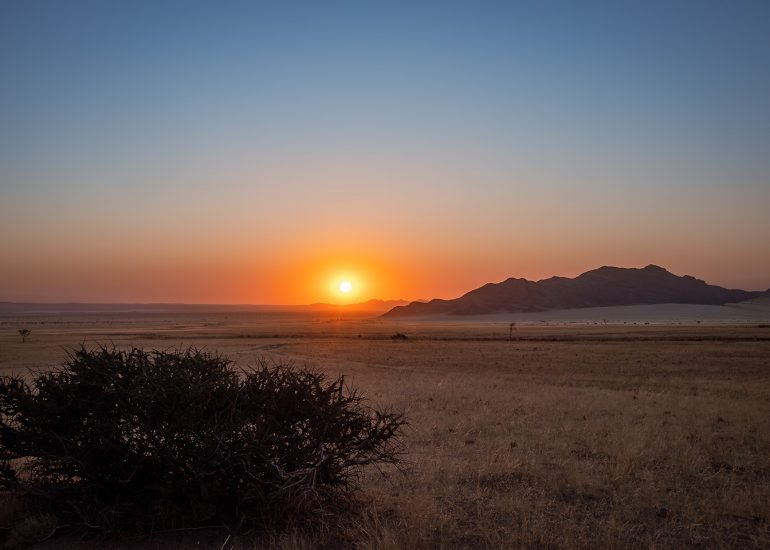
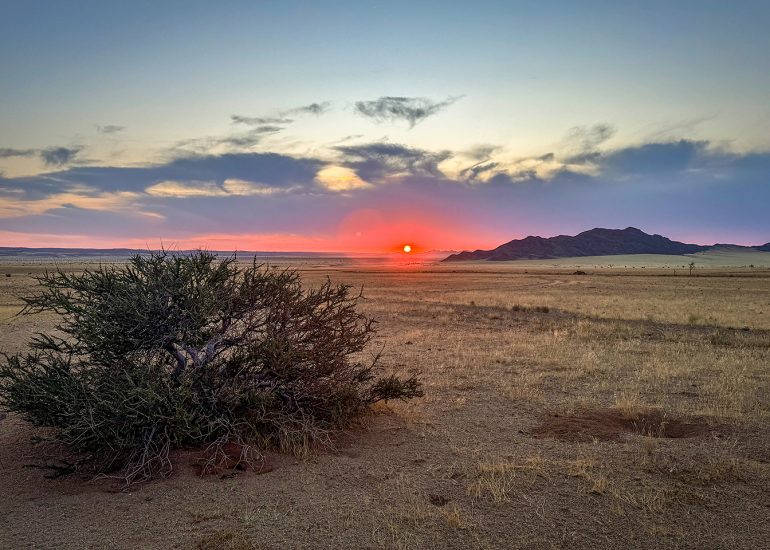
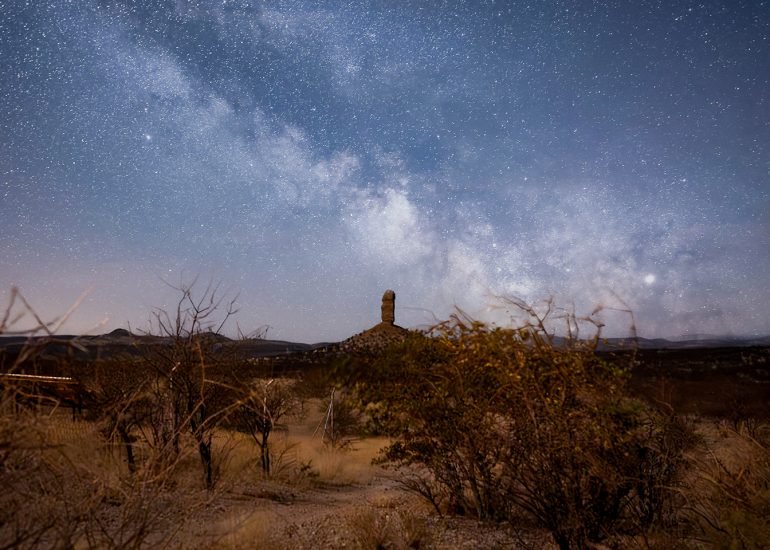
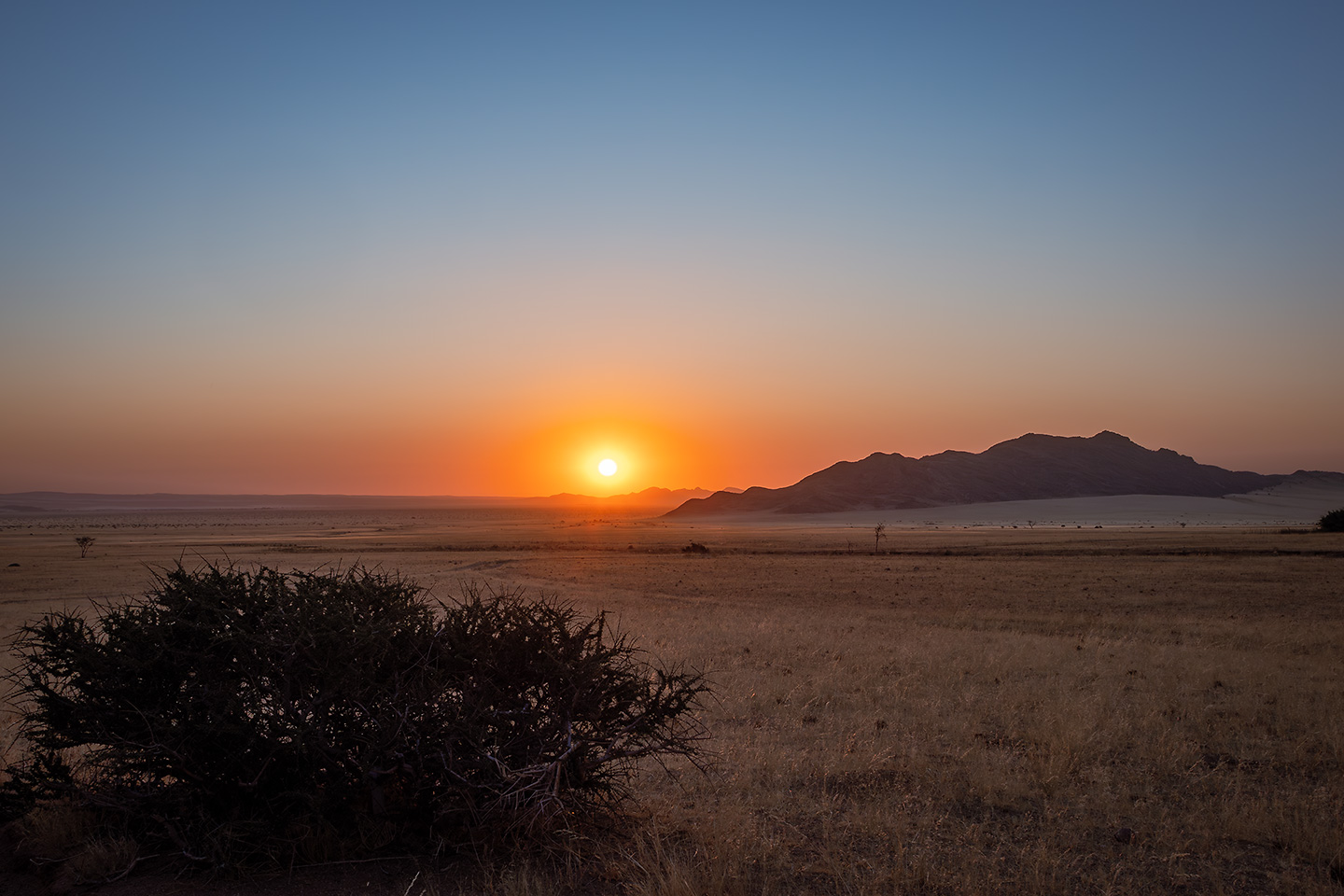
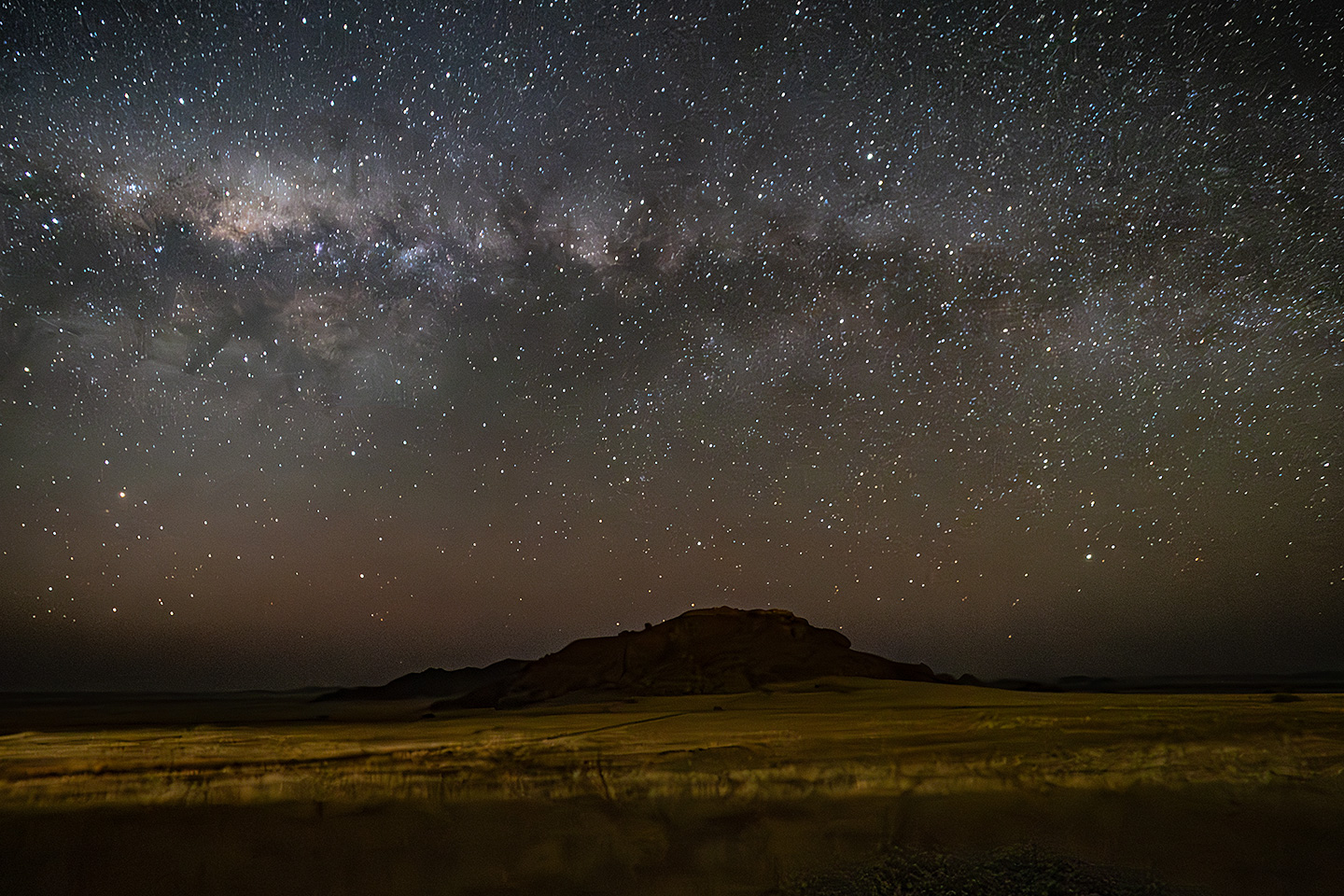
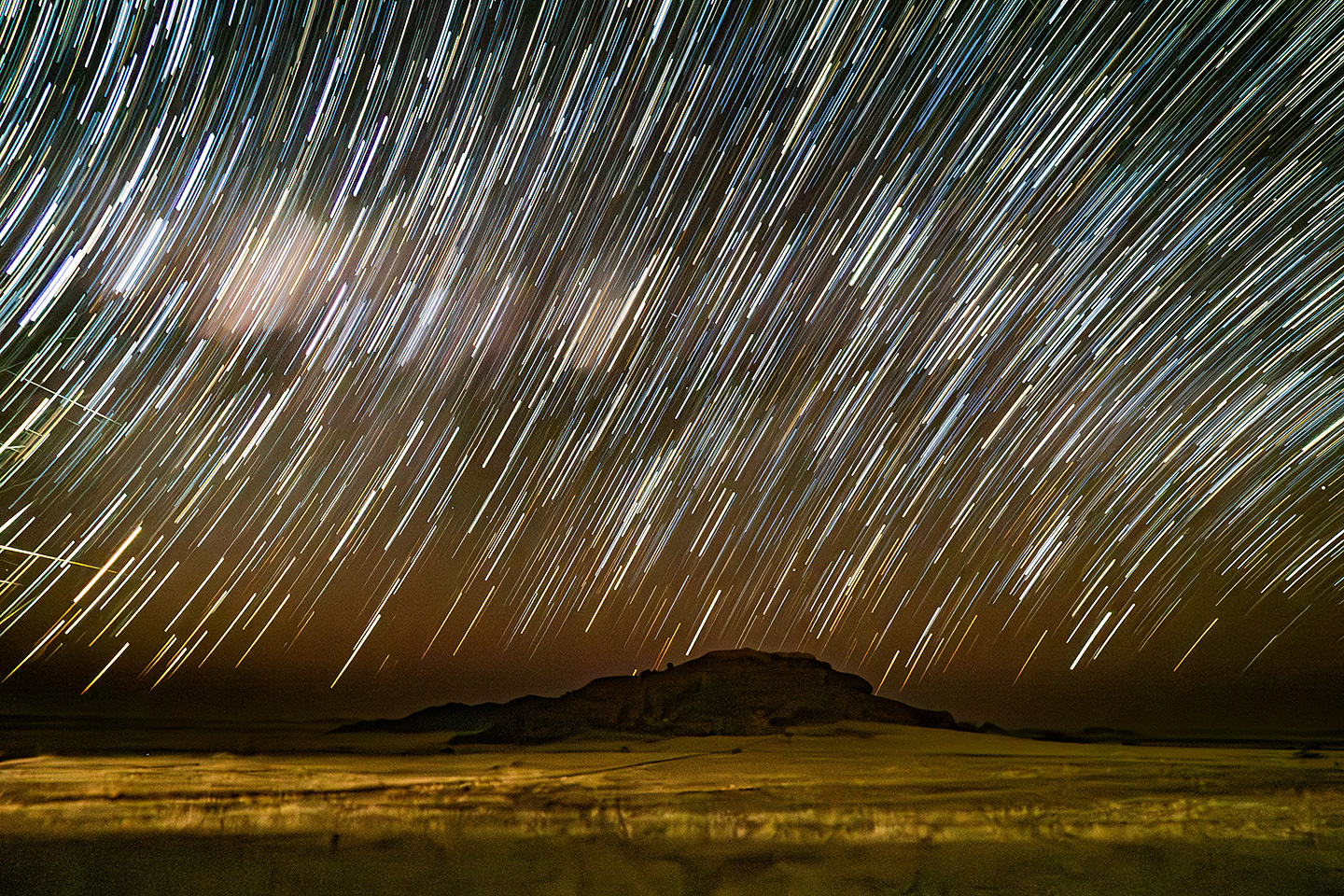
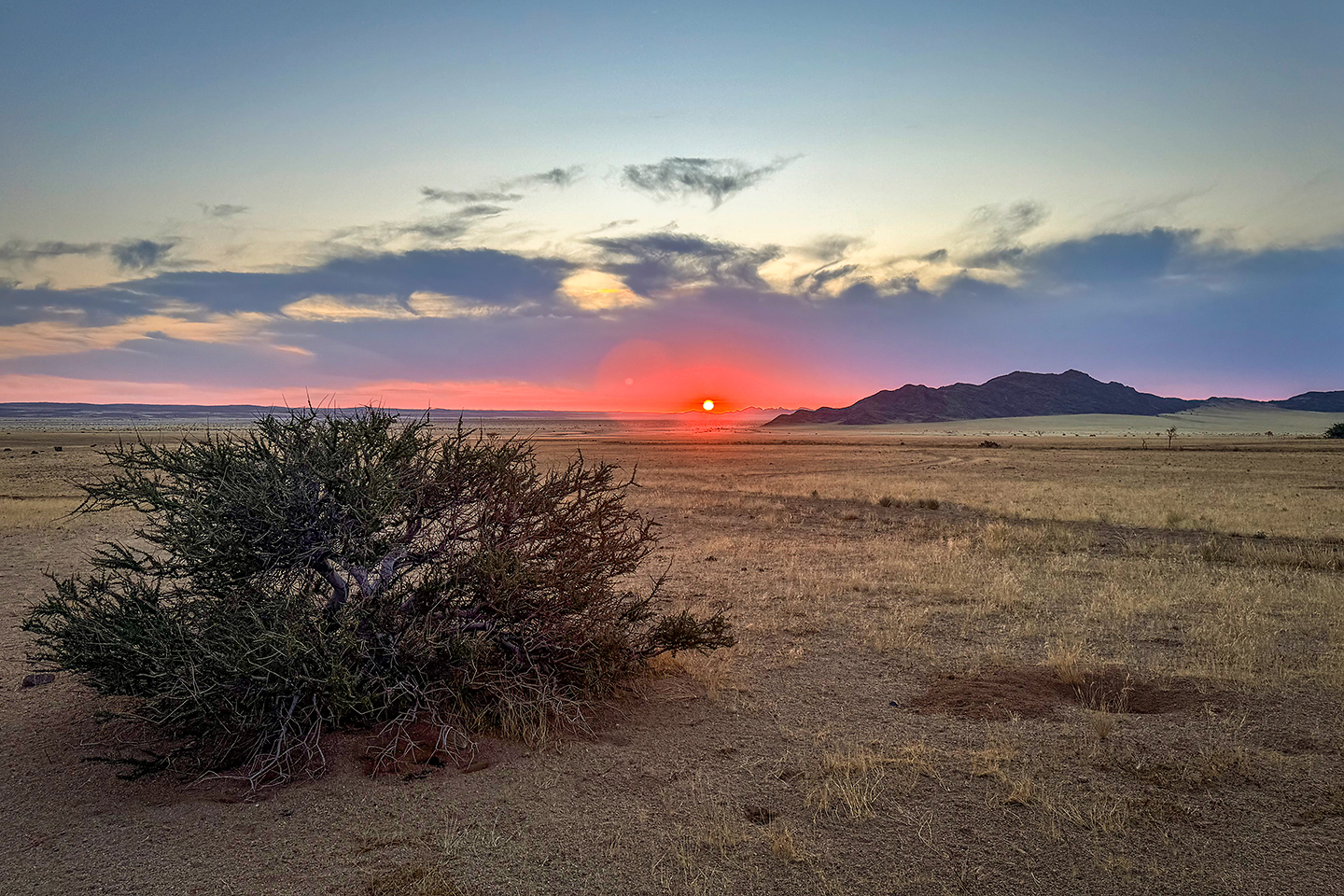
That evening brings another inevitable sundowner, the buffet, soft laughter at the table. One of our friends battles a mild stomach bug and rests in the bungalow — the rest of us watch the sun melt into the desert. Later, as darkness spreads, the sky erupts. Never has the Milky Way been so clearly visible to the naked eye.
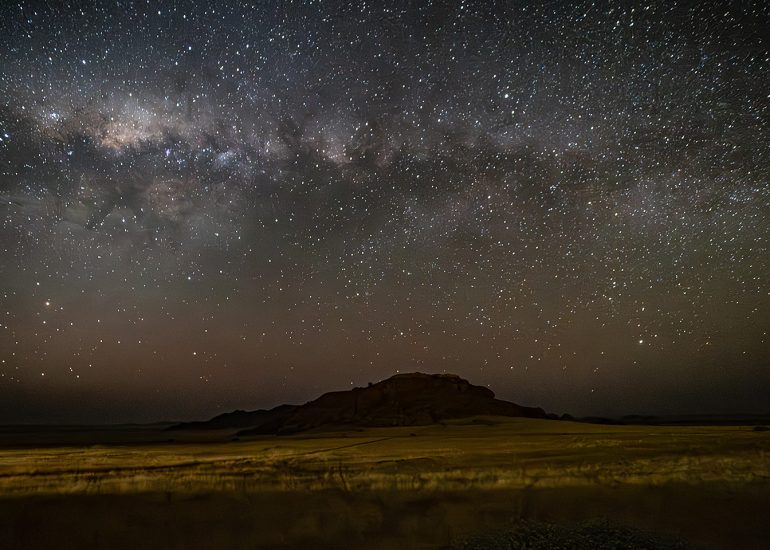
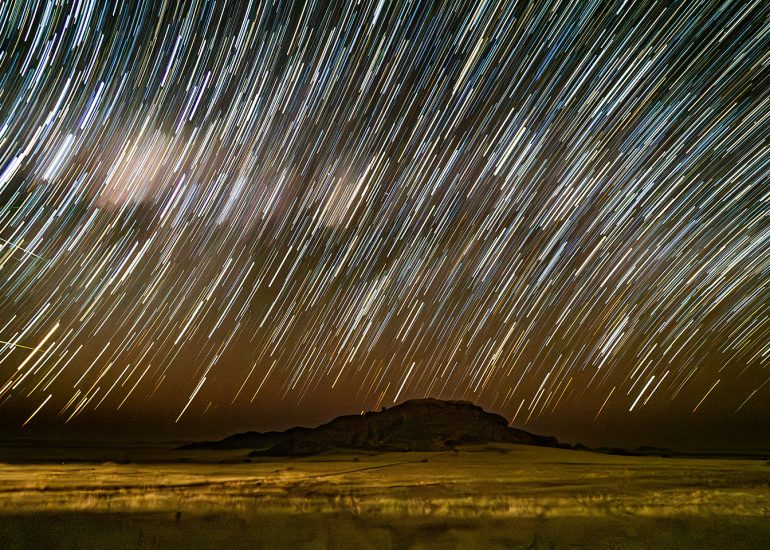
Between Dunes and Silence — Rest at the Edge of the Namib
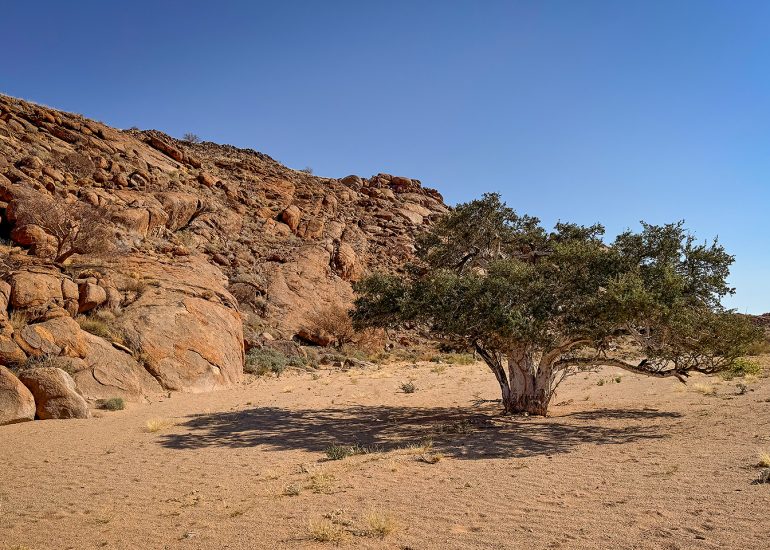
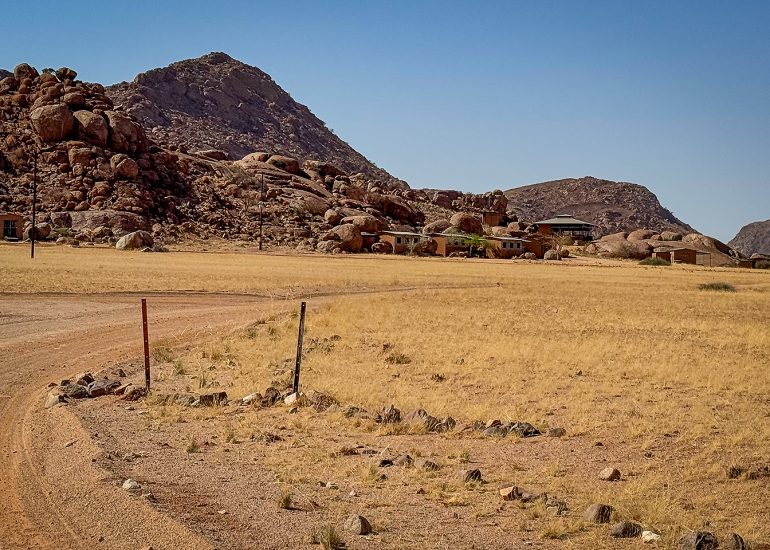
The next morning, stillness lies over the desert. The day is dedicated to rest: a short hike around the lodge’s hill on an old jeep trail — four kilometers, just under an hour. Afterwards, pool time, shade, cameras ready. The light changes constantly, from the blinding white of midday to the warm gold of late afternoon. Another sundowner follows, this time in near-total silence — just crickets and the faint clink of glasses.
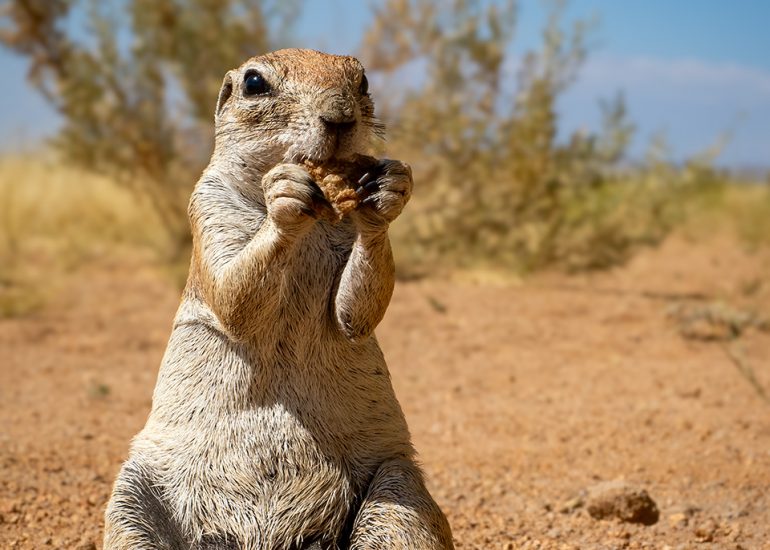
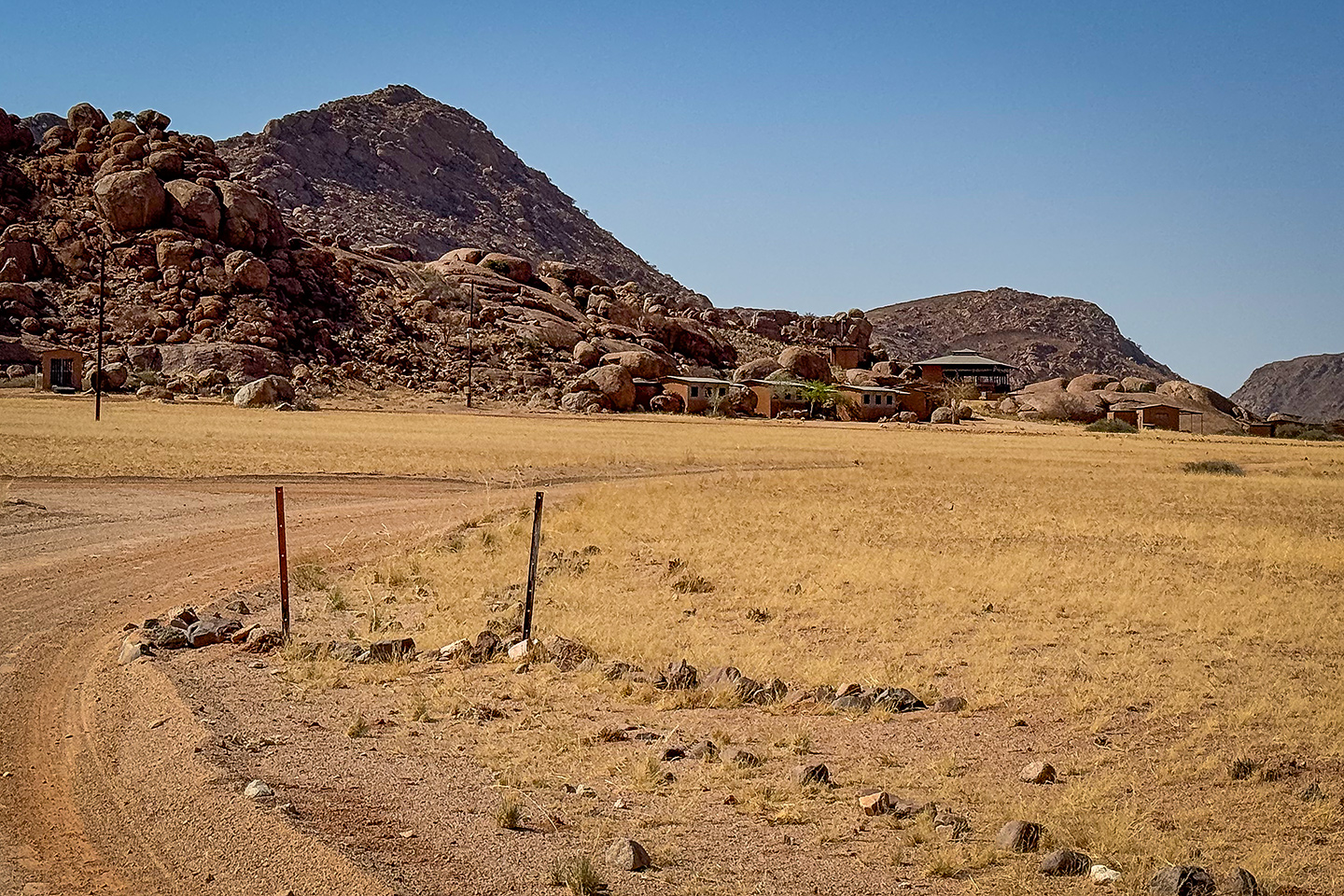
Within walking distance lies the Soft Adventure Camp, the lodge’s simpler sister property. From here, you have a wide-open view of the plains where meerkats peer curiously out of the sand. One could photograph here for days: shadows, lines, sky — and nothing more.

Solitaire — The Charm of Emptiness
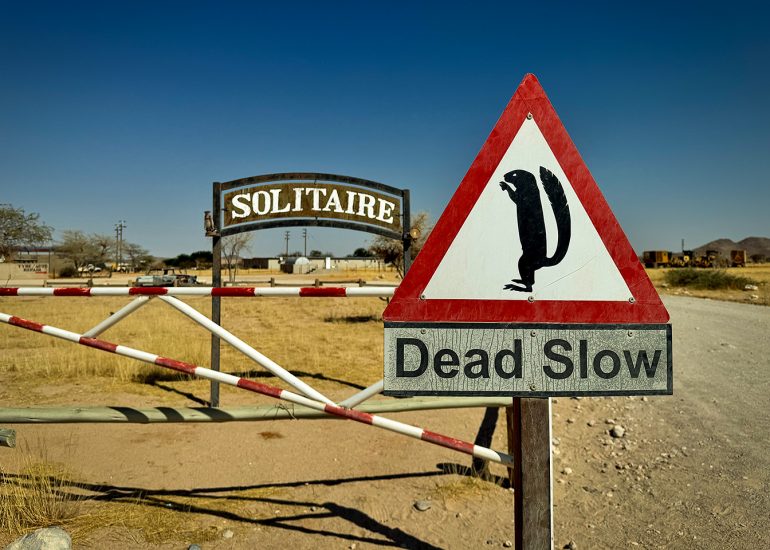
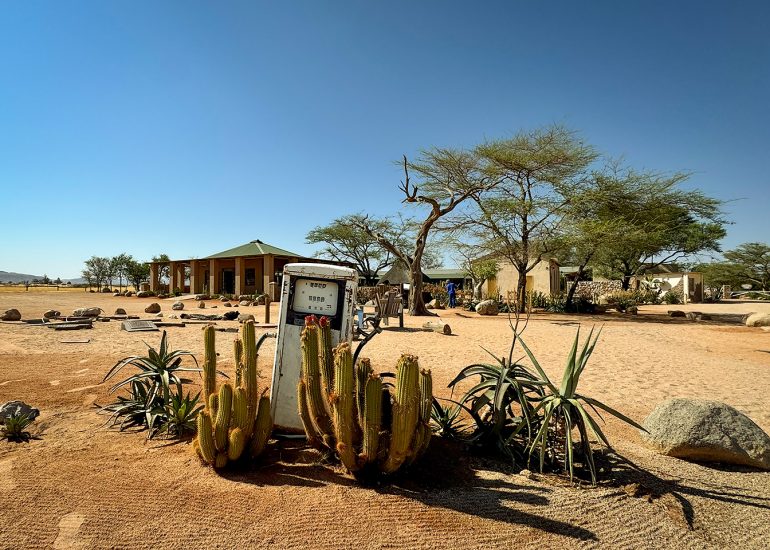
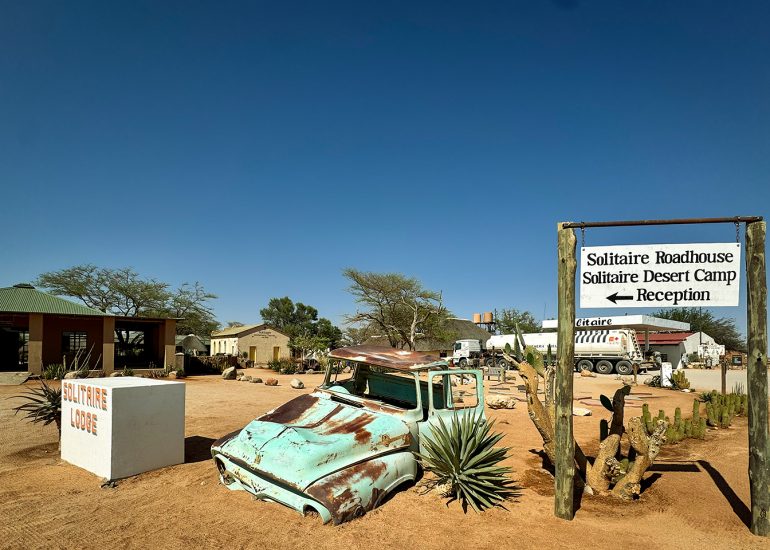
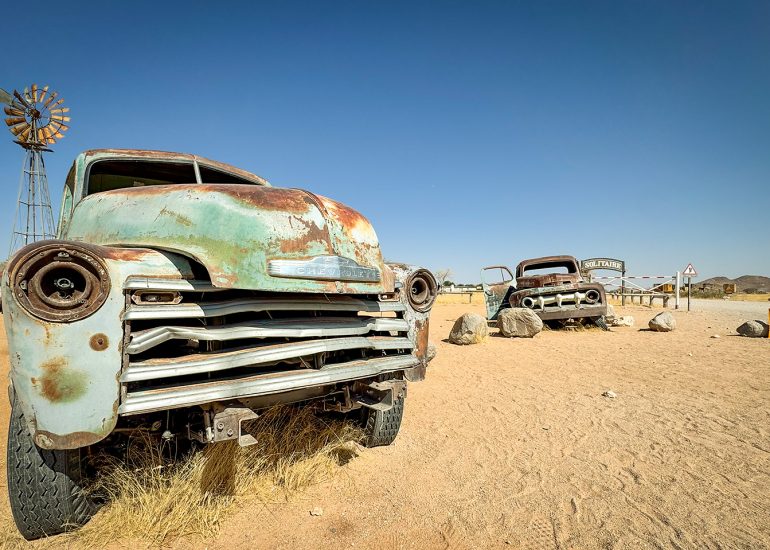
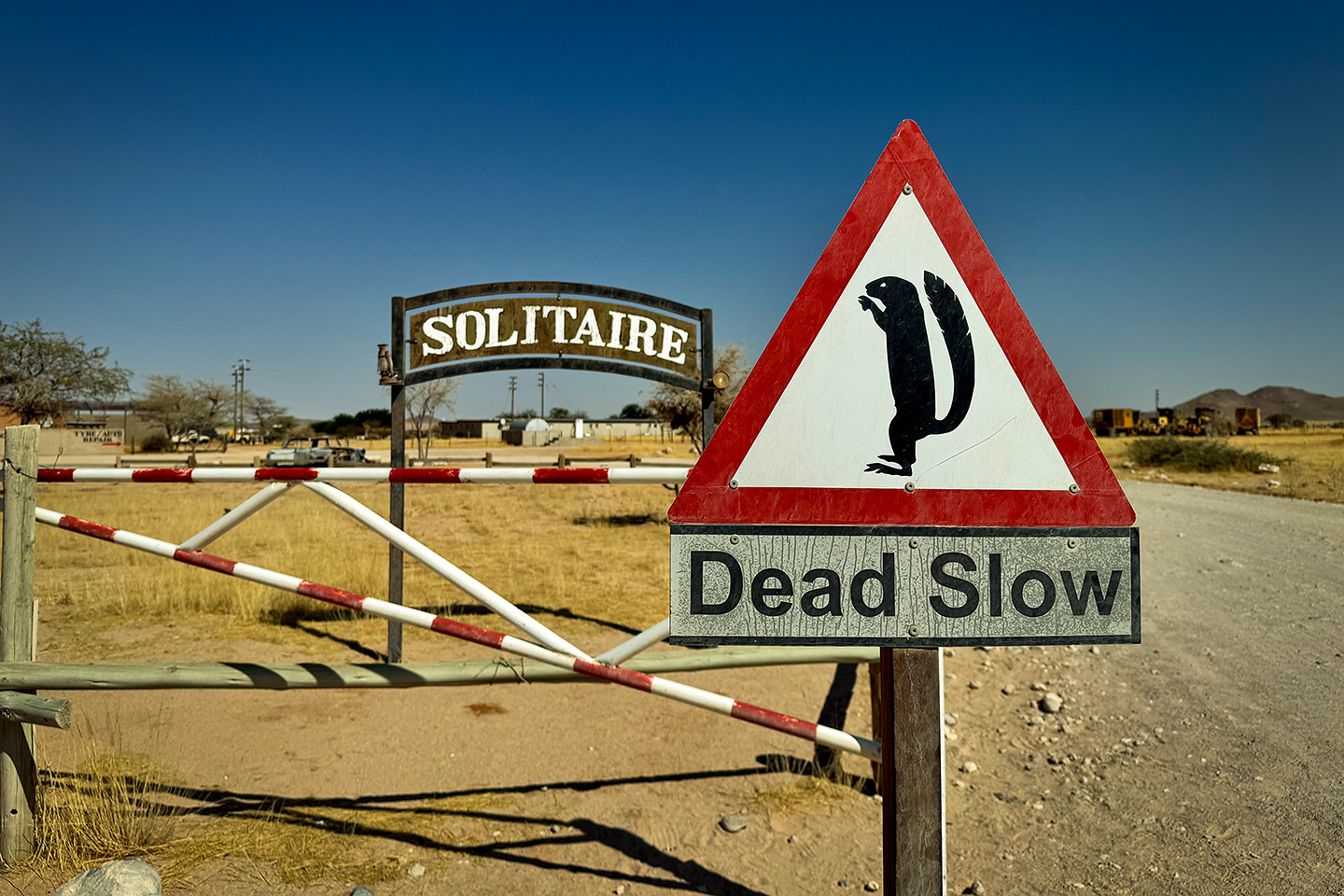
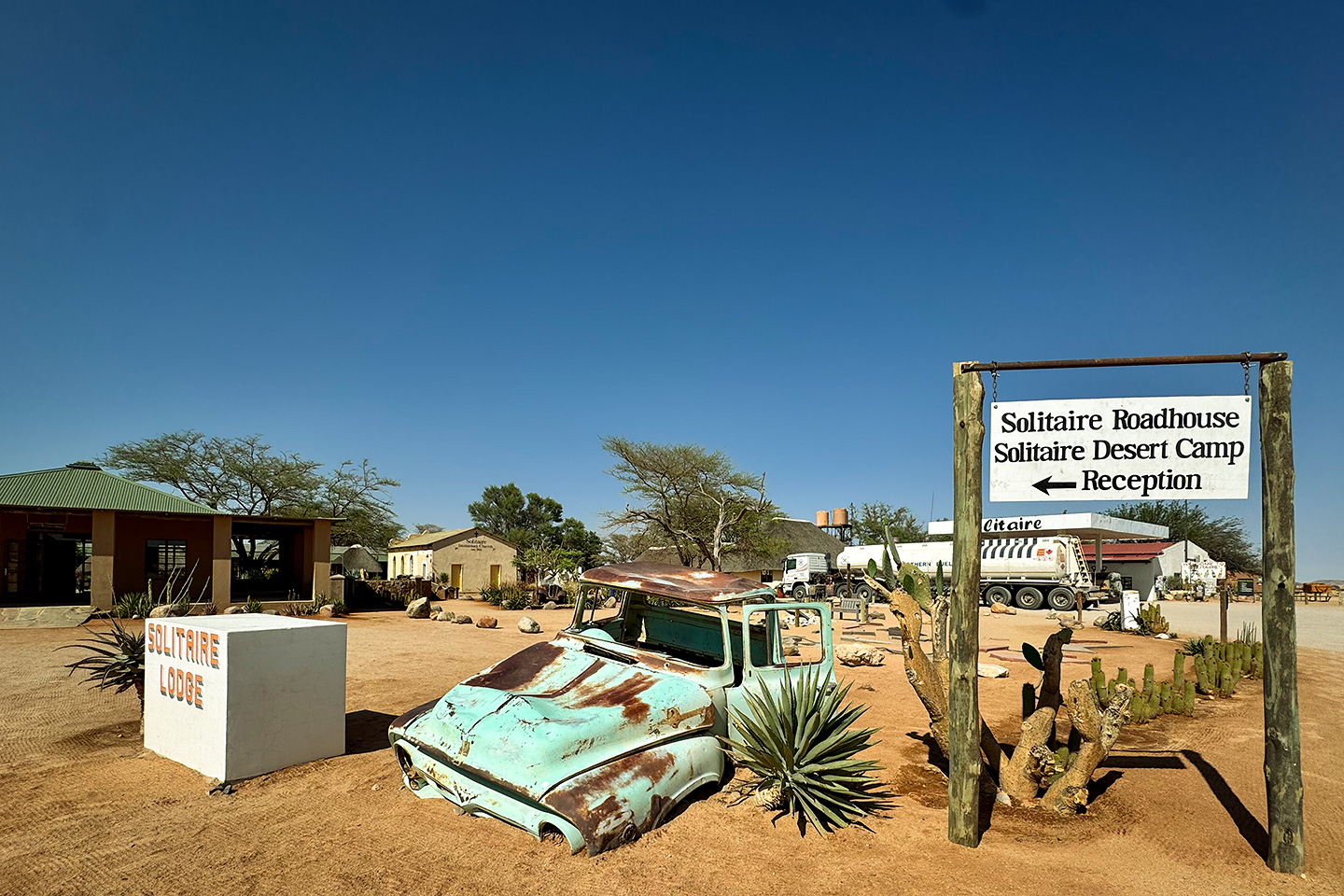
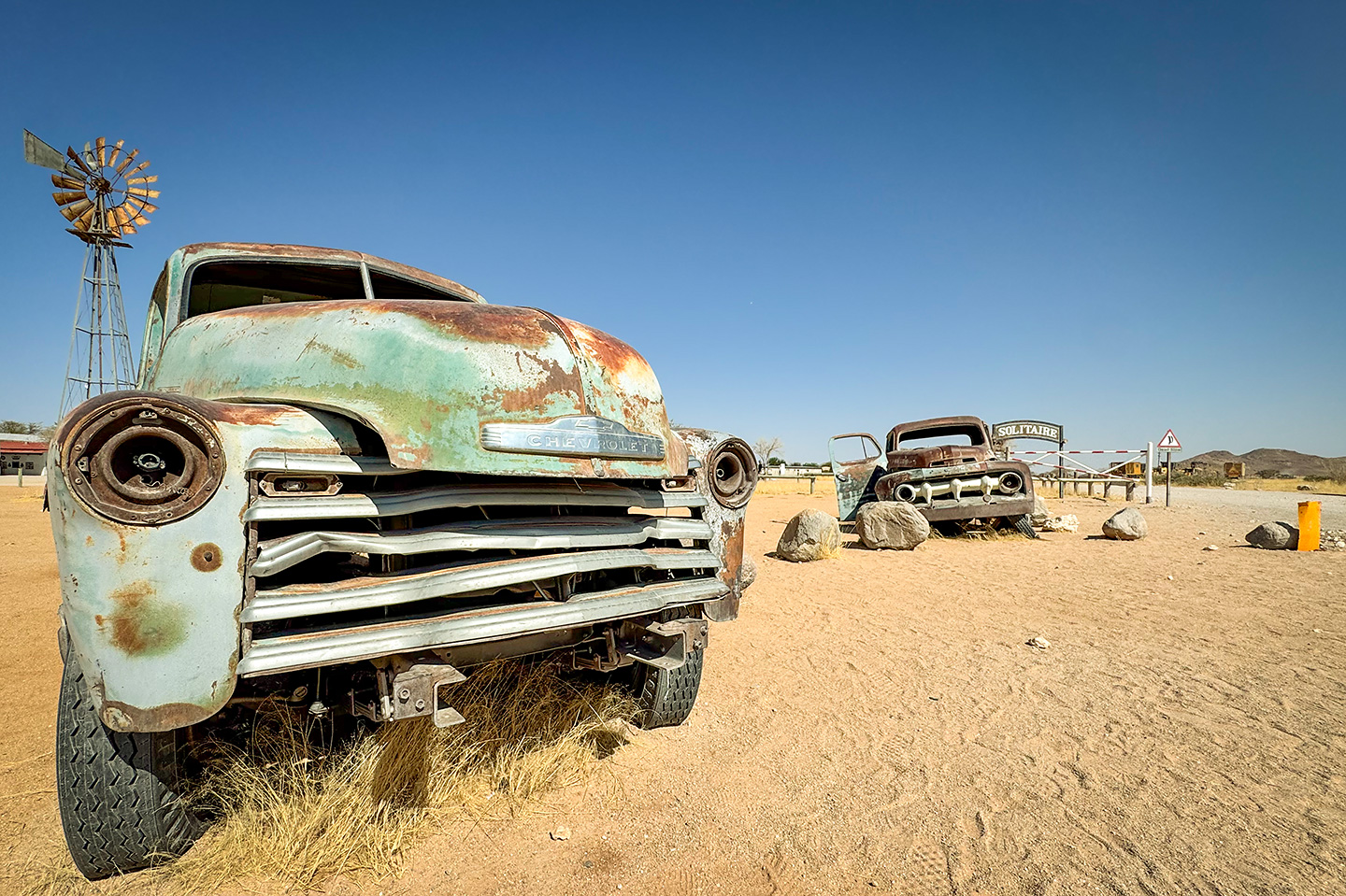
The next day begins early. After a brief stop for fuel, we head over endless gravel toward Solitaire, a tiny settlement consisting of a gas station, a café, and a collection of rusting car wrecks — a dream for photographers who appreciate the melancholic beauty of decay.
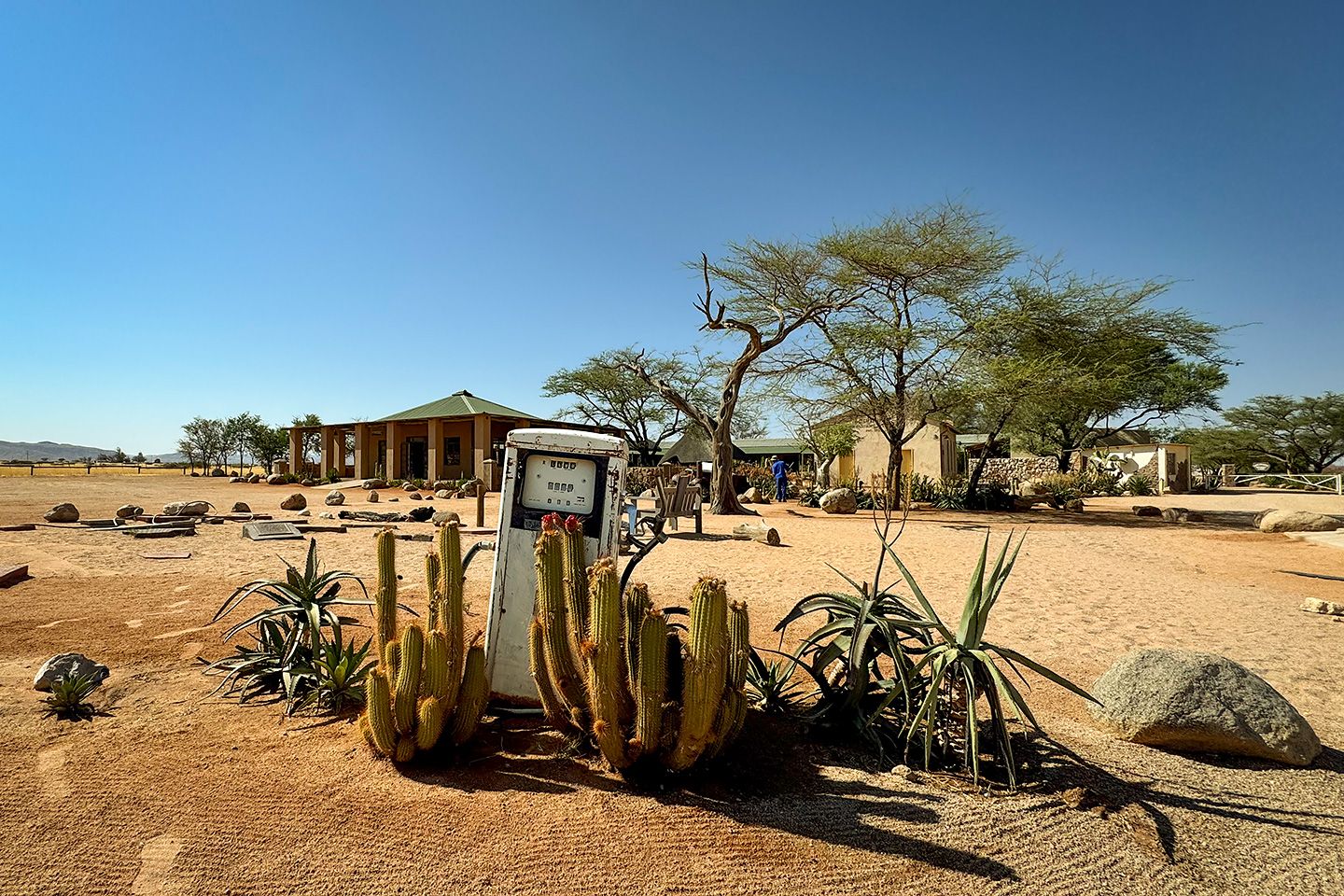
Inside the Solitaire Roadhouse, it smells of oil and dust. The baked apple pie here is world-famous — though not quite as legendary since the original baker passed away. The sun scorches the earth, yet we linger, pointing our cameras at old Chevy carcasses, rusted pumps, faded signage. Nothing feels staged; everything is authentic.
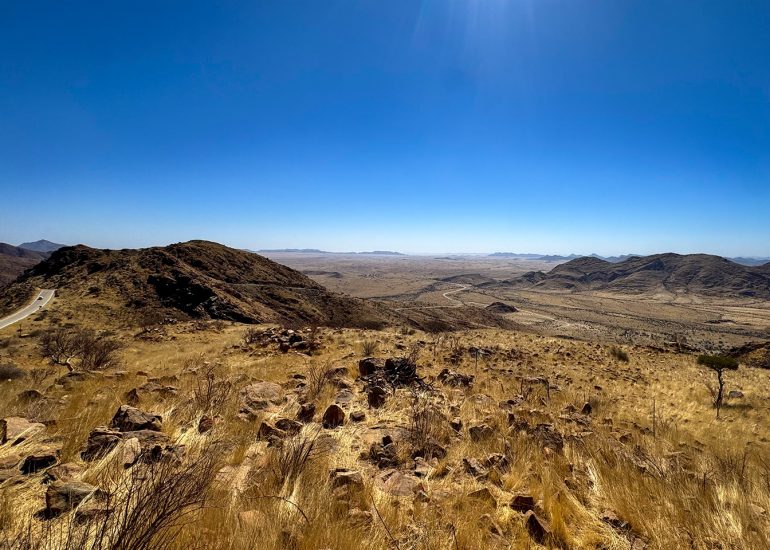
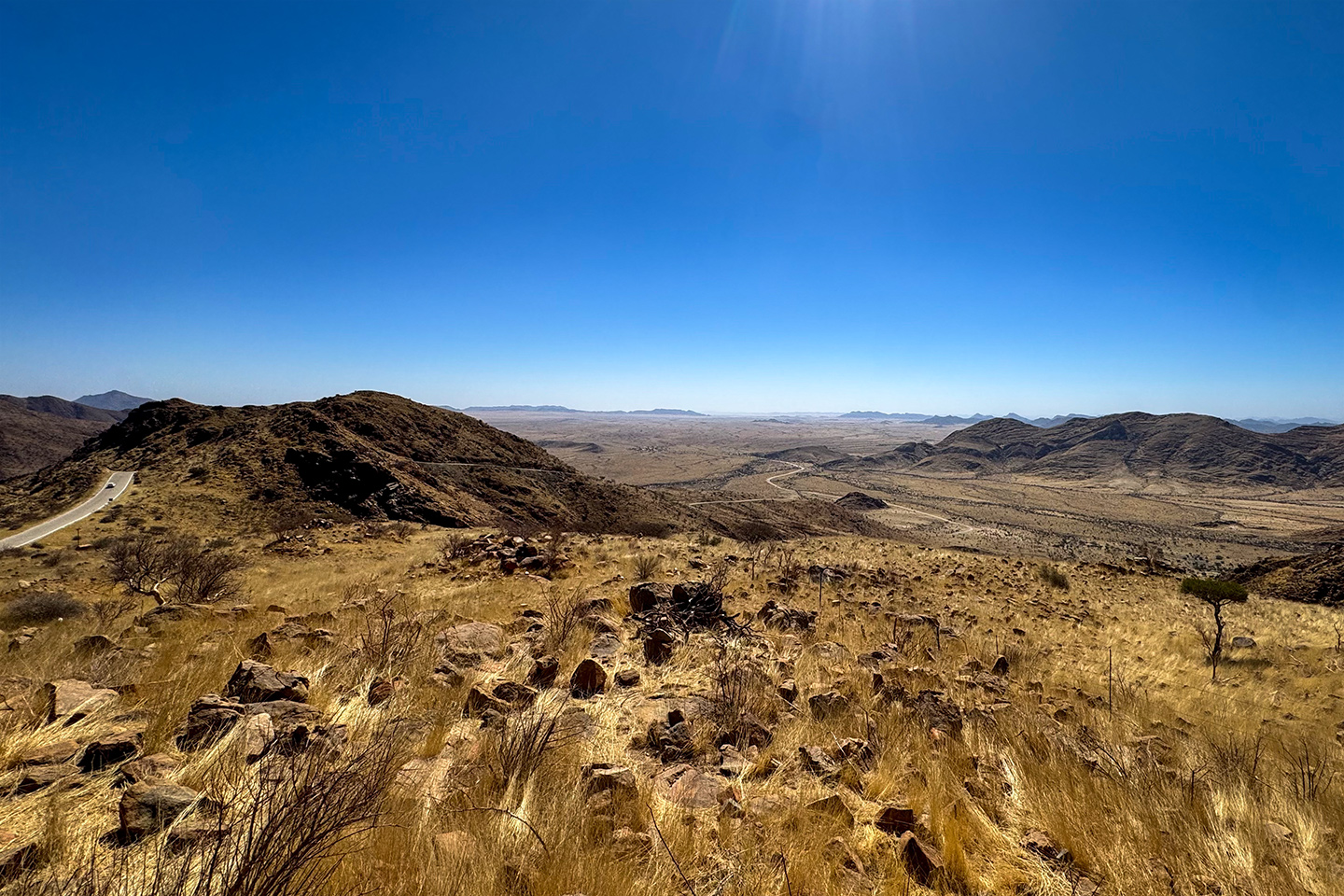
From Solitaire, the road continues north, over mountain passes and dry riverbeds, toward the Atlantic. After four and a half hours, the signs of civilization return: power lines, a breath of fog, and then suddenly — the ocean.
Swakopmund — Between Desert and Sea
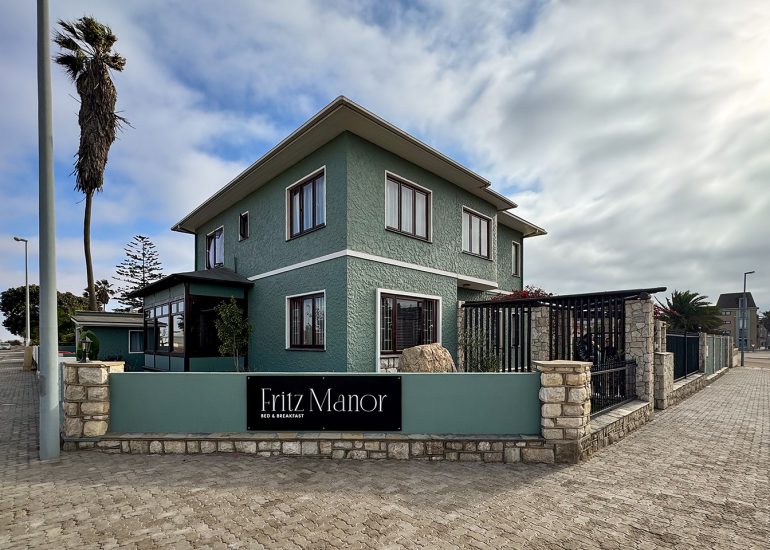
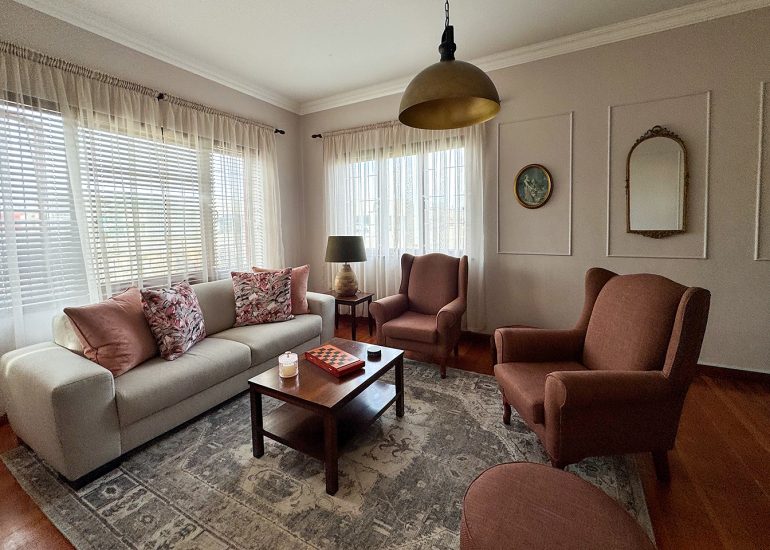
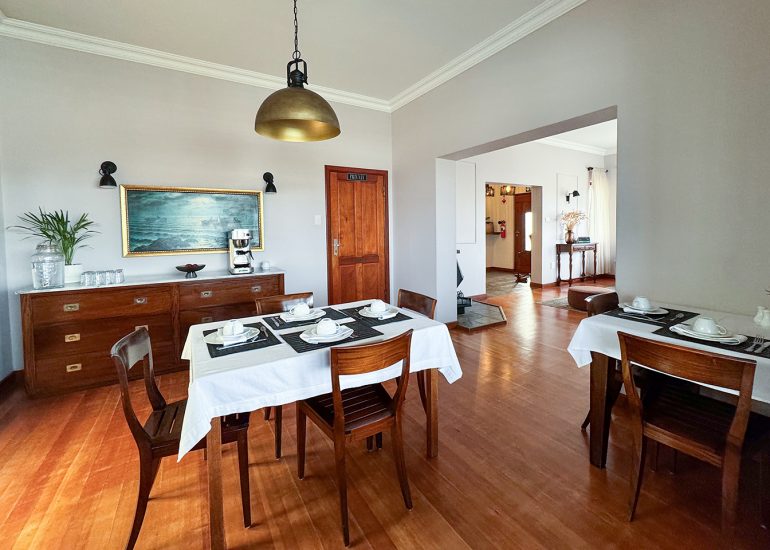
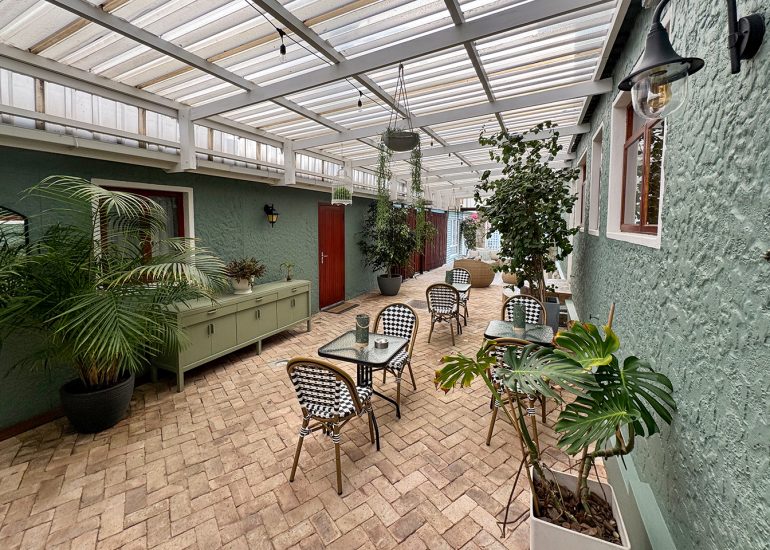
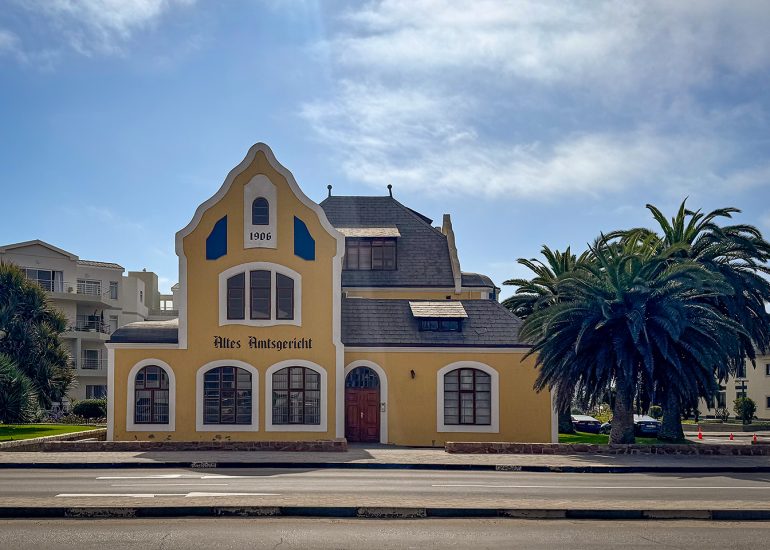
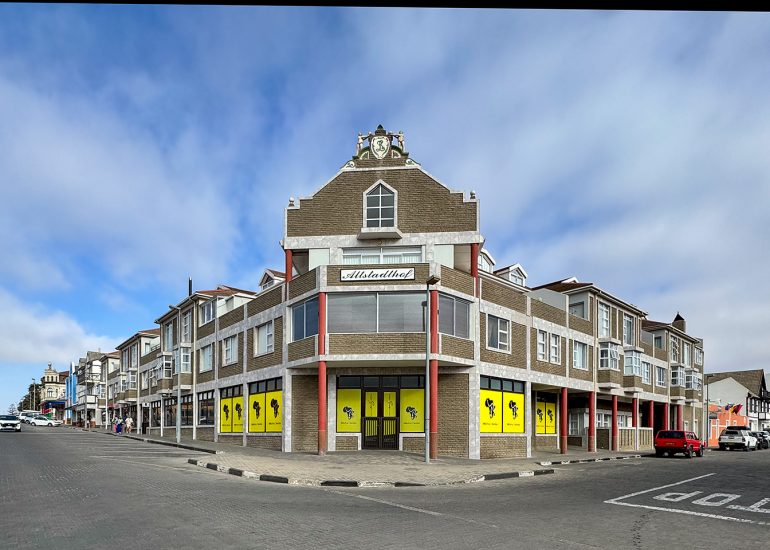
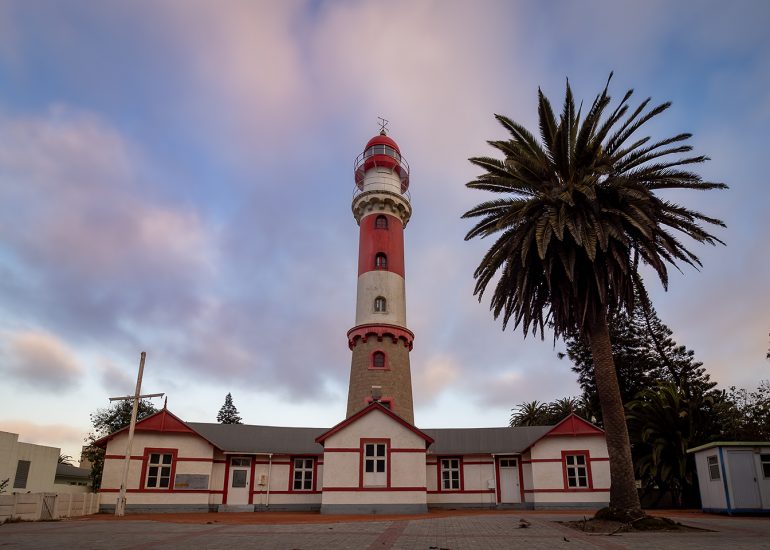
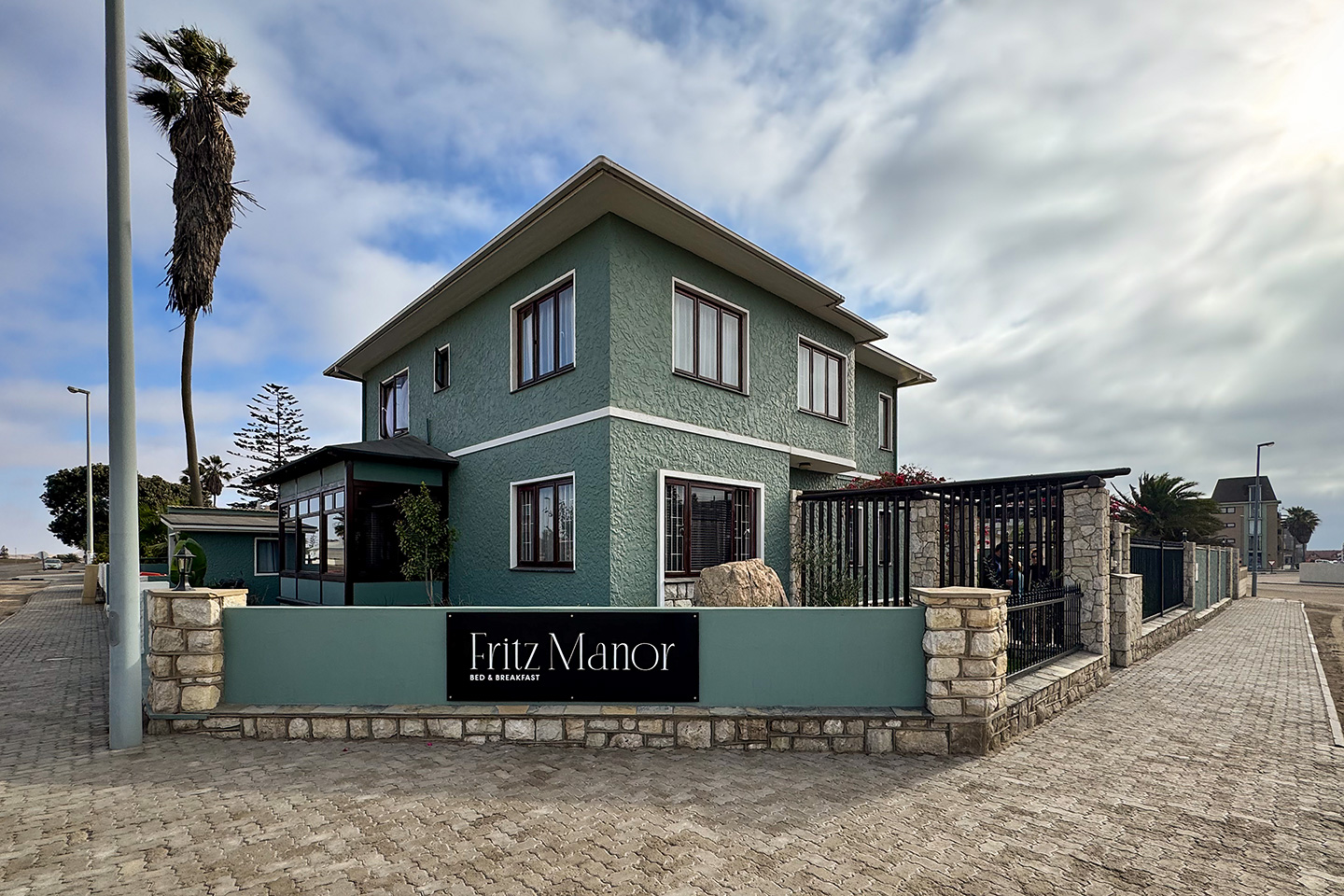
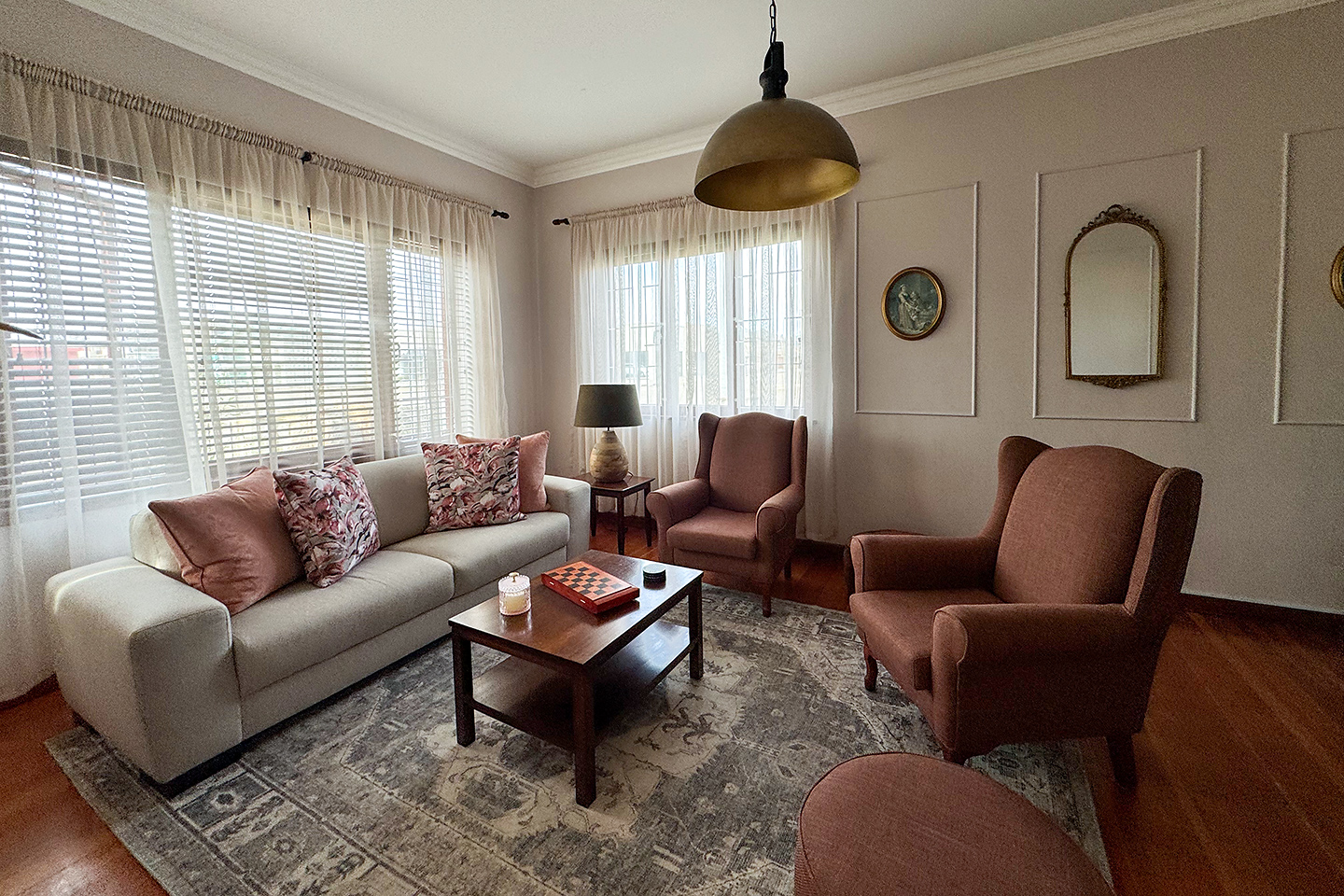
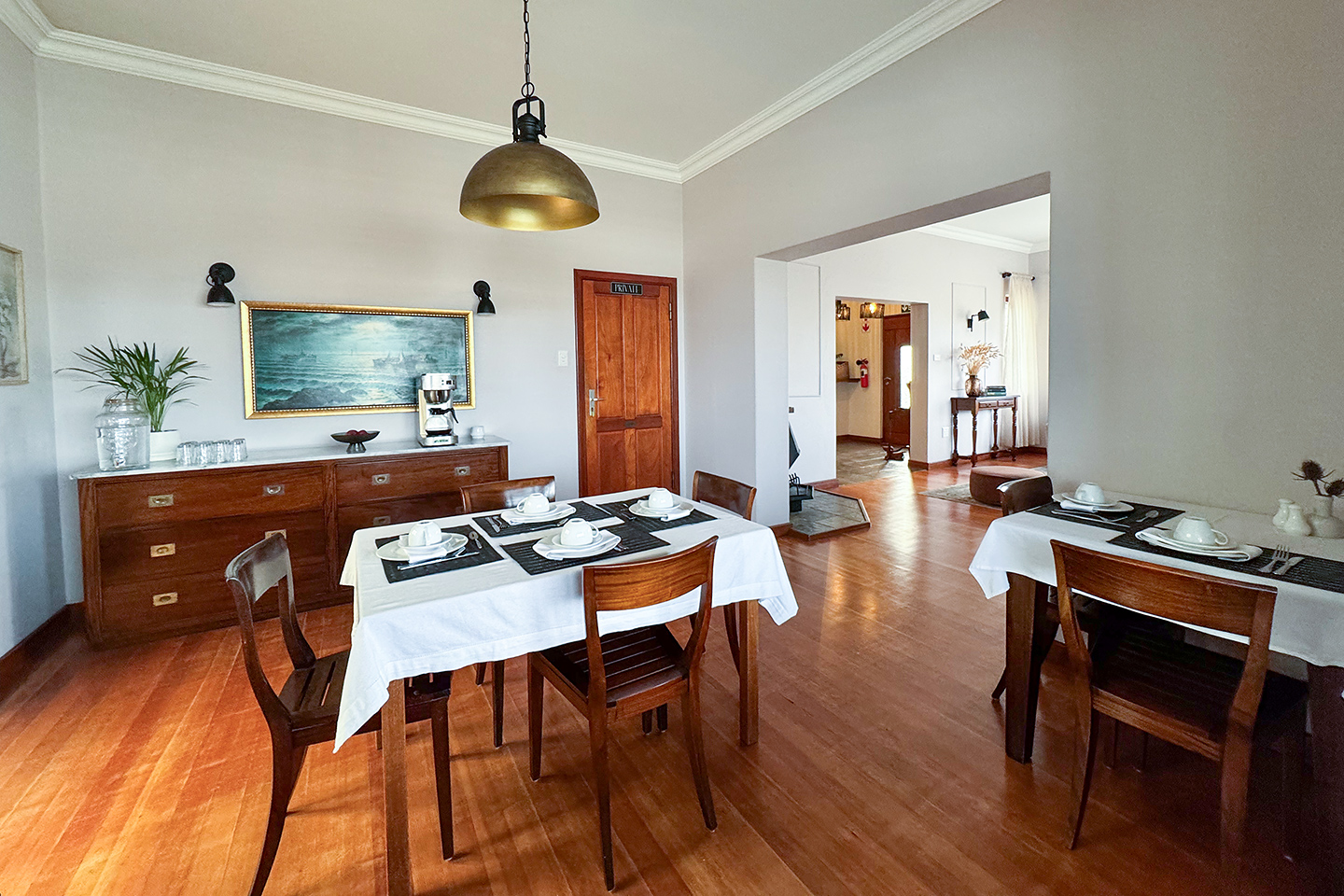
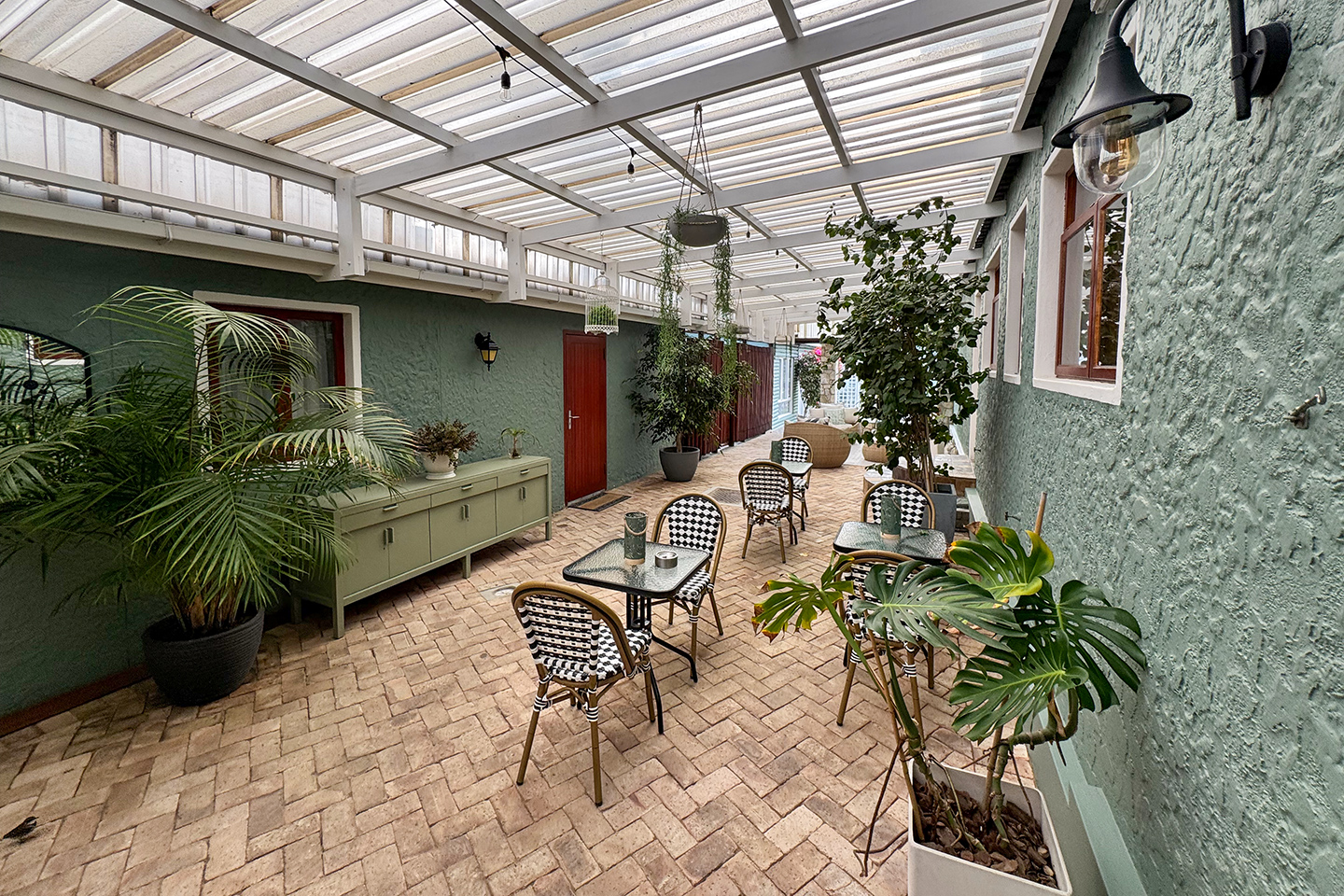
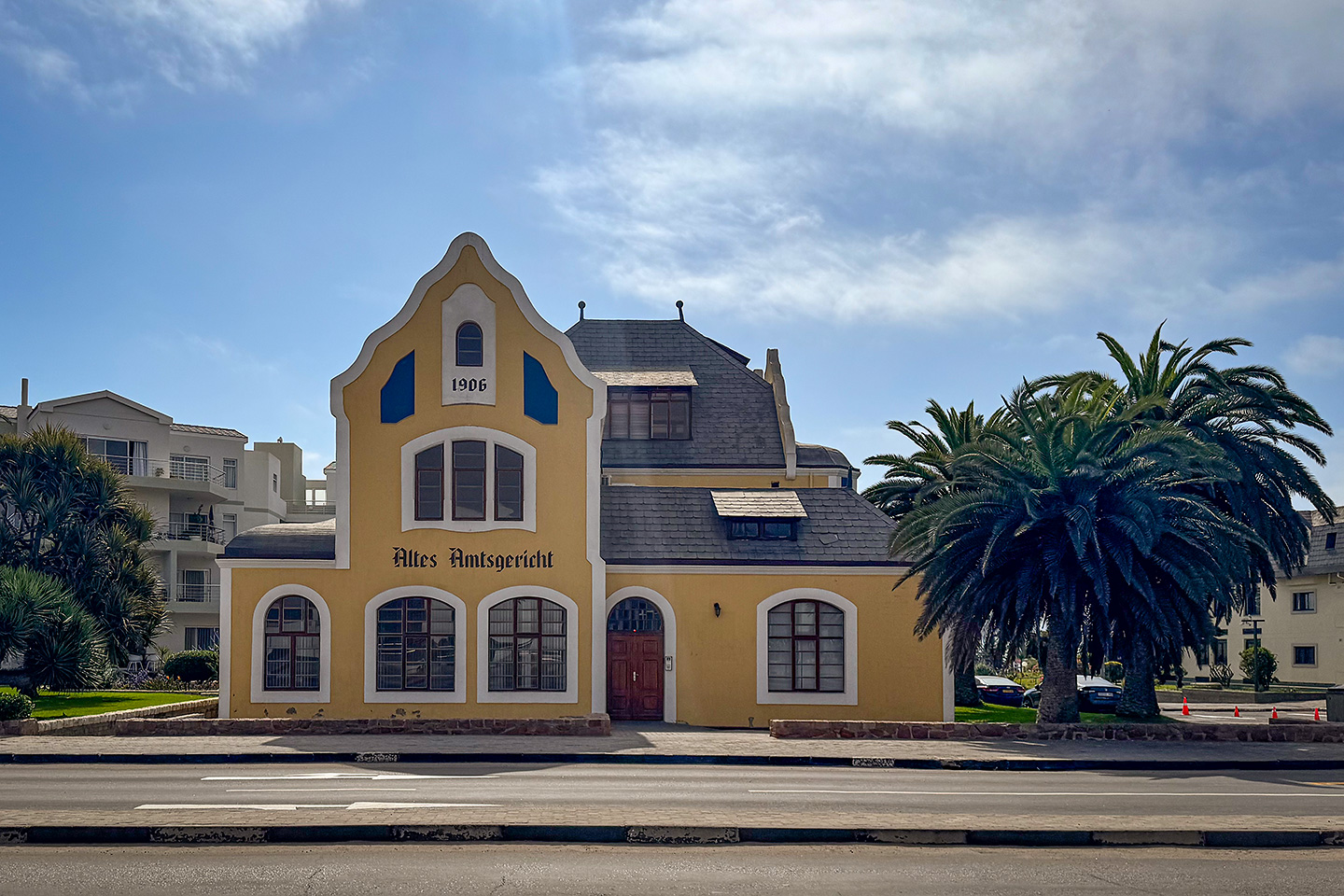
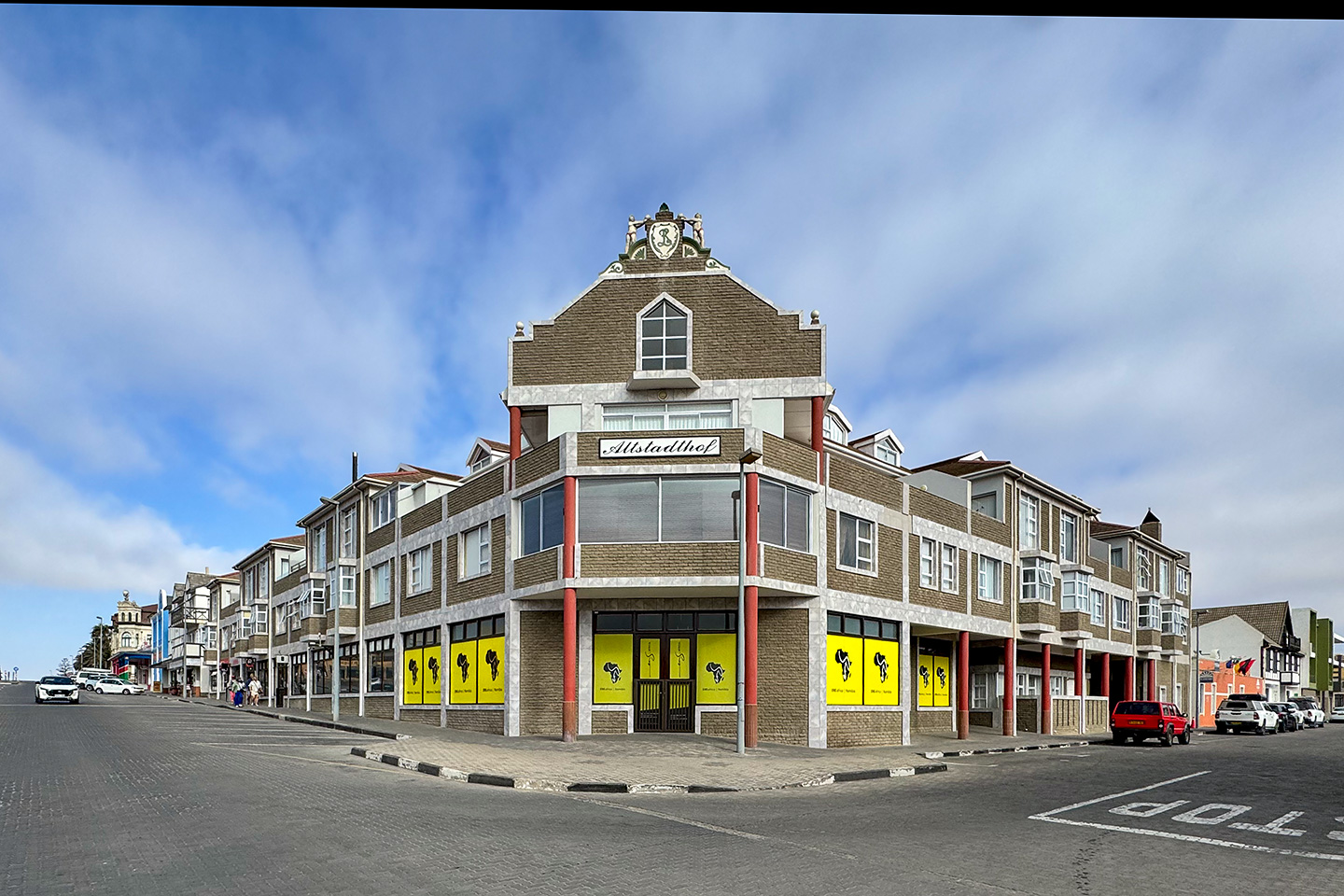
Swakopmund appears like a mirage: half-timbered buildings, palms, the smell of salt. Our destination is the elegant and tranquil Fritz Manor Bed and Breakfast in the city center, with high ceilings, whitewashed walls, and a quiet courtyard where the light reflects softly.
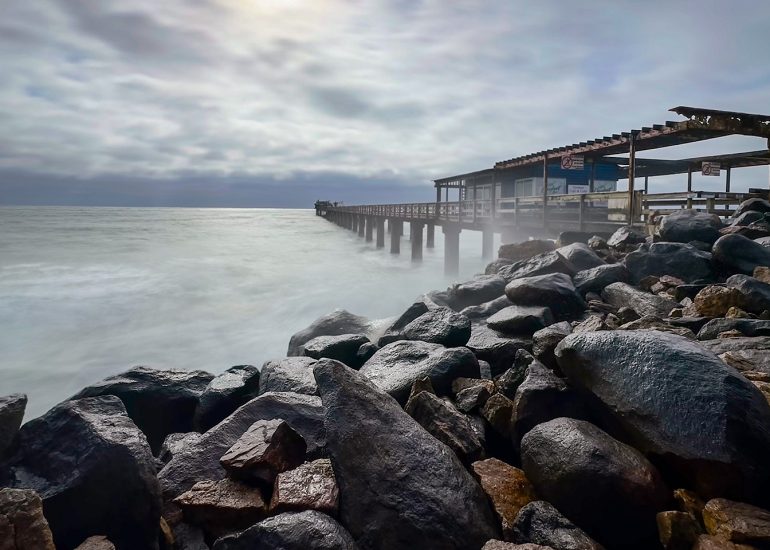
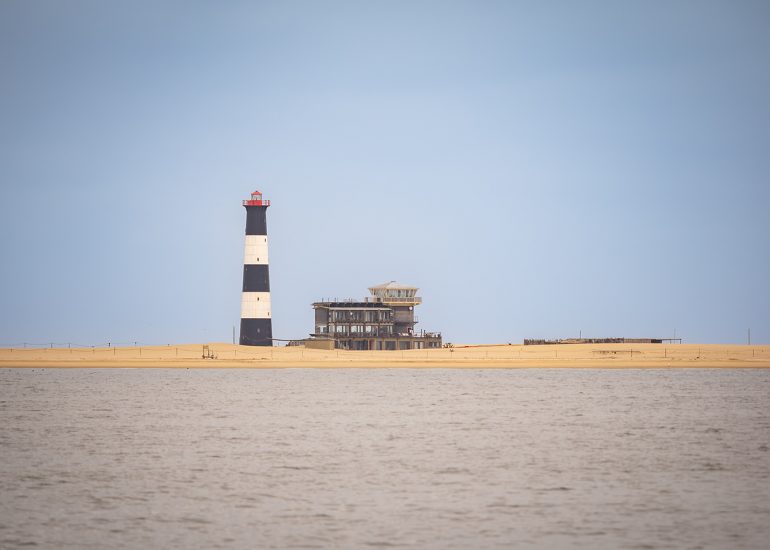
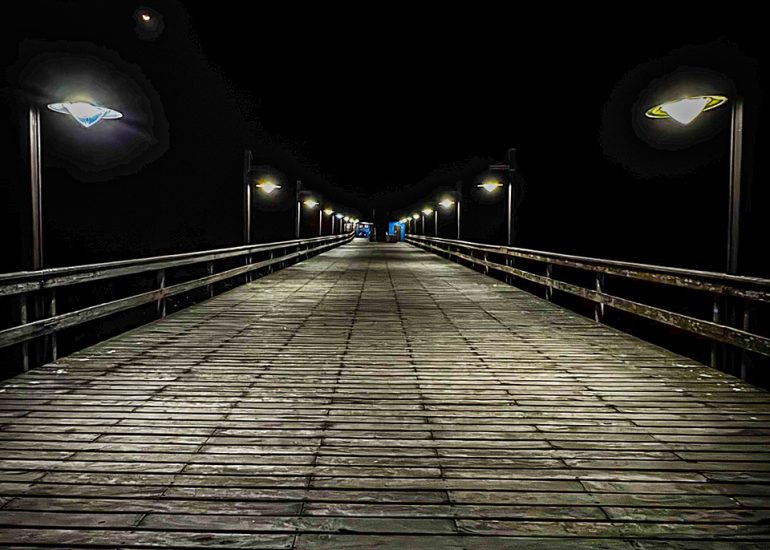
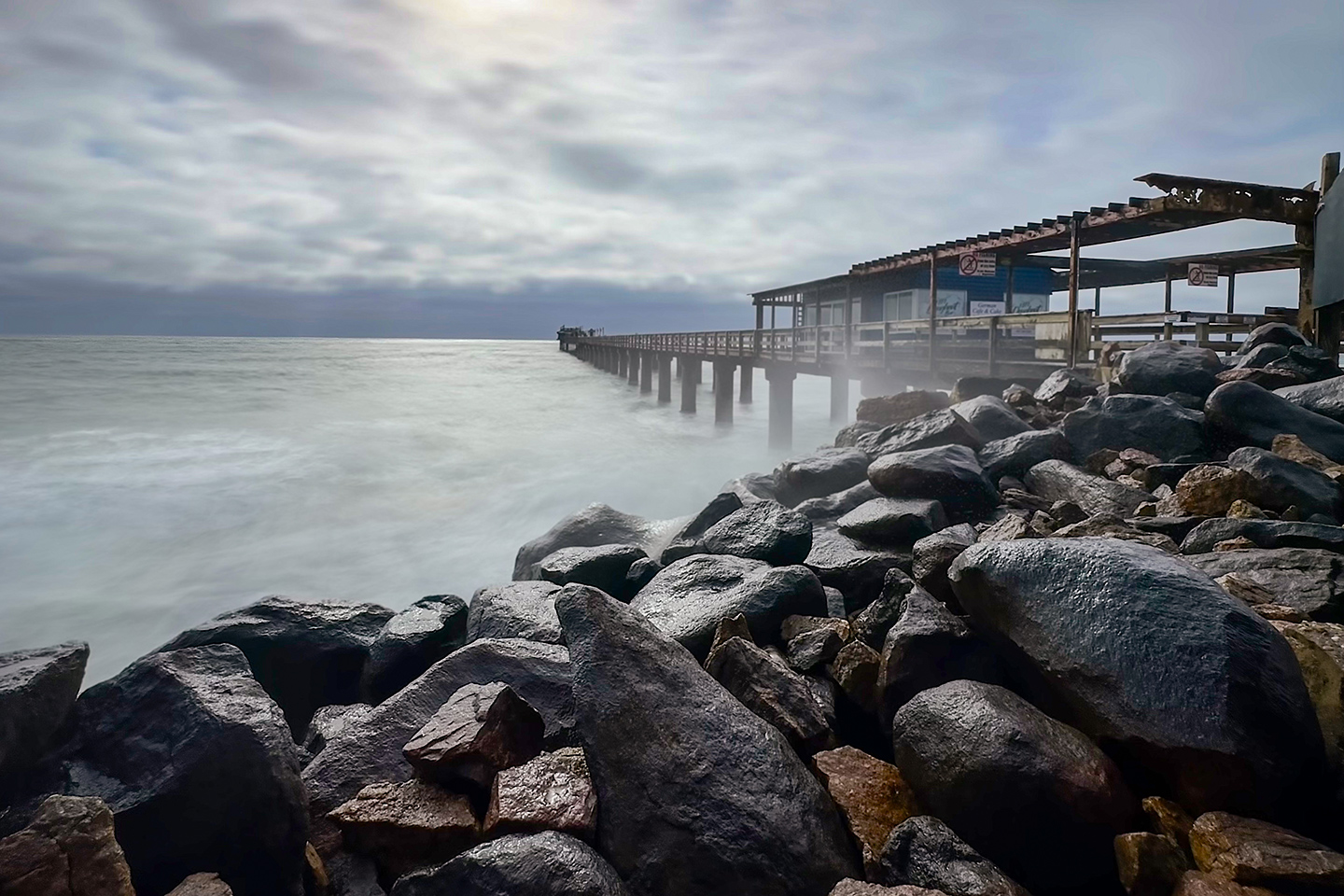
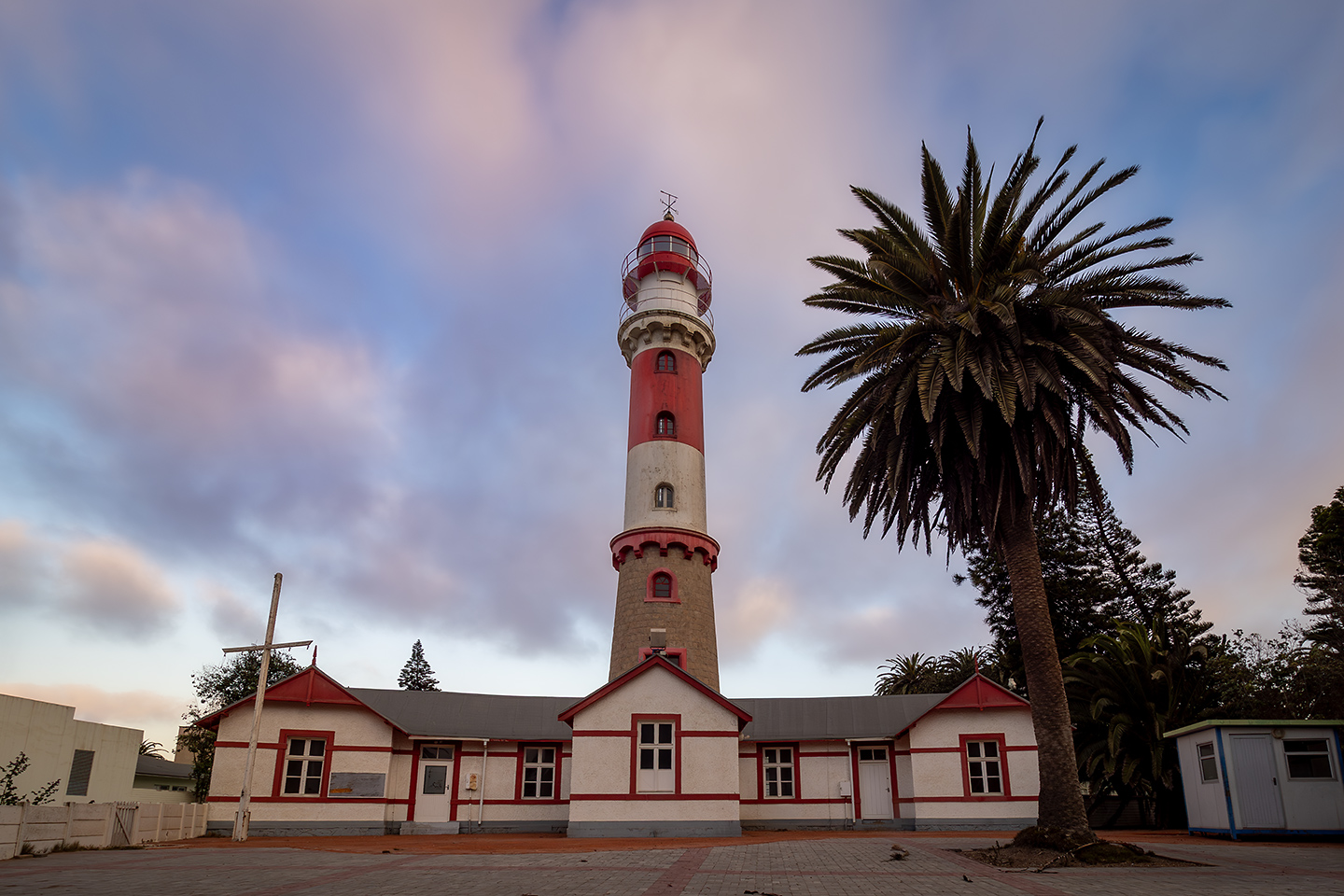
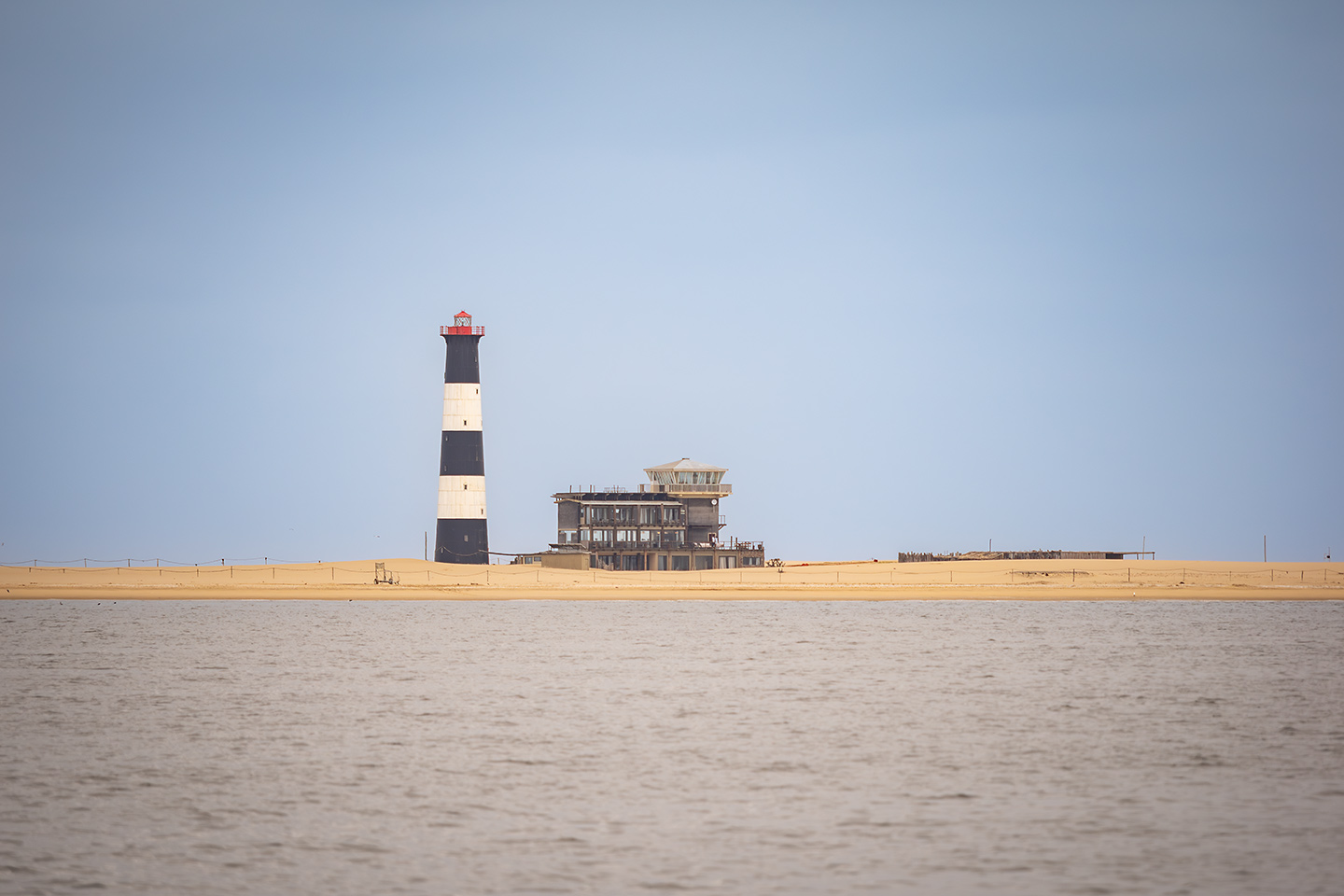
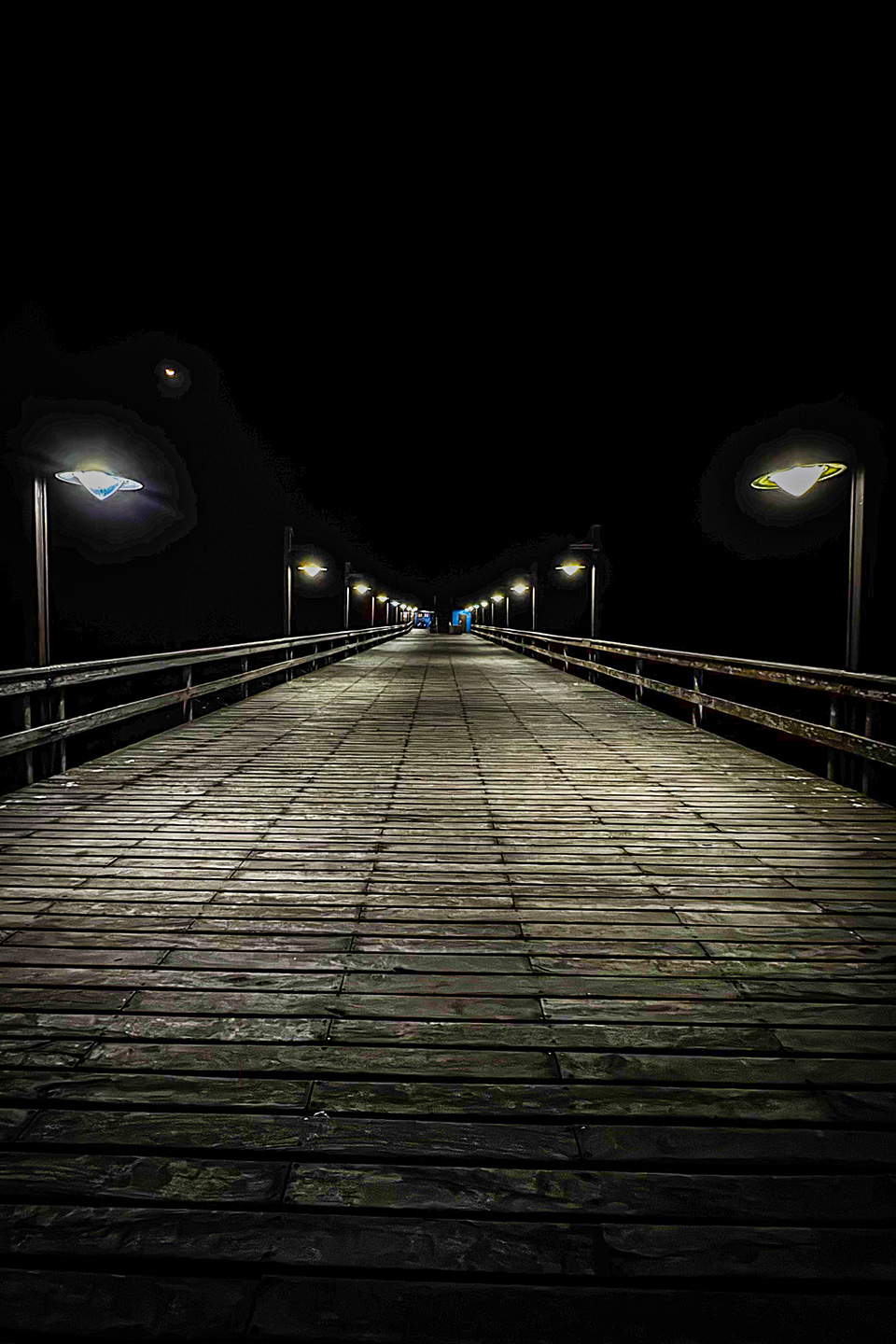
An afternoon walk through town: cafés, small shops, the pier, the sea. A slice of cake at Café Anton (or the excellent meatloaf wrapped in pastry), then a walk across the pier toward the lighthouse. Dinner at Ocean Cellar— a solid, friendly seafood spot with ocean views. Not spectacular, but honest and delicious.
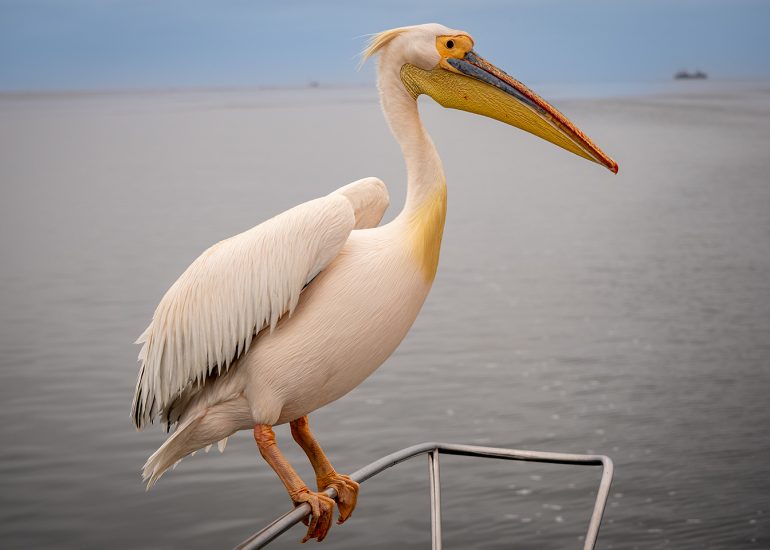
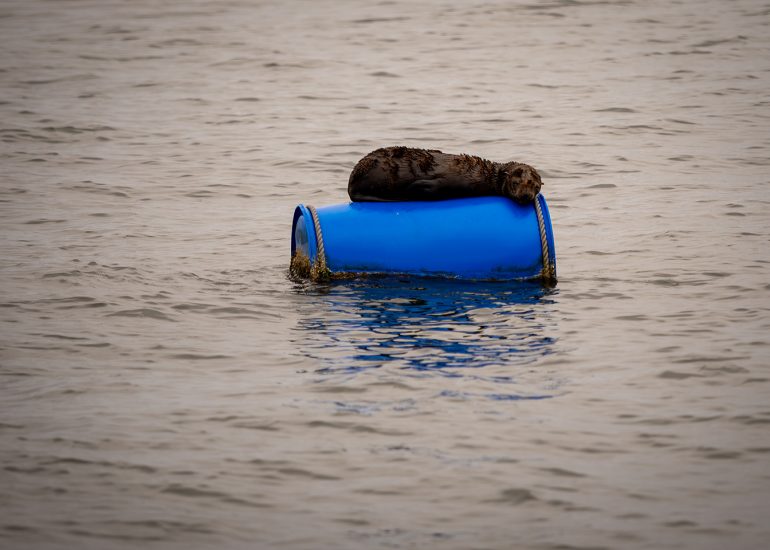
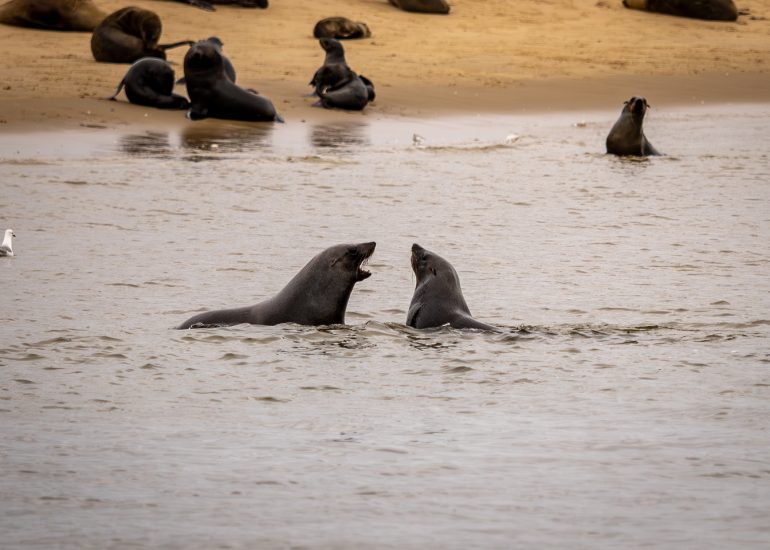
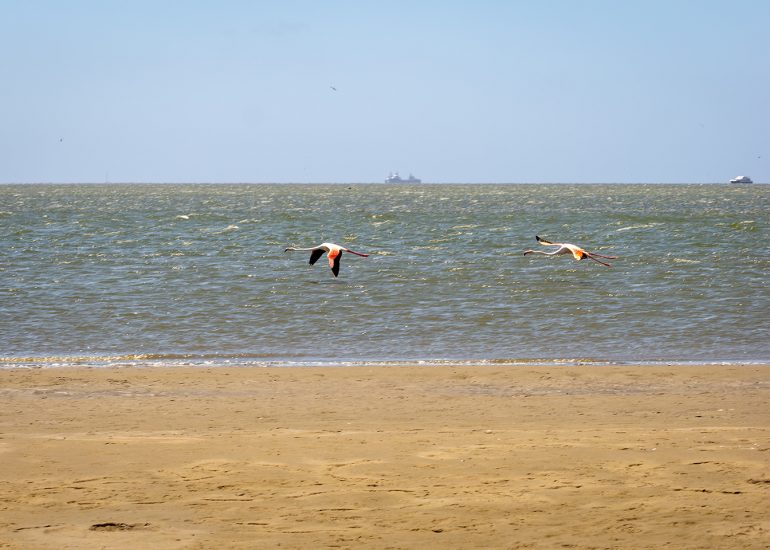
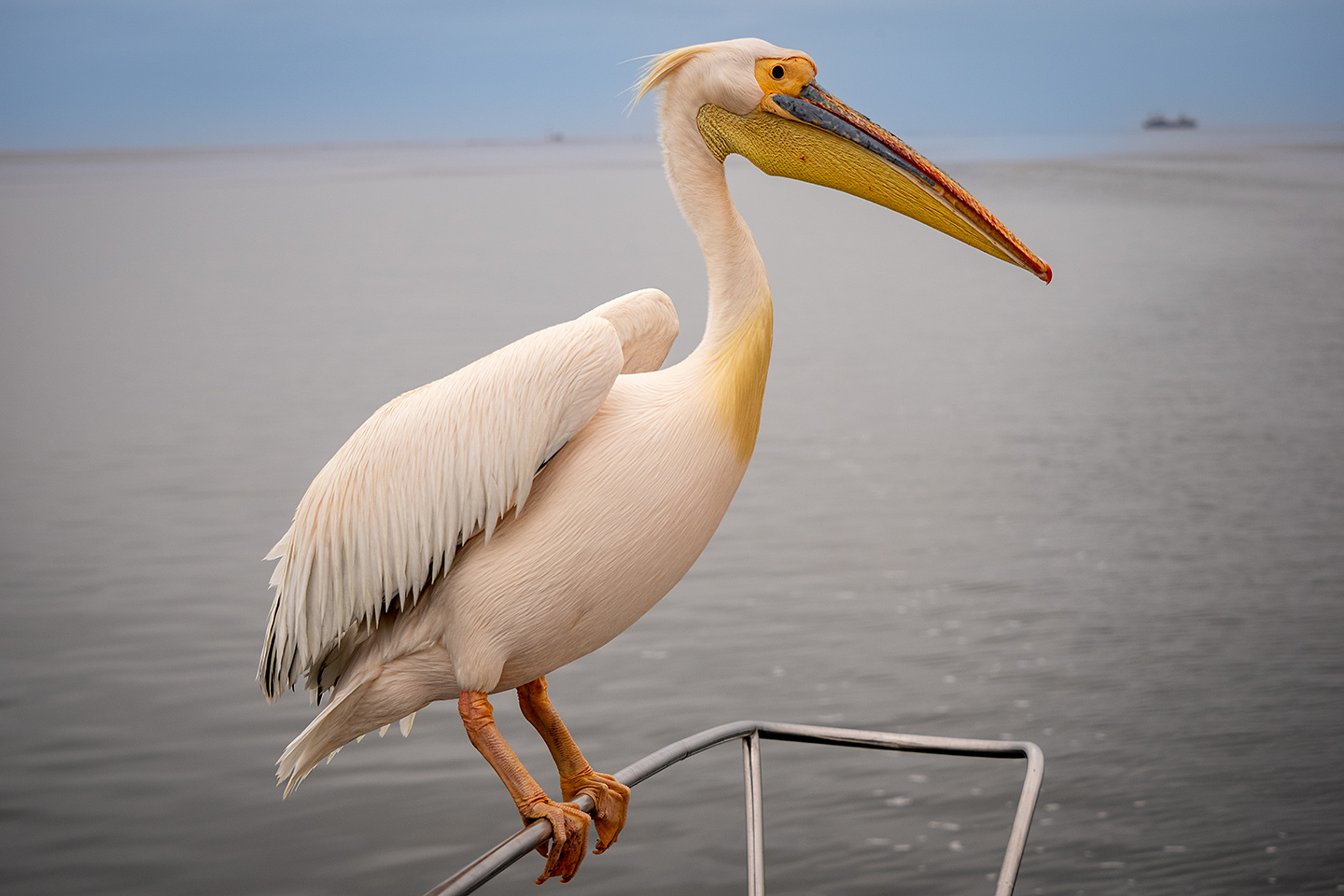
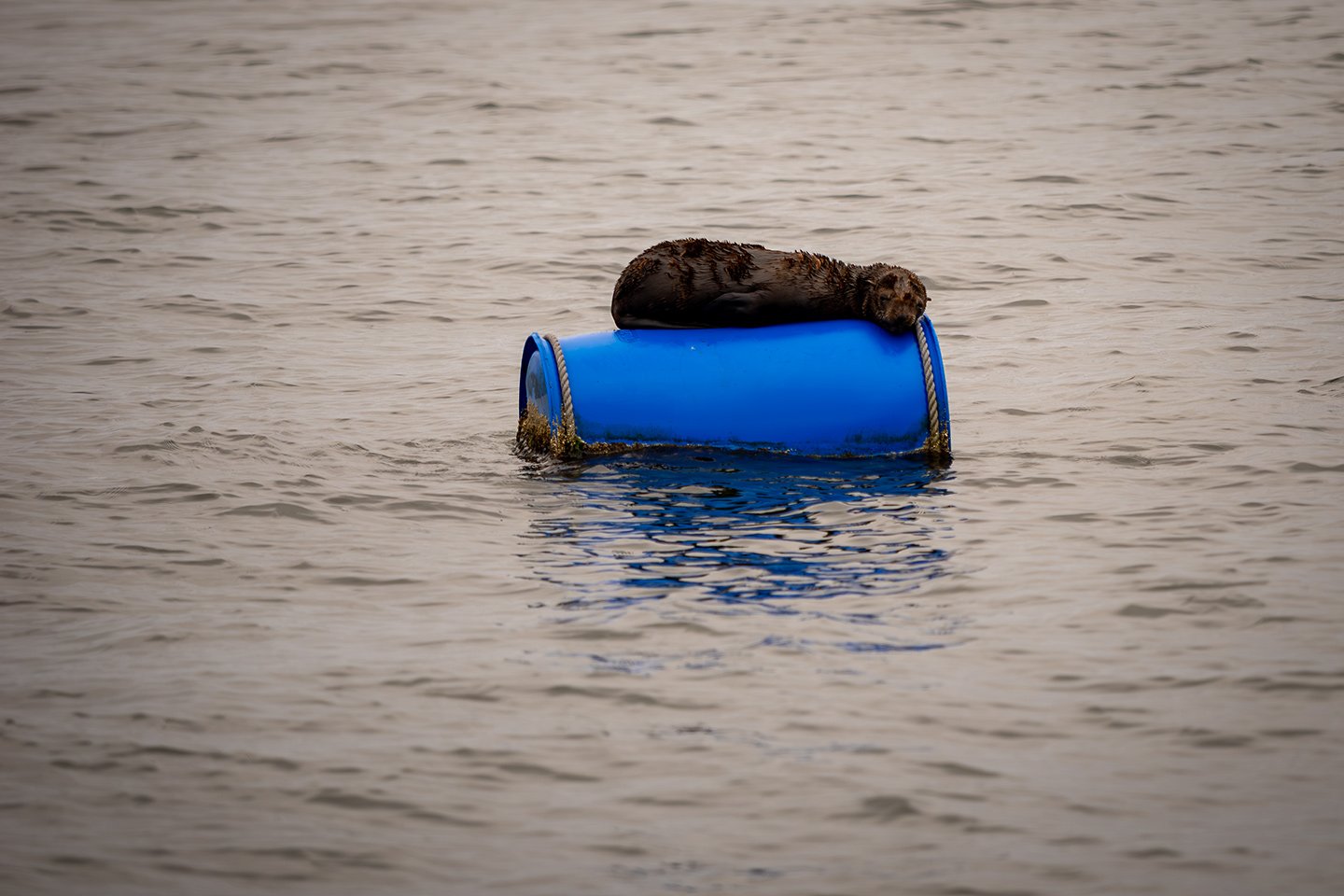
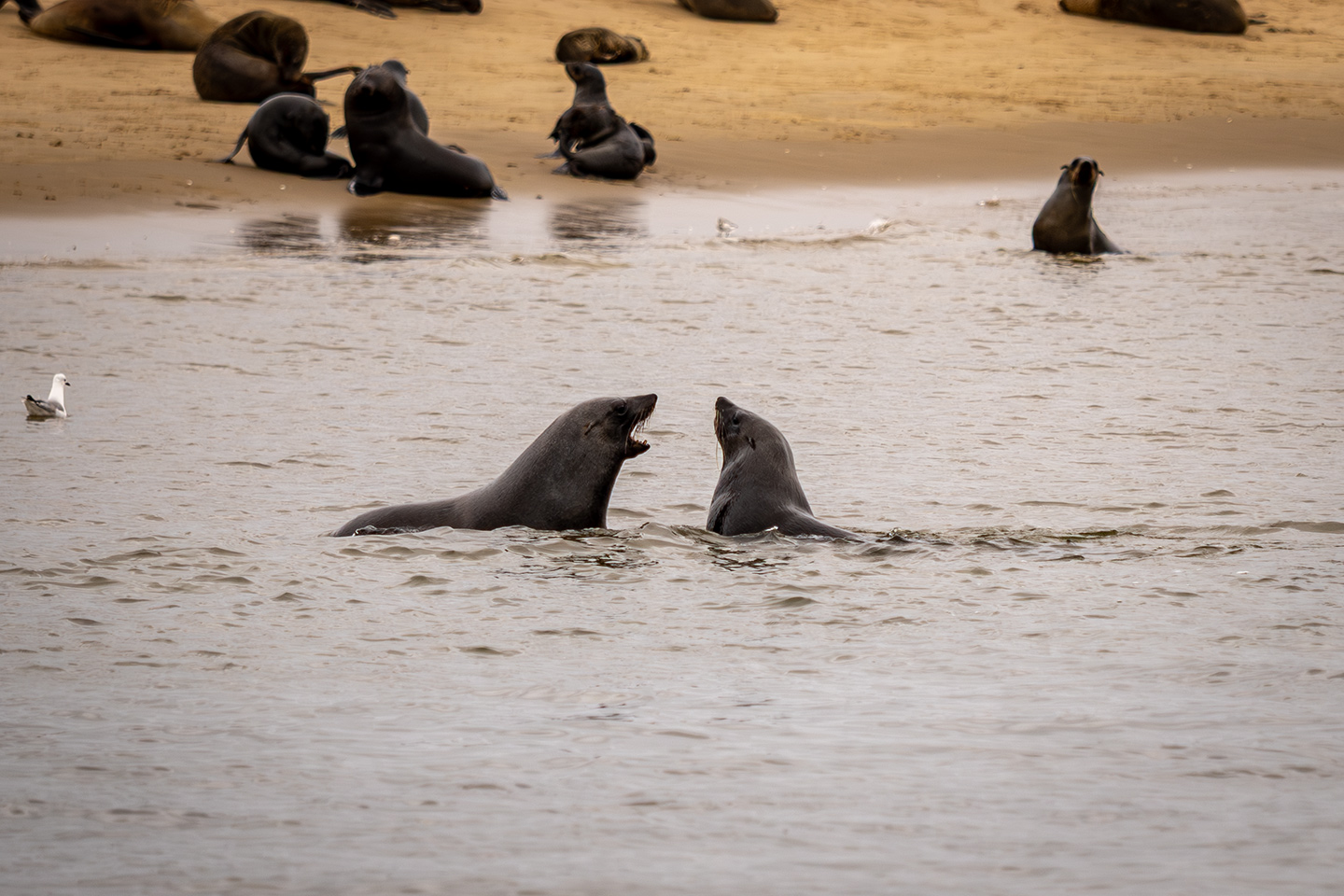
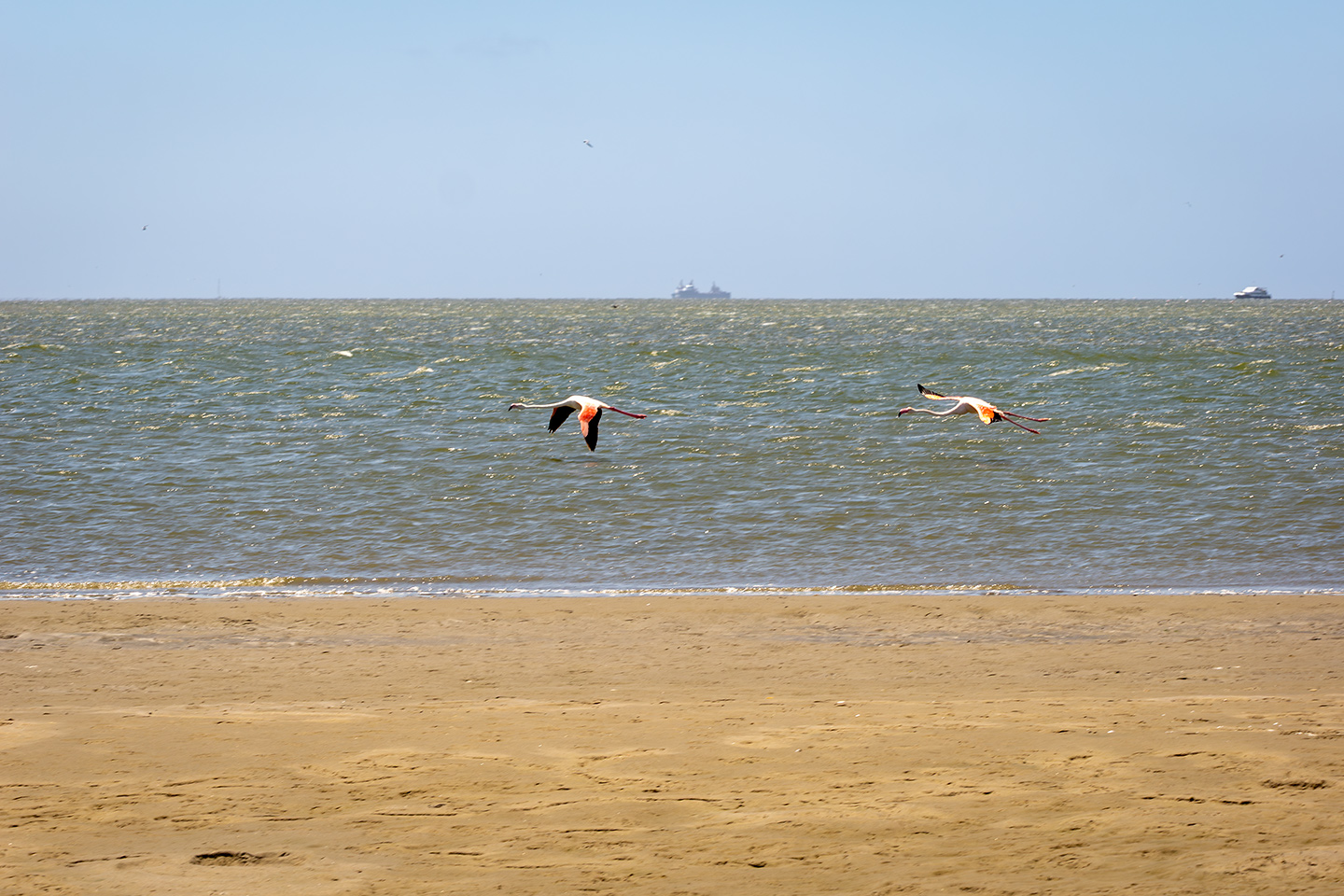
The next day belongs to the water. Early morning, we drive to Walvis Bay, where catamarans depart for wildlife tours. We choose Catamaran Charter, known for respectful wildlife encounters. On the boat: seals and pelicans, more seals in the distance, dolphins, even a humpback whale — and hundreds of flamingos in the shallow waters. The wind is cool, the light milky — perfect for telephoto shots.
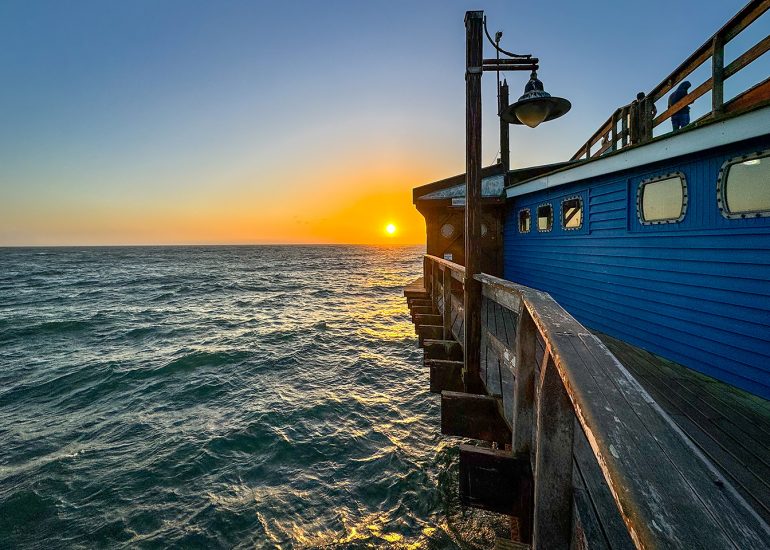
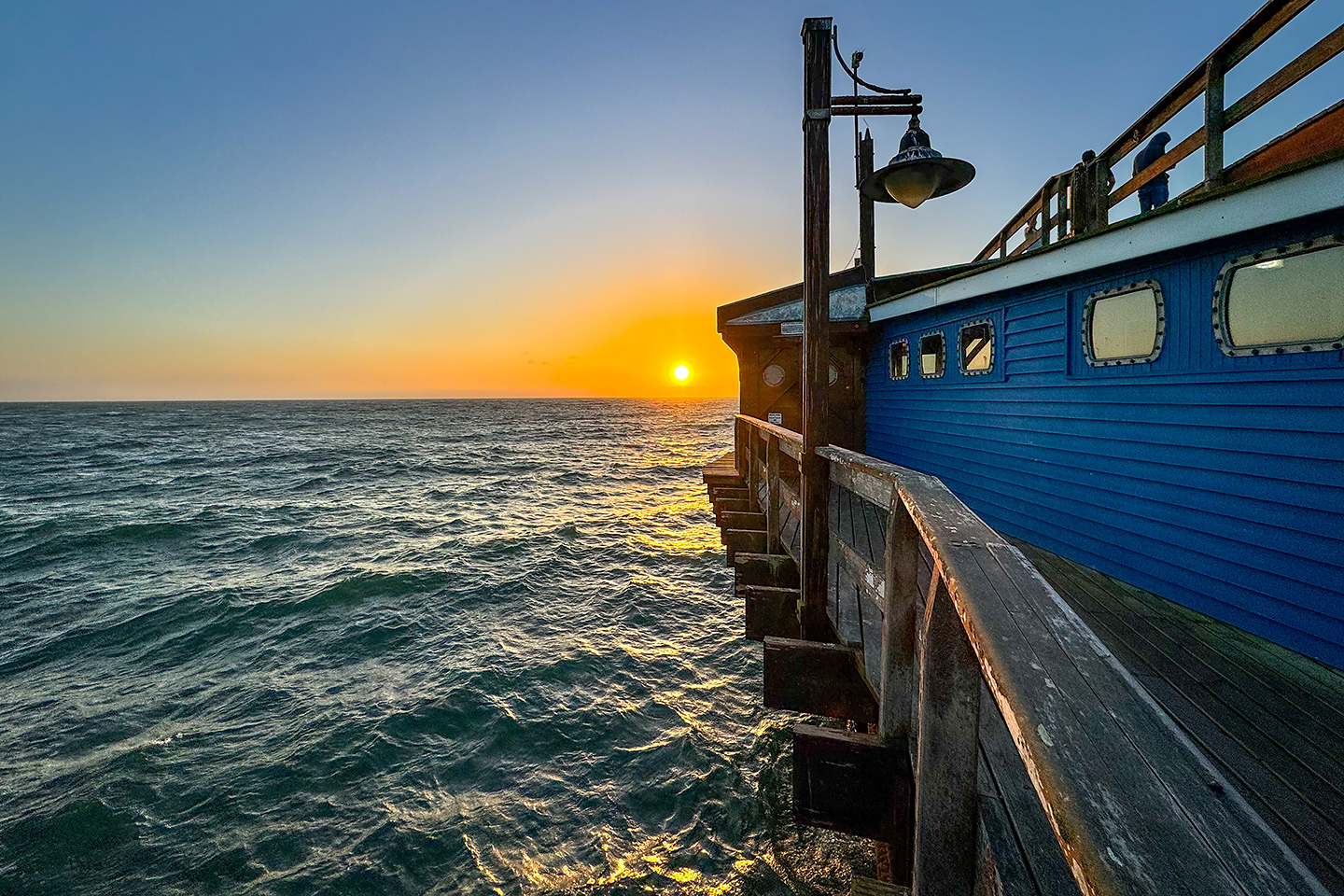
In the afternoon, we stroll along the Walvis Bay promenade, then stop at a supermarket to stock up for the coming days. Back in Swakopmund, we dine at Jetty 1905, directly above the ocean where waves crash beneath the wooden planks. The sunset is dramatic — orange, violet, gray. The walk home is quiet, accompanied by the roar of the Atlantic and the feeling of being at the edge of the world.
From the Atlantic Into Damaraland — Color, Rock, Distance
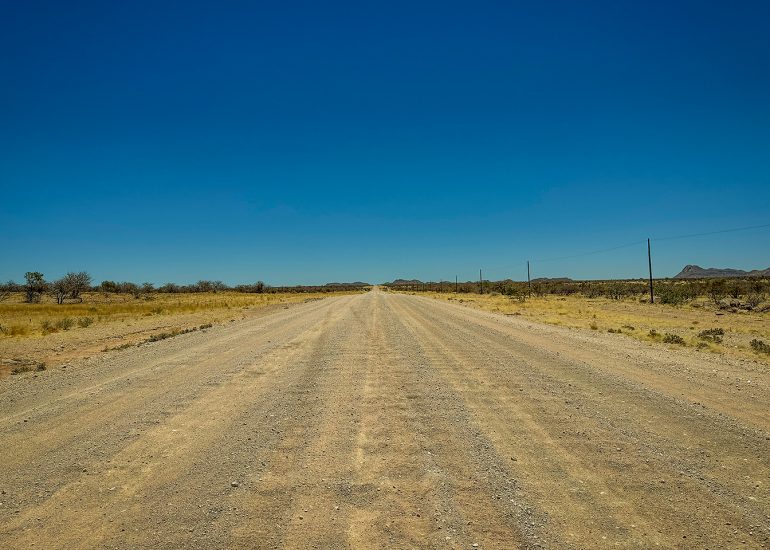
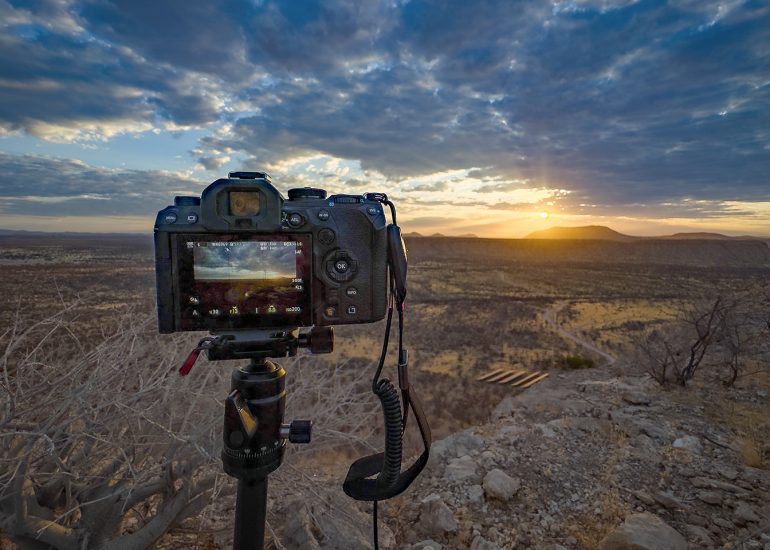
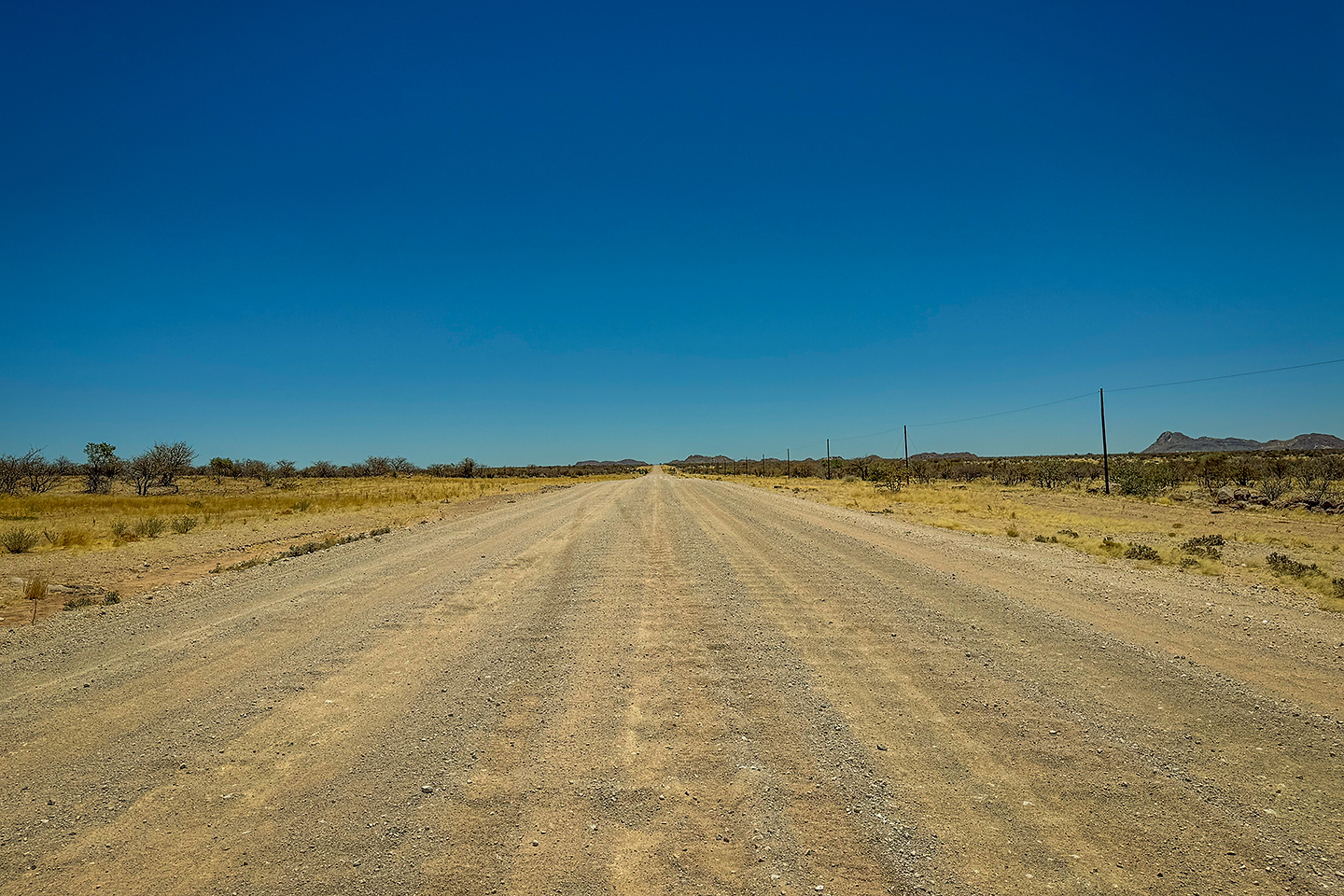
After our days at the coast, the road turns inland once again. About 150 kilometers outside Swakopmund, the asphalt ends and the familiar rattle of gravel begins. Slowly, everything with screws starts to shake — the pickup’s cover, even the screws of my tripod on the truck bed. The landscape changes once more: dunes give way to gray mountains, the sun relentless, heat shimmering over the valleys.
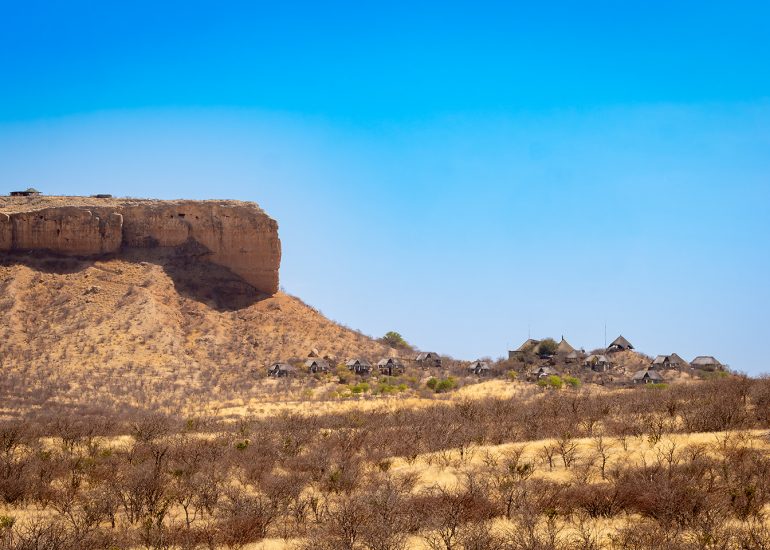
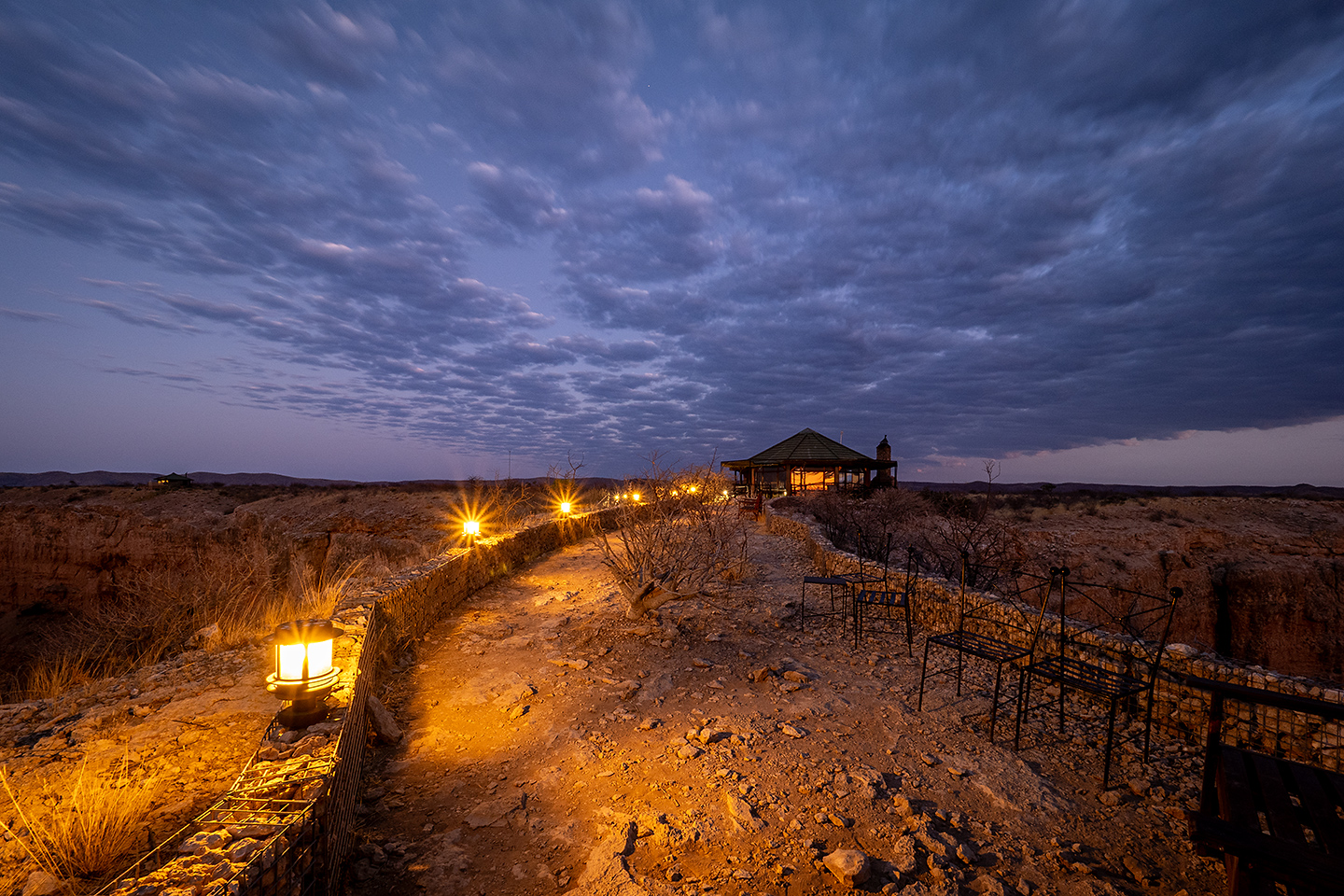
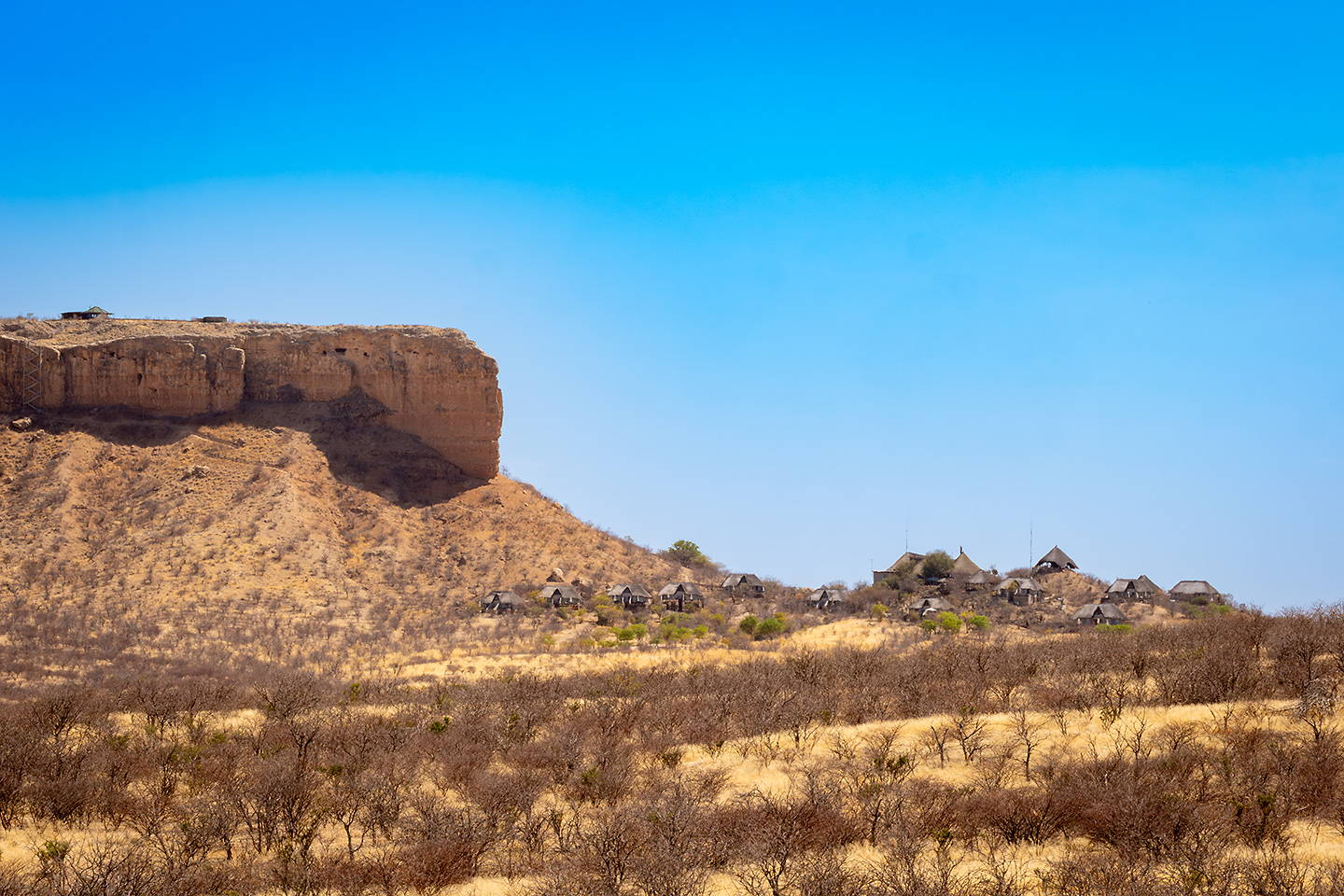
For photographers, the temptation lies in the lines — every curve, every rise, every dust cloud looks deliberately composed. The drive takes four to five hours, with pauses for breath and wonder. Then, just before sunset, it appears on a plateau as if from nowhere: the Vingerklip Lodge.
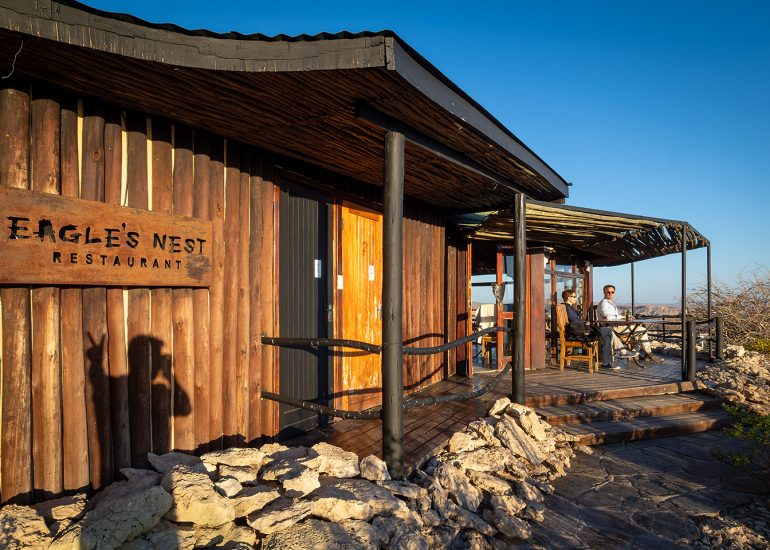
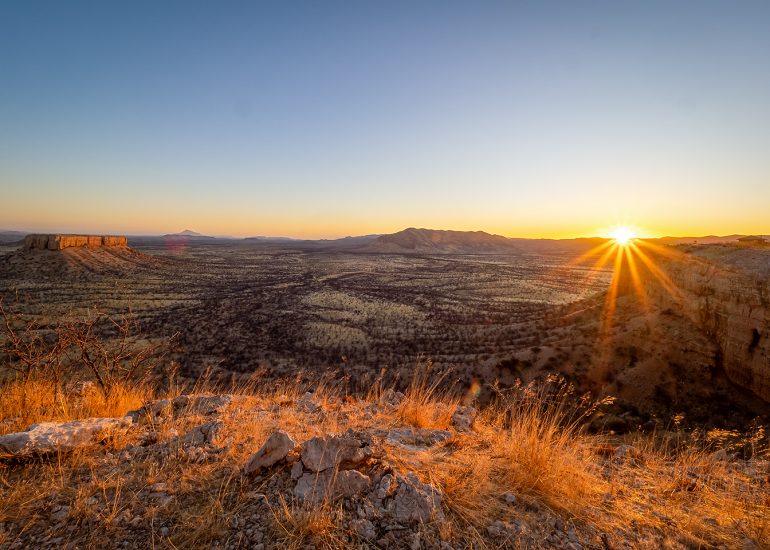
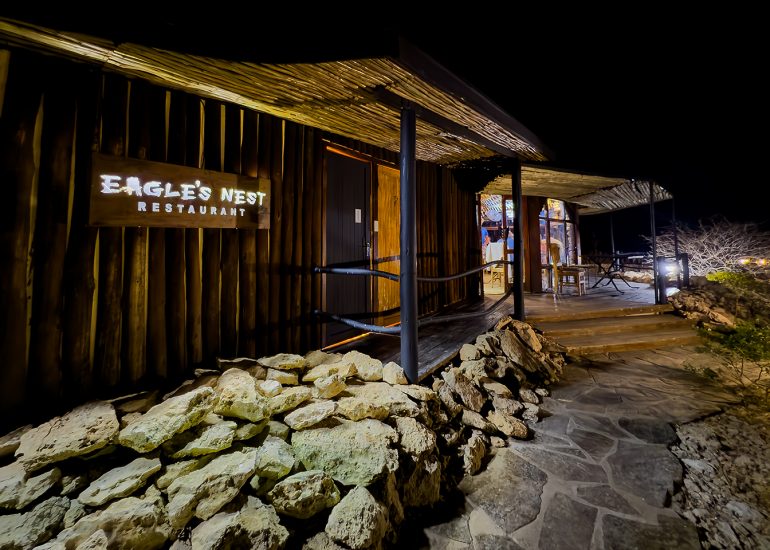
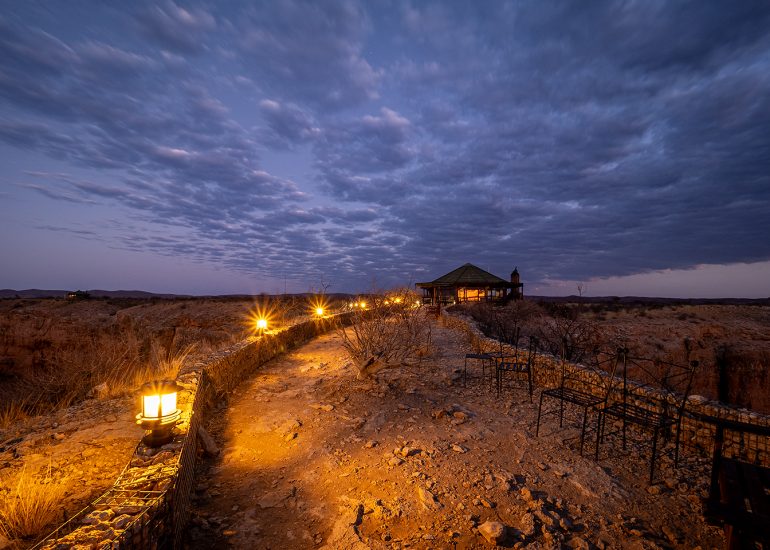
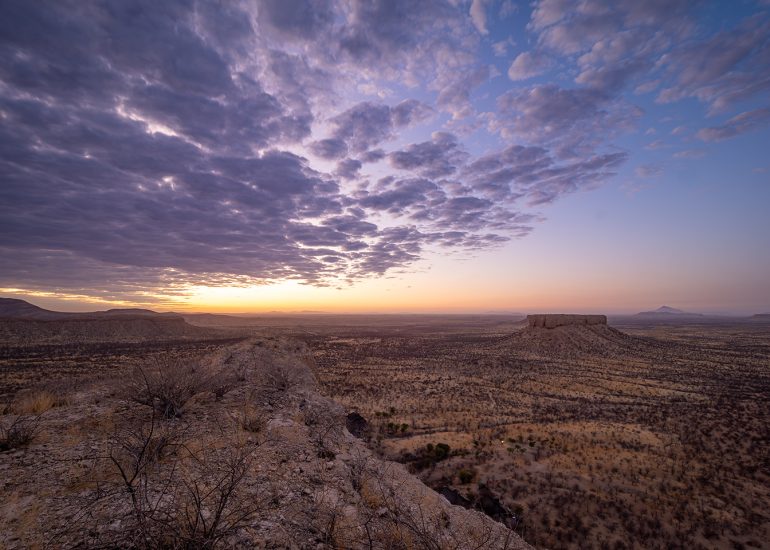
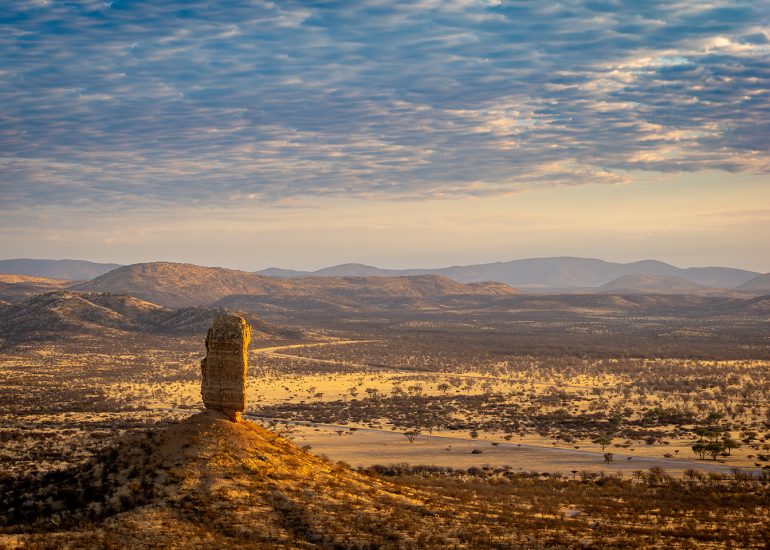
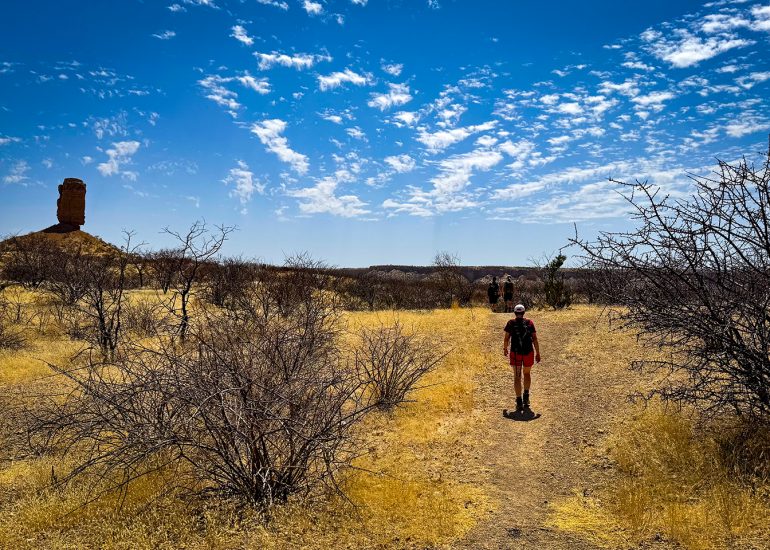
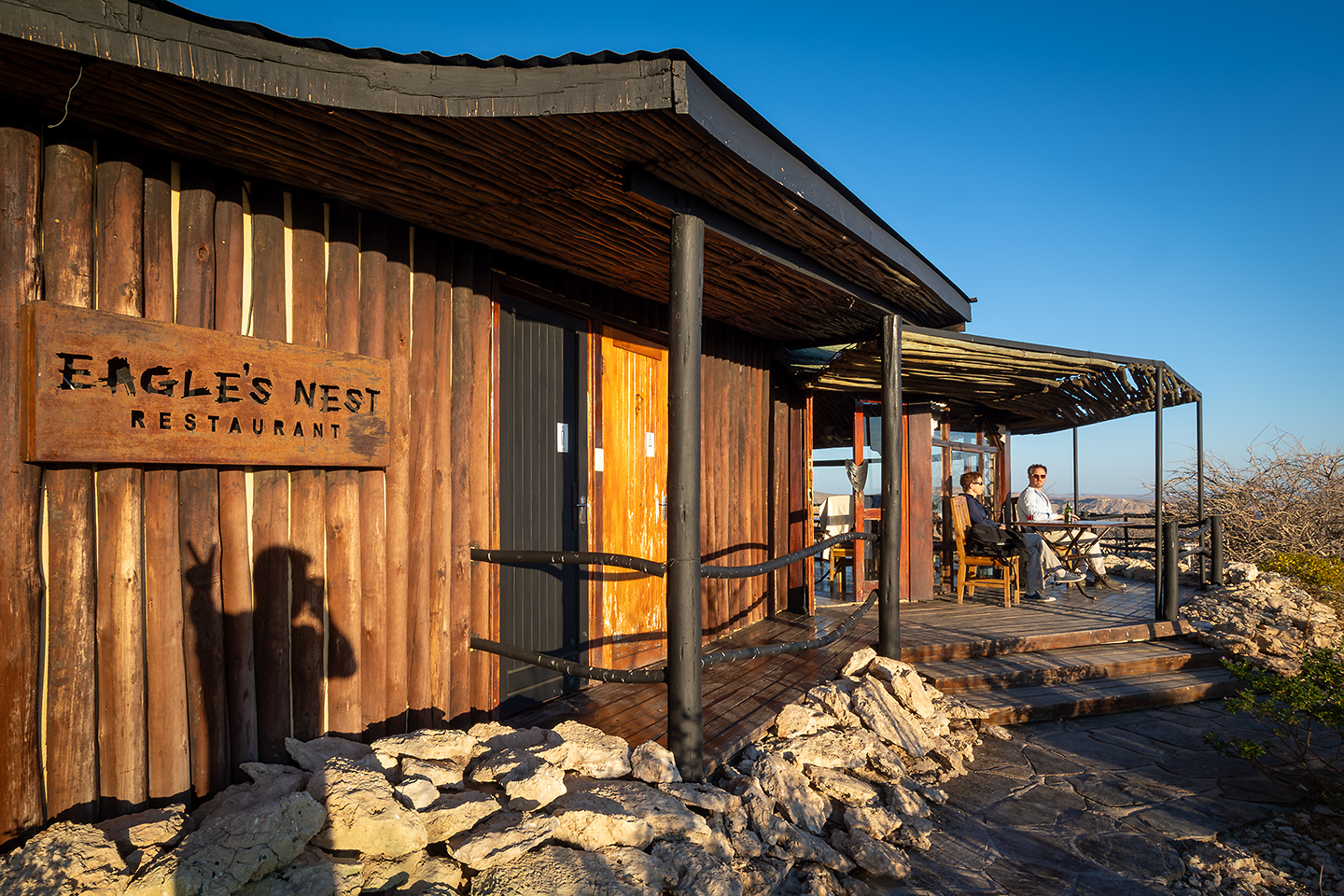
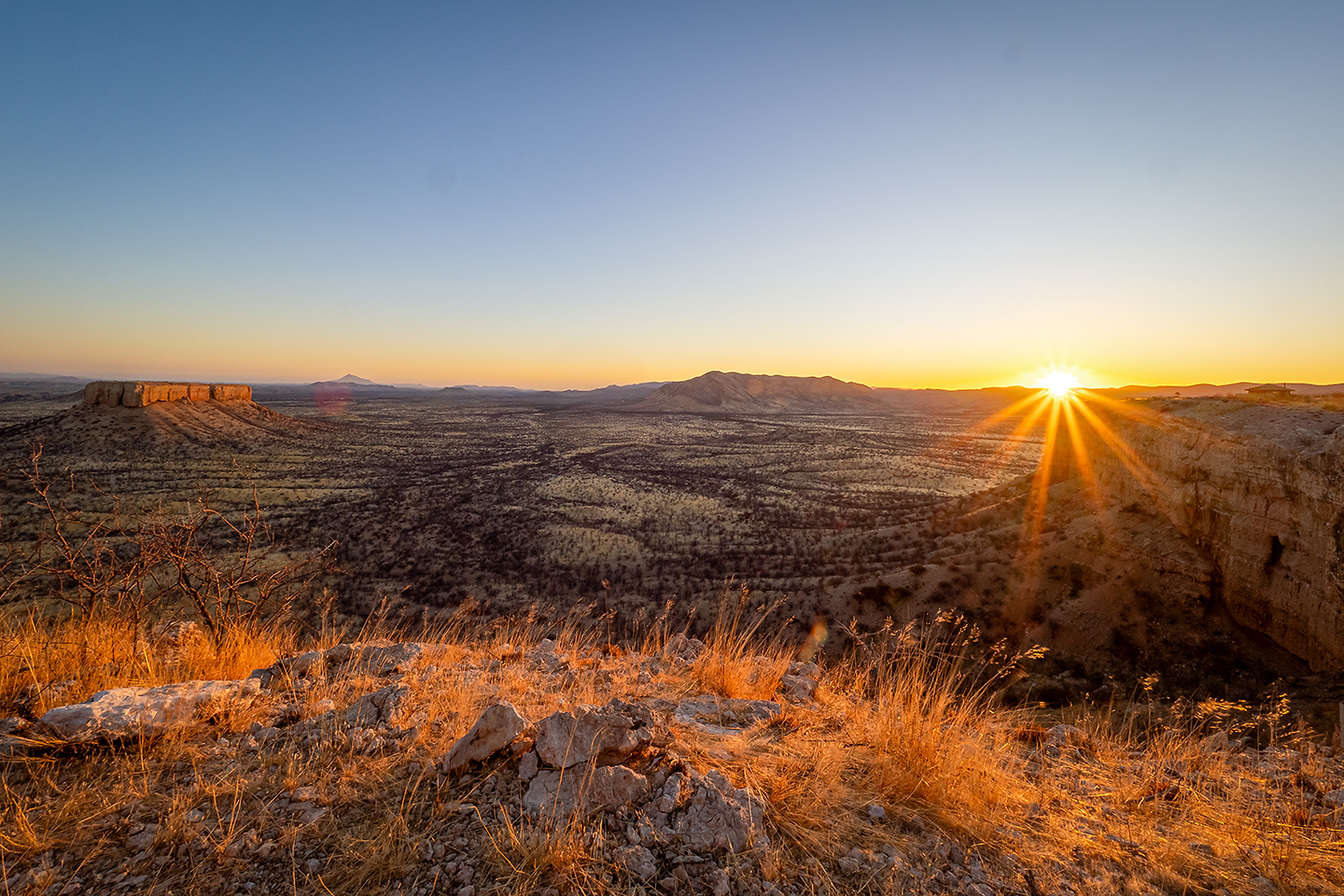
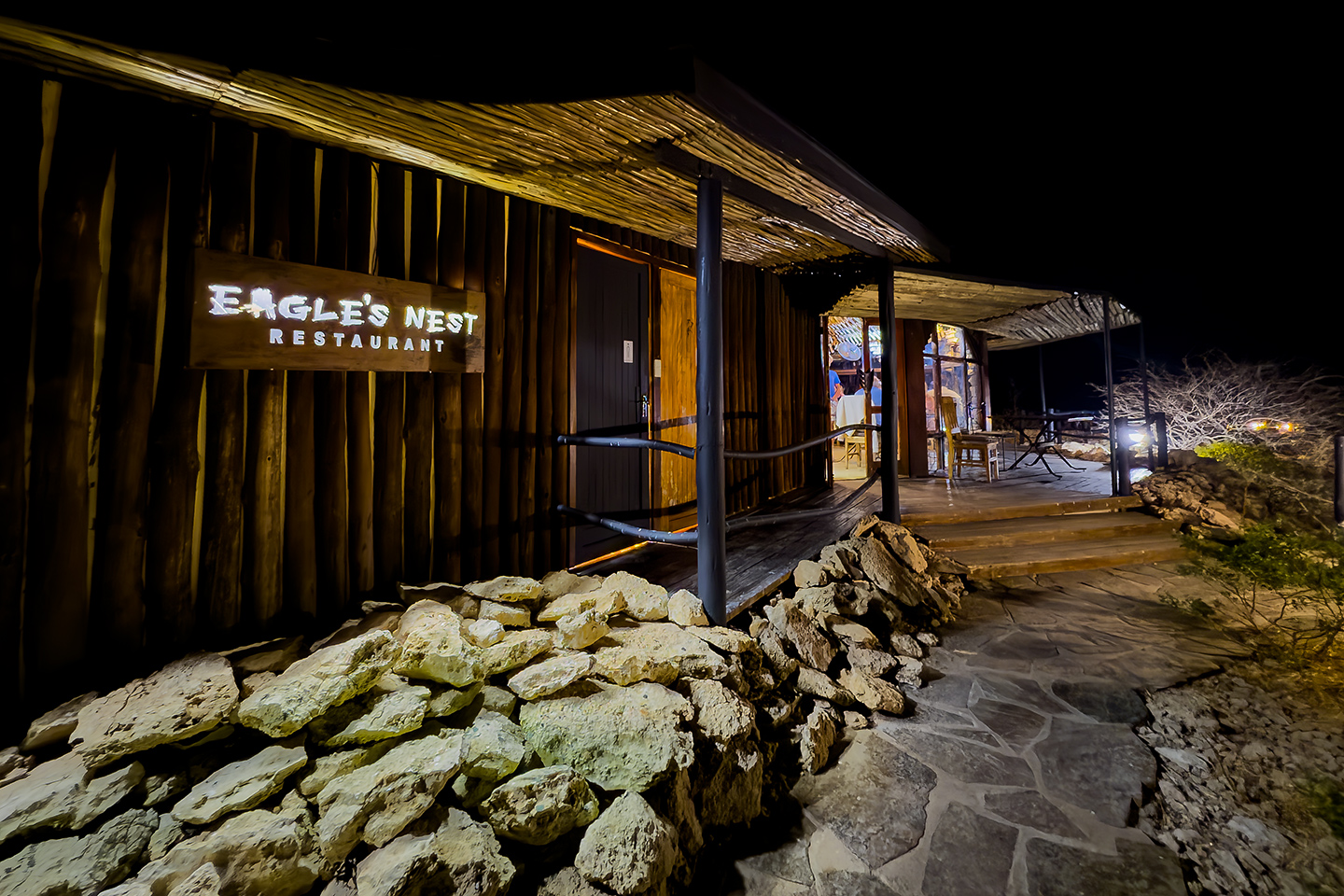
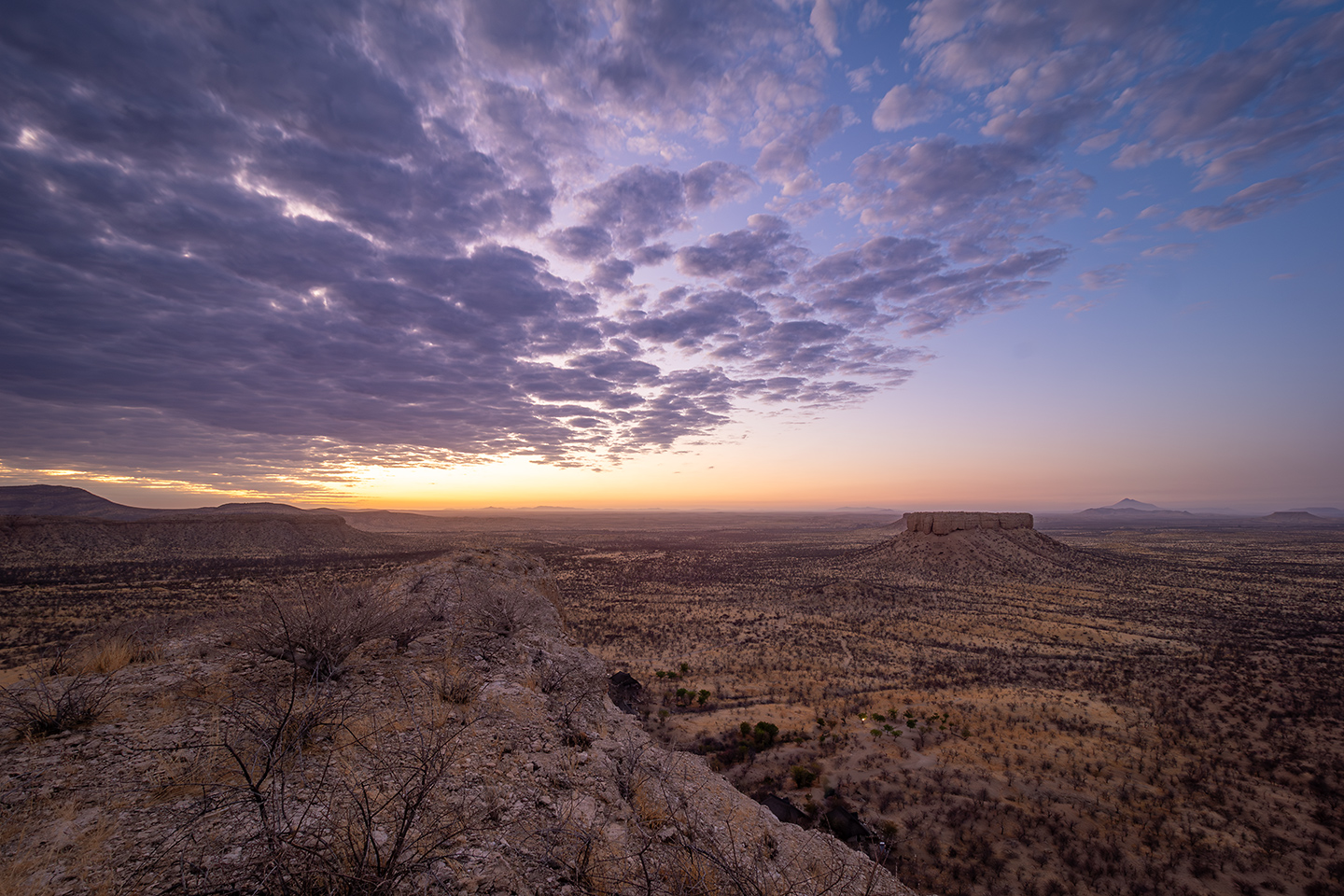
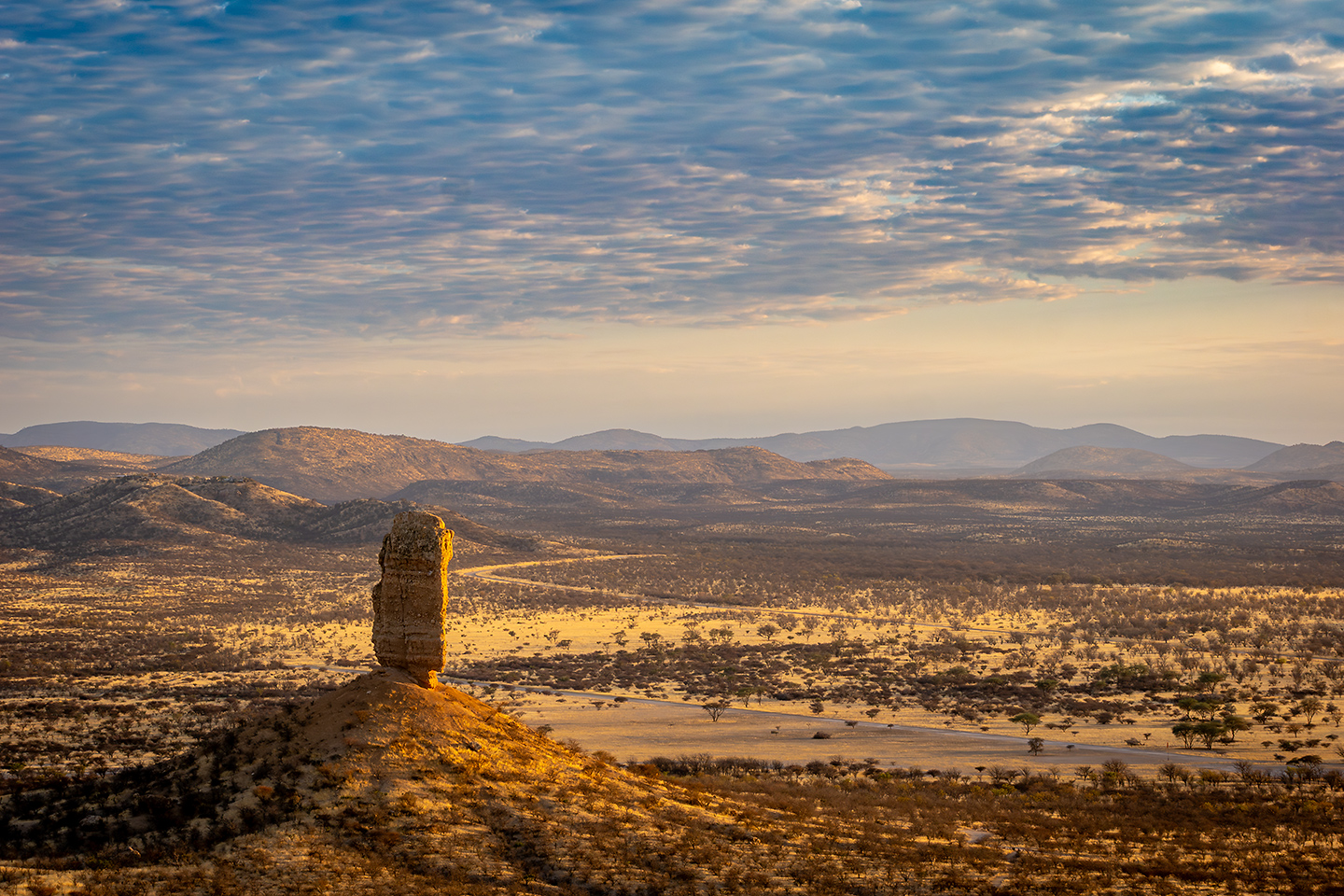
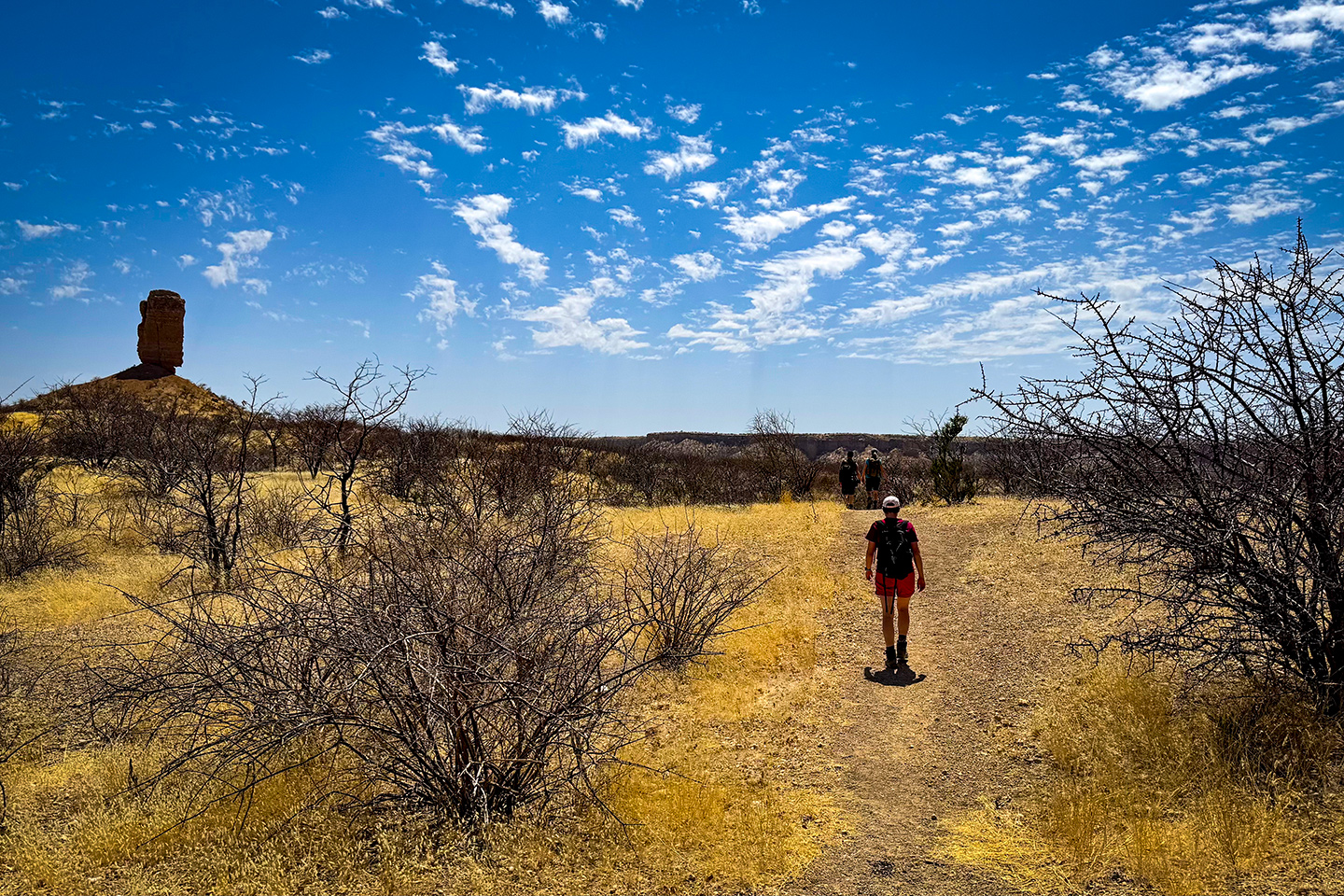
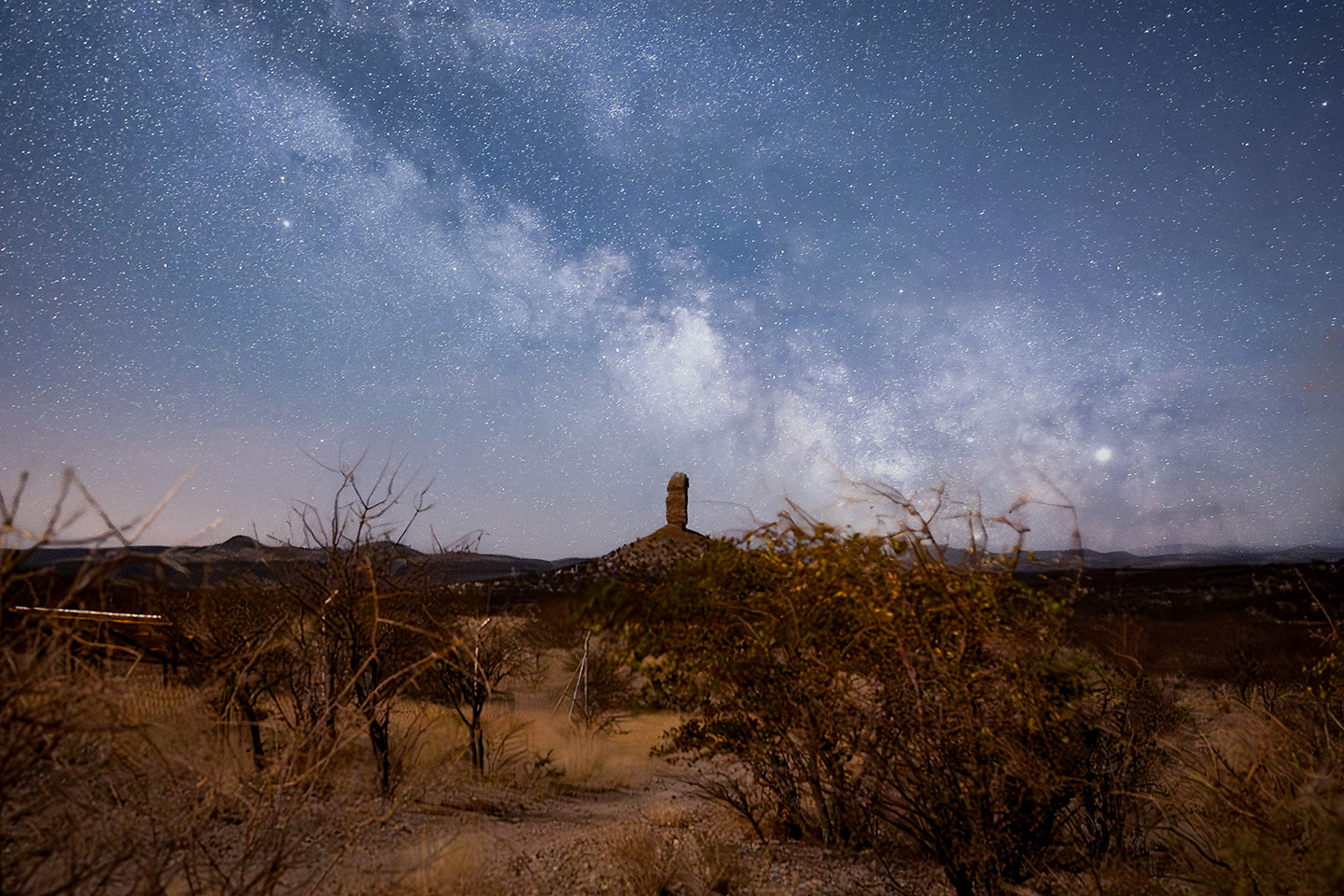
The lodge is spectacularly perched above the Ugab Valley, with views of the rock needle that gives it its name — an eroded monolith glowing like a candle in the evening light. A dry wind greets us during check-in. Shortly after, we climb to theEagles Nestrestaurant on the neighboring mesa. The ascent takes 15 minutes, the sun dips low, and the land glows in every imaginable shade of red and orange. Dinner unfolds in an open-air rock restaurant with a 360-degree view into infinity — nothing but wind, space, and light.
Morning Light and Encounters
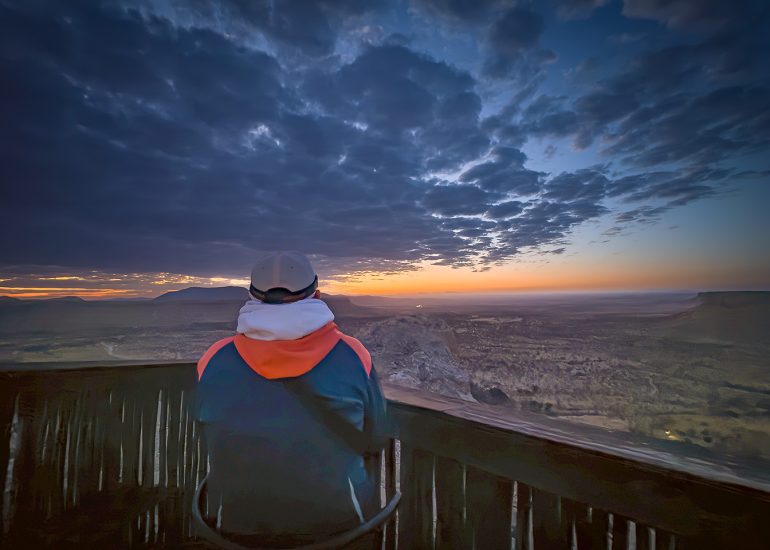
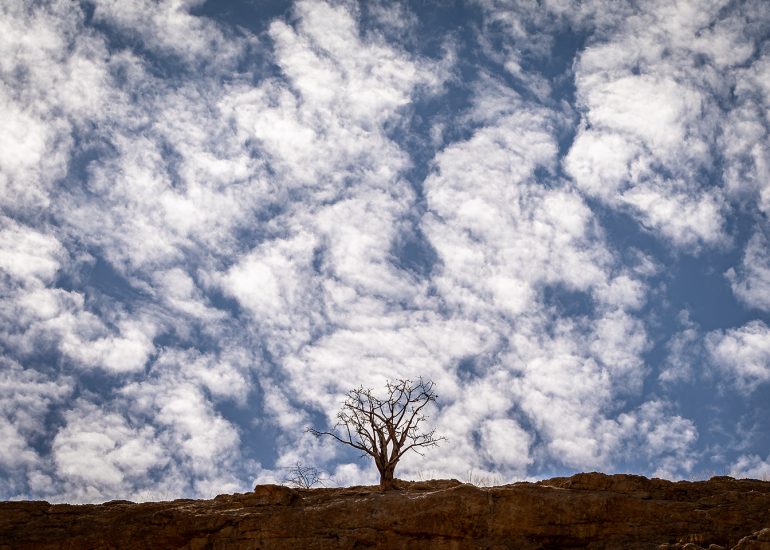
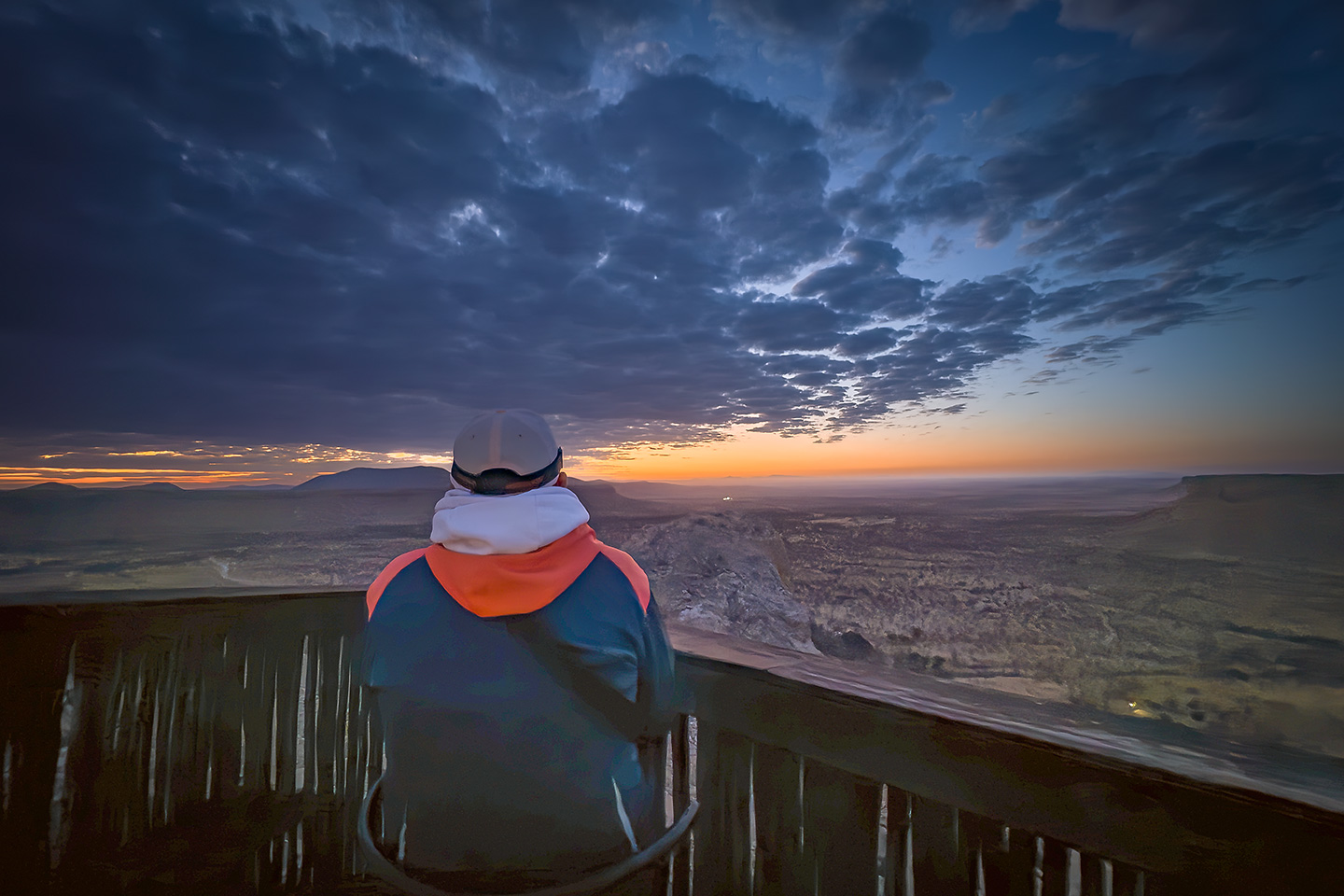
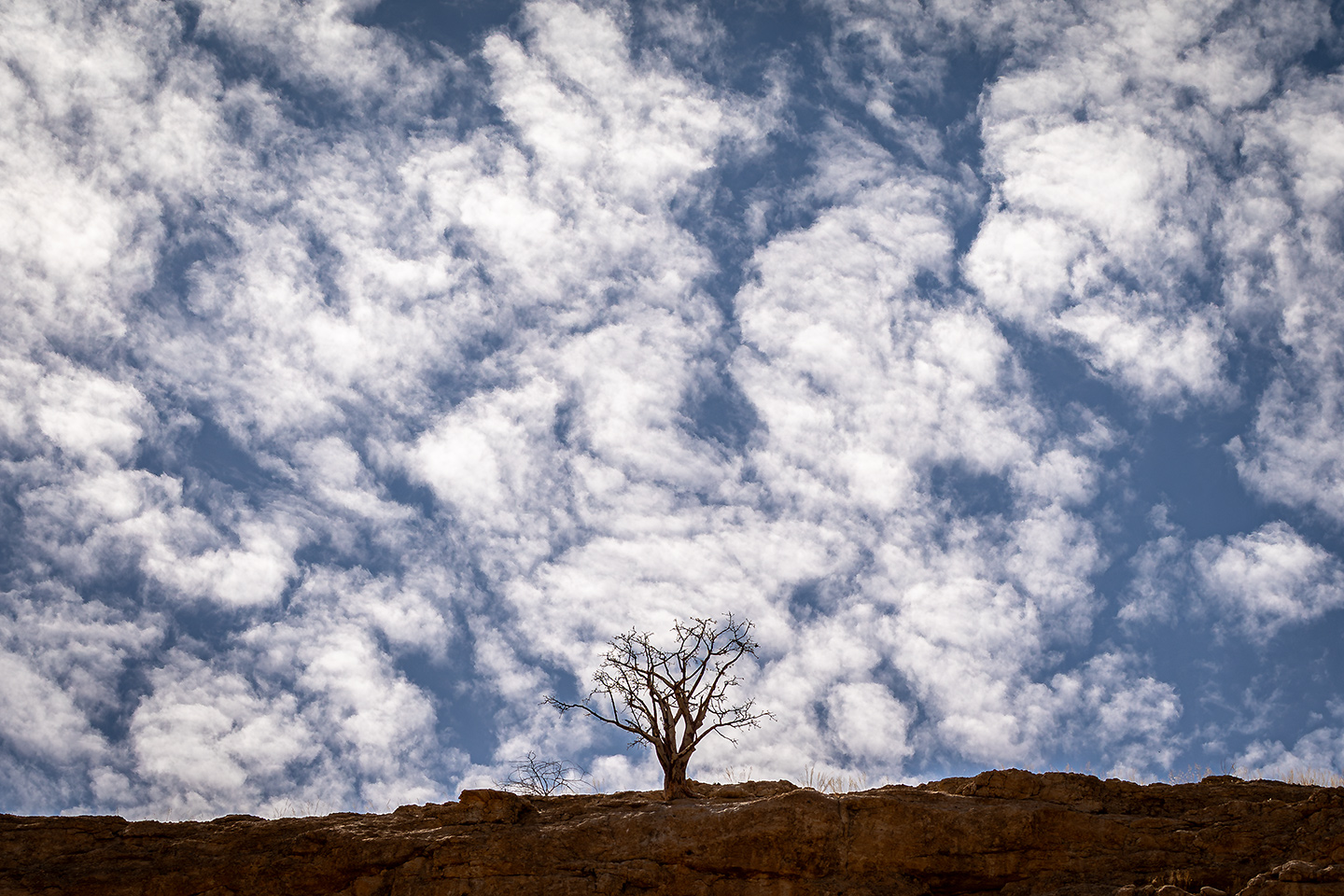
The next morning is silent — birds, rustling shrubs, then the first hint of dawn. We climb up to Eagles Nest again to photograph and savor the soft morning colors. Clouds drift over the horizon, breaking the light into gentle pastels. Not a dramatic sunrise, but a breathtaking one.
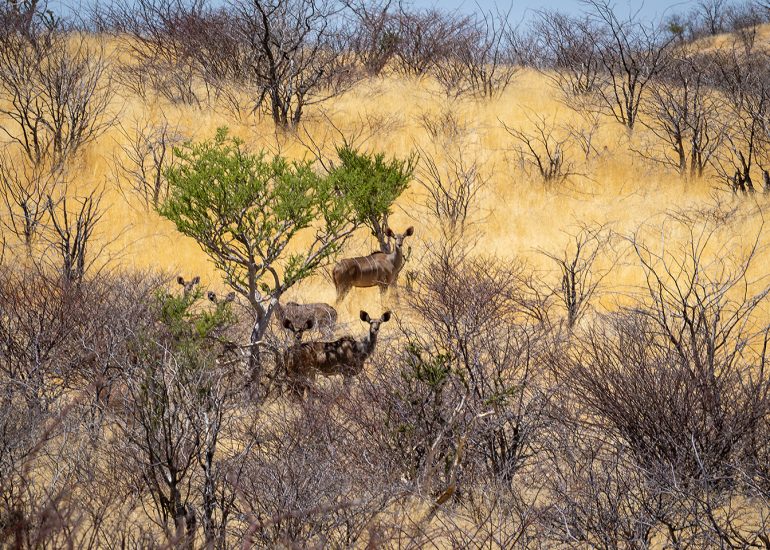
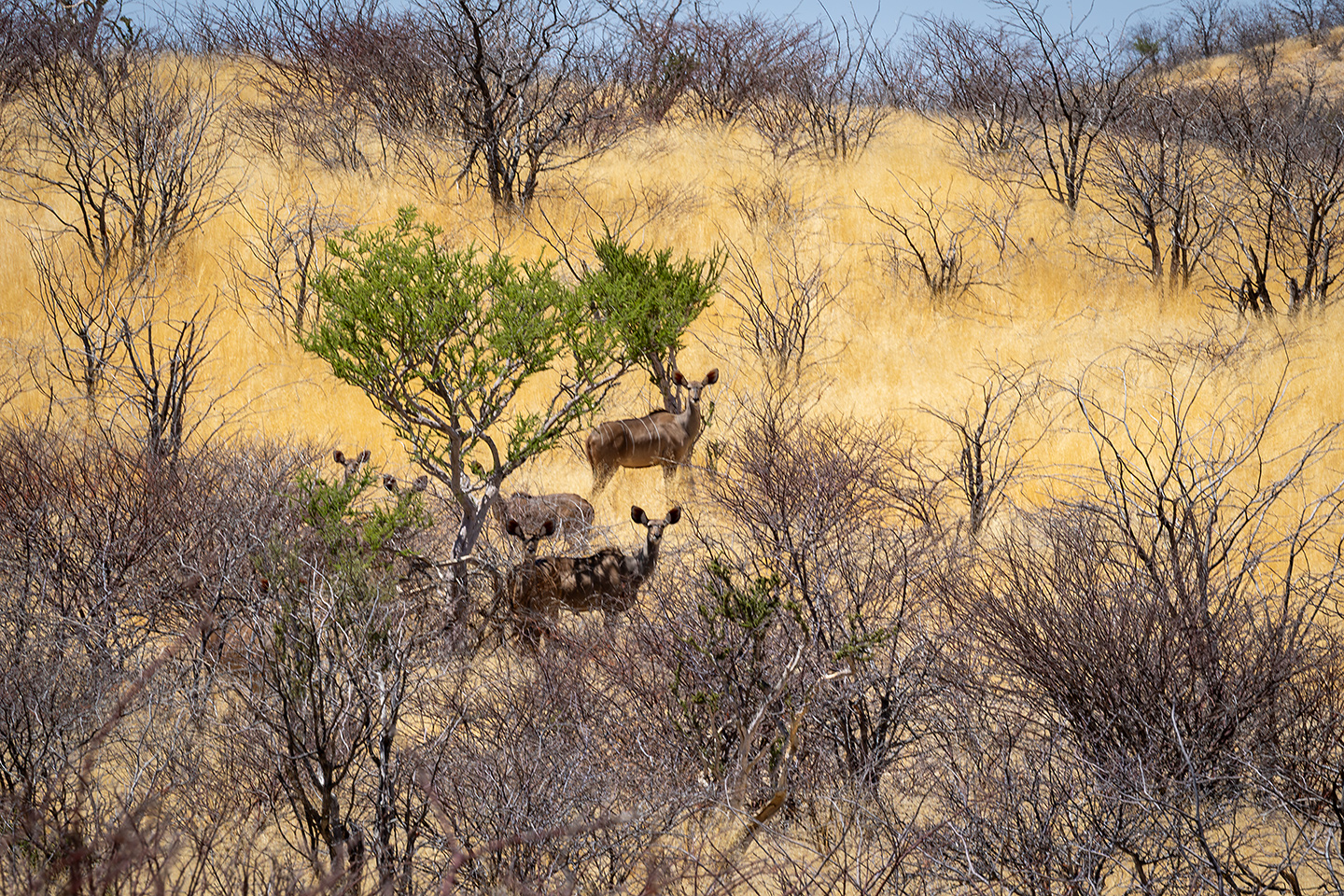
After breakfast, the trails call. There are two in total. The first leads over gentle hills and through bushland — two hours if you take your time (and stray off the path as we do). A noise in the shrubs: a group of female kudus leaps up, elegant and shy. The lead cow pauses for a heartbeat, then slips away — a fleeting triumph for any photographer.
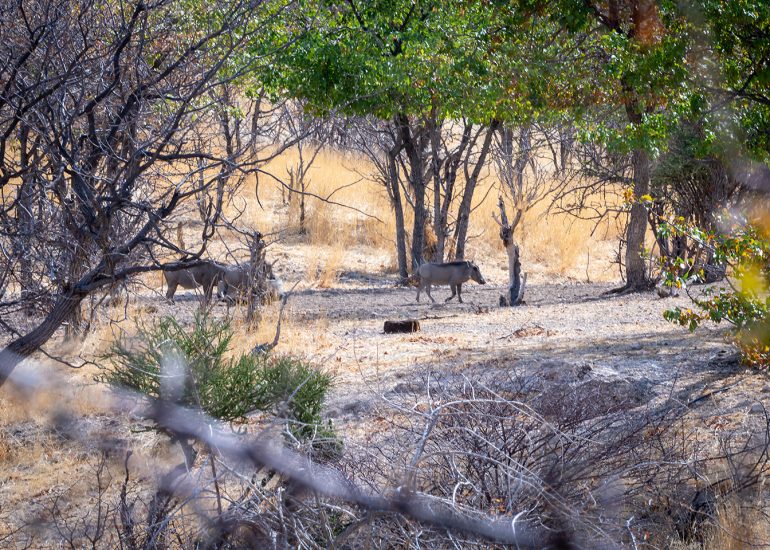
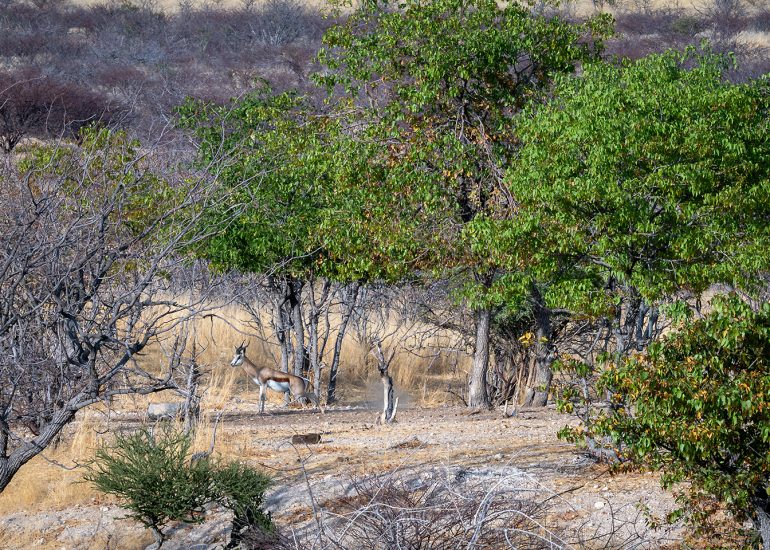
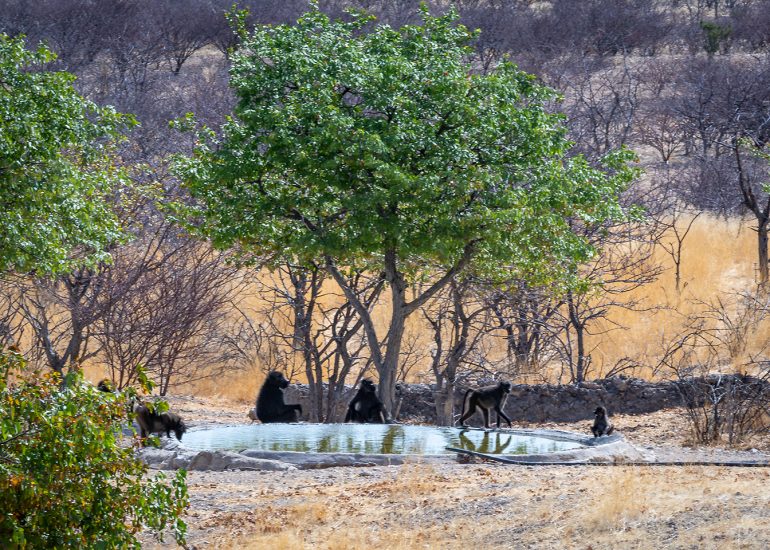
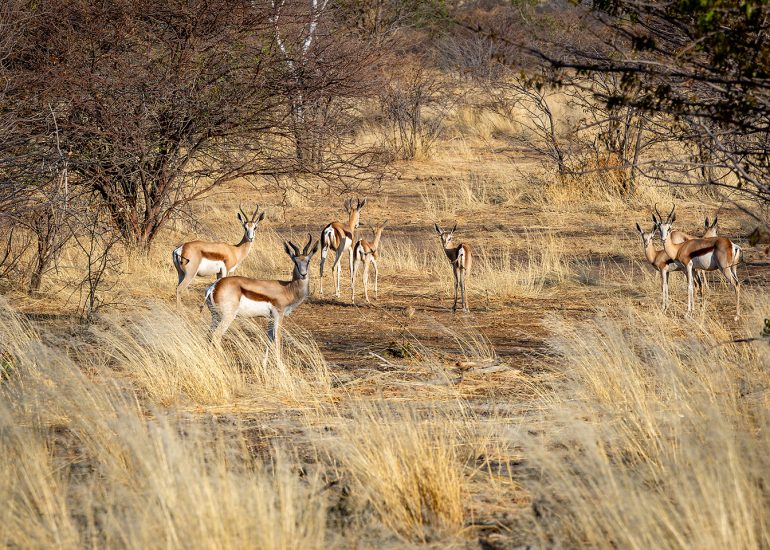
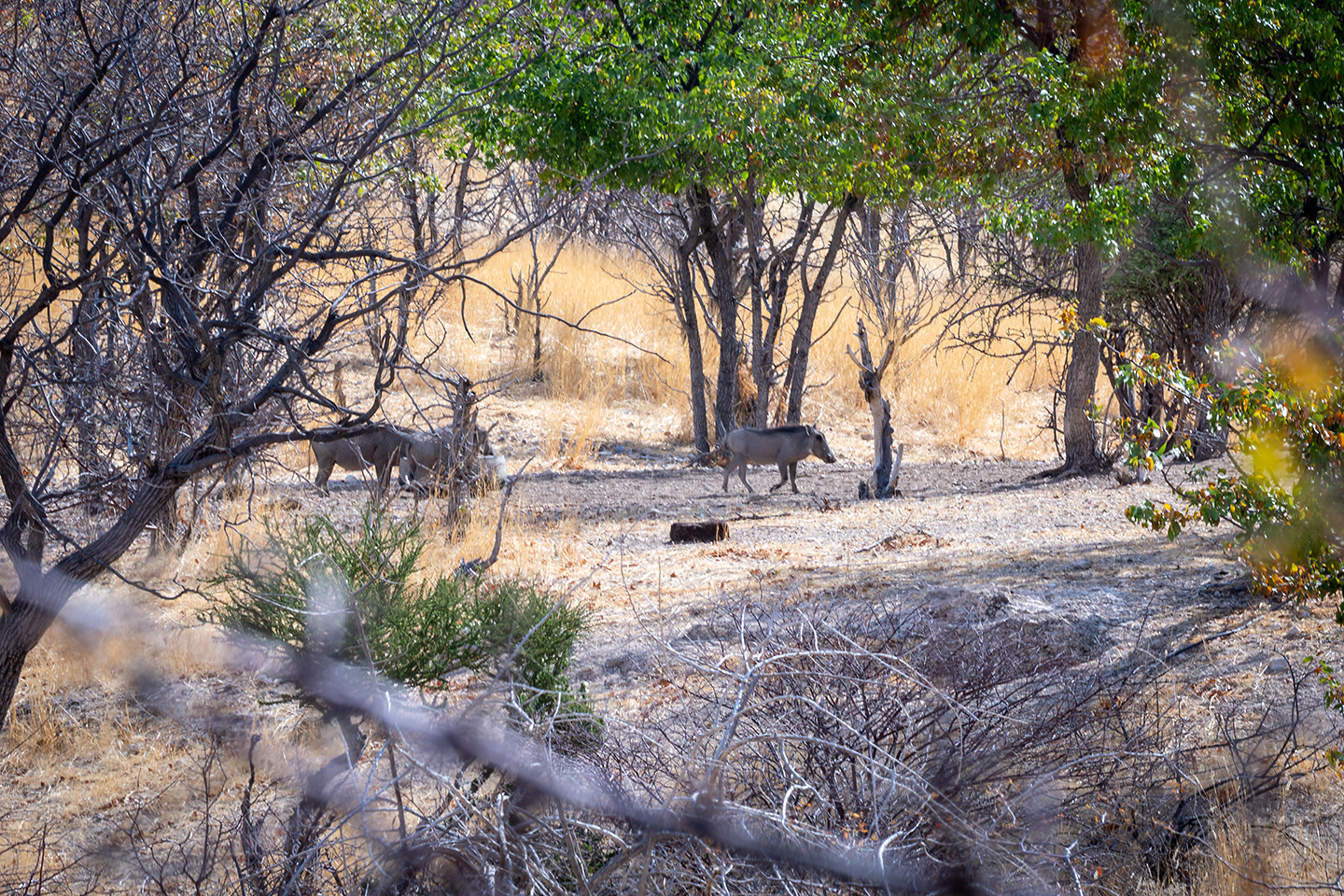
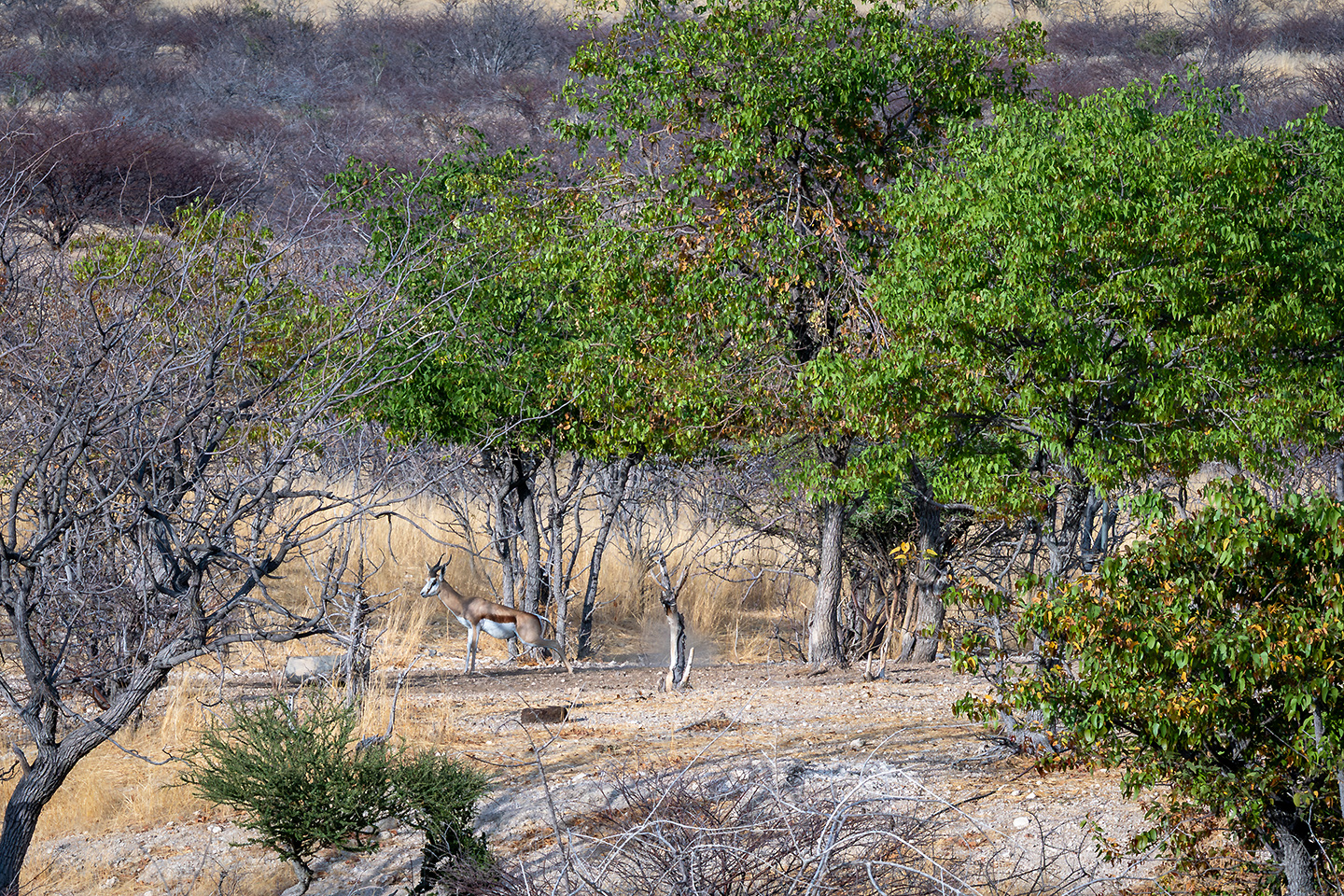
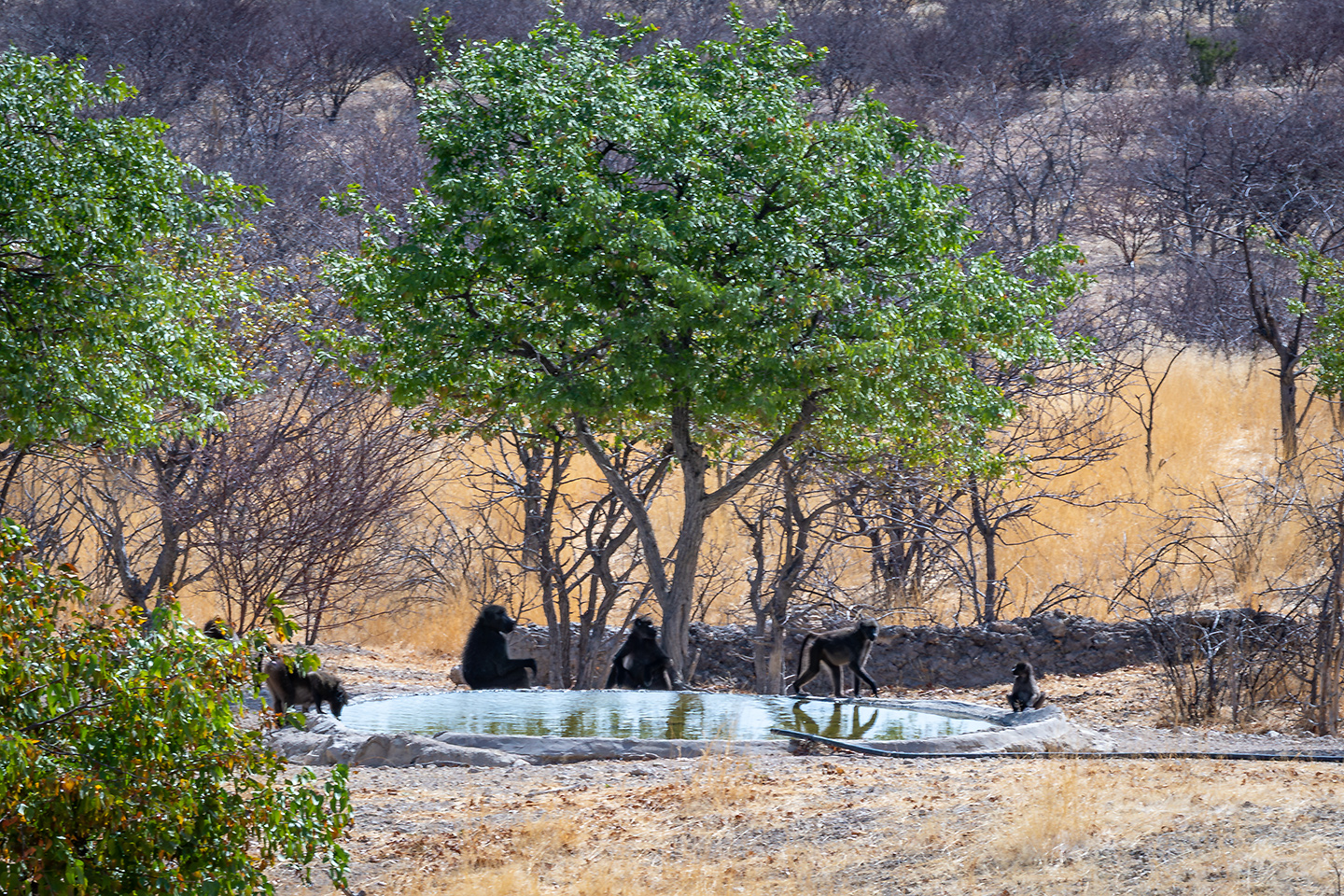
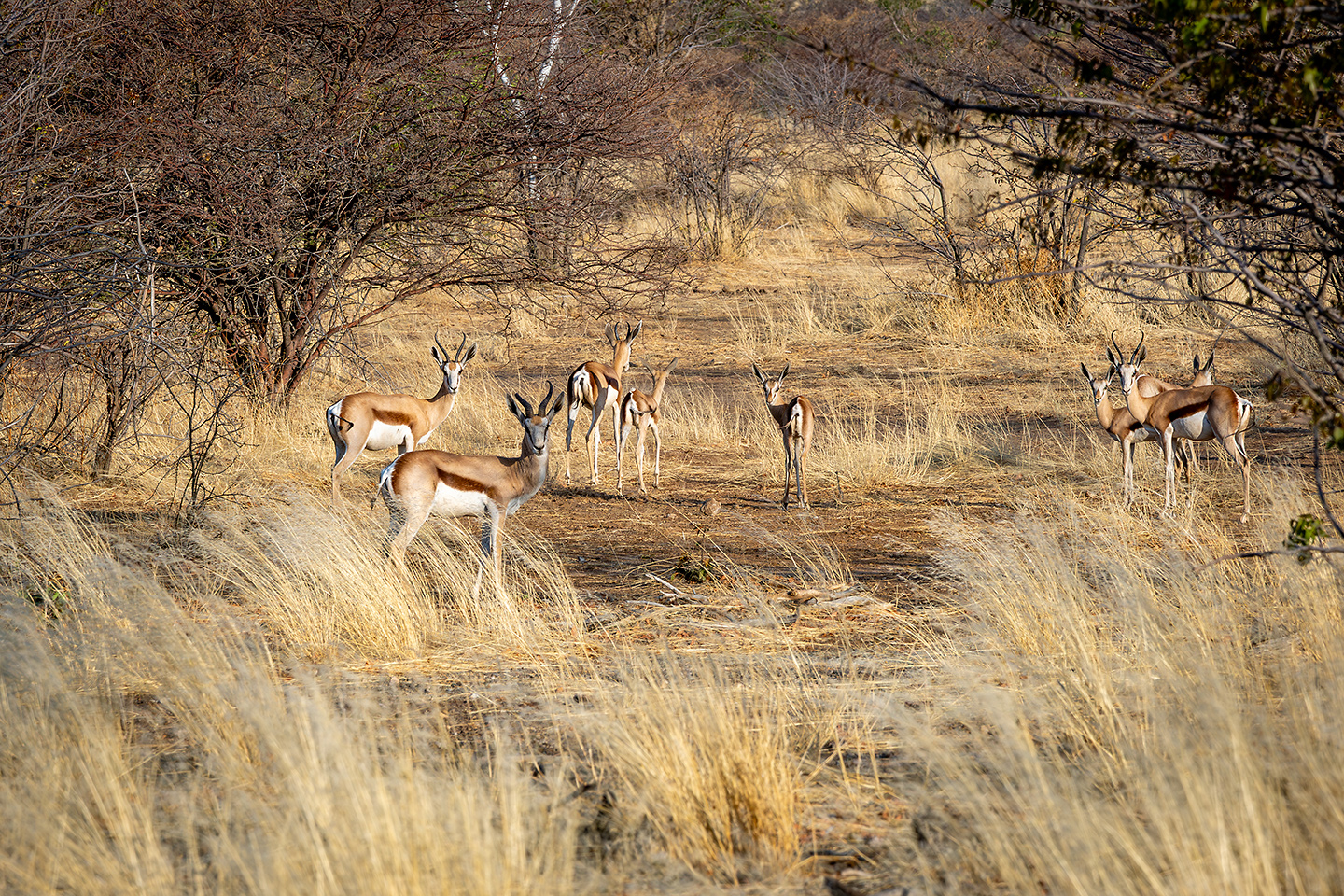
Afternoon belongs to rest. At the lodge, the light shifts constantly over the waterholes: warthogs, springboks, monkeys come and go. Later, over a game and a cold drink, Damaraland is bathed in violet and gold.
Second Day in the Sea of Rock
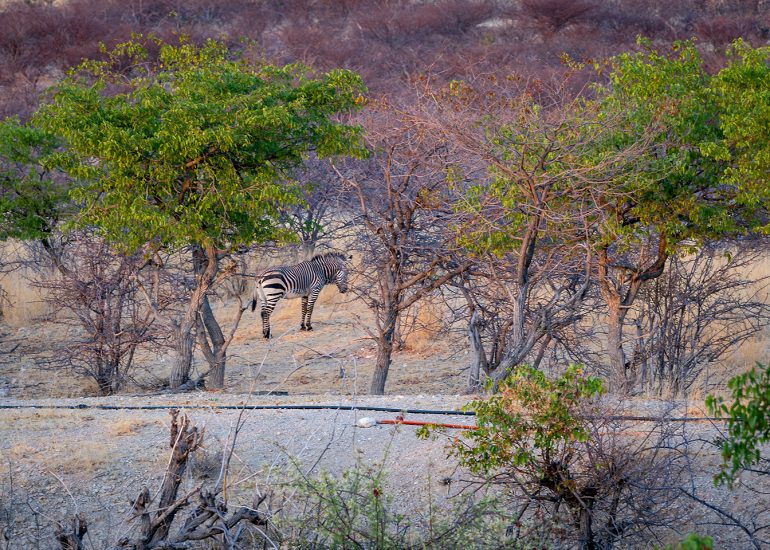
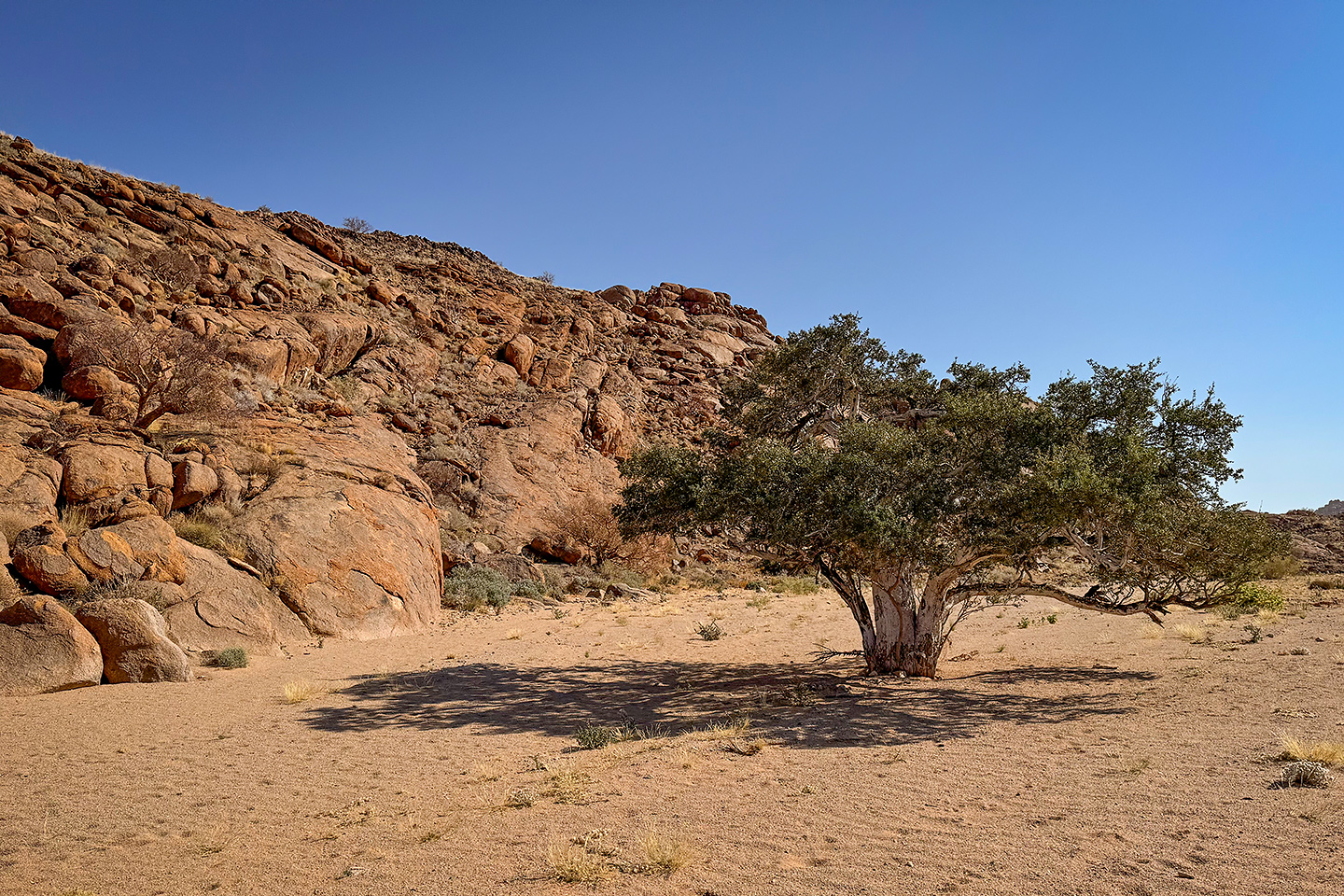
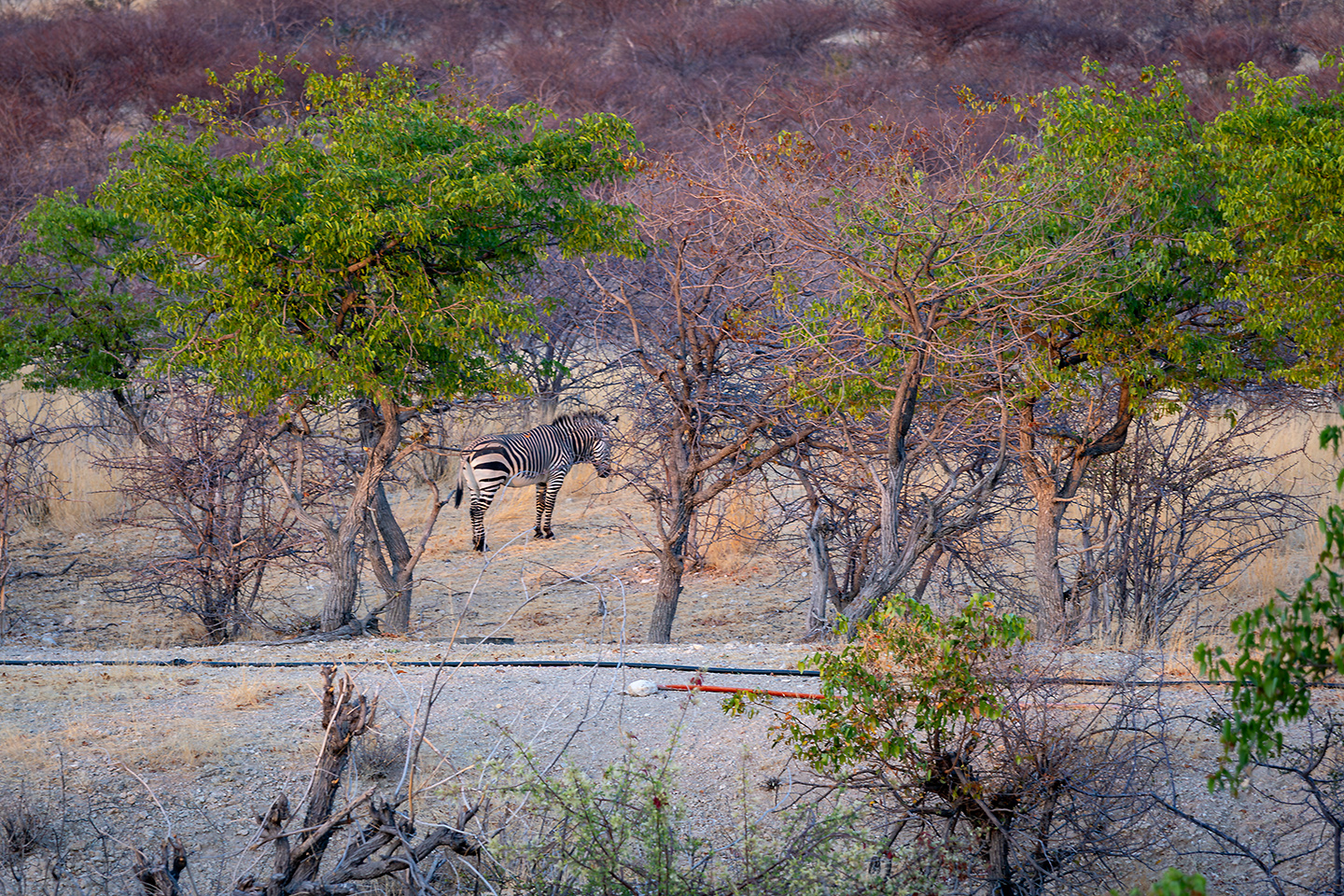
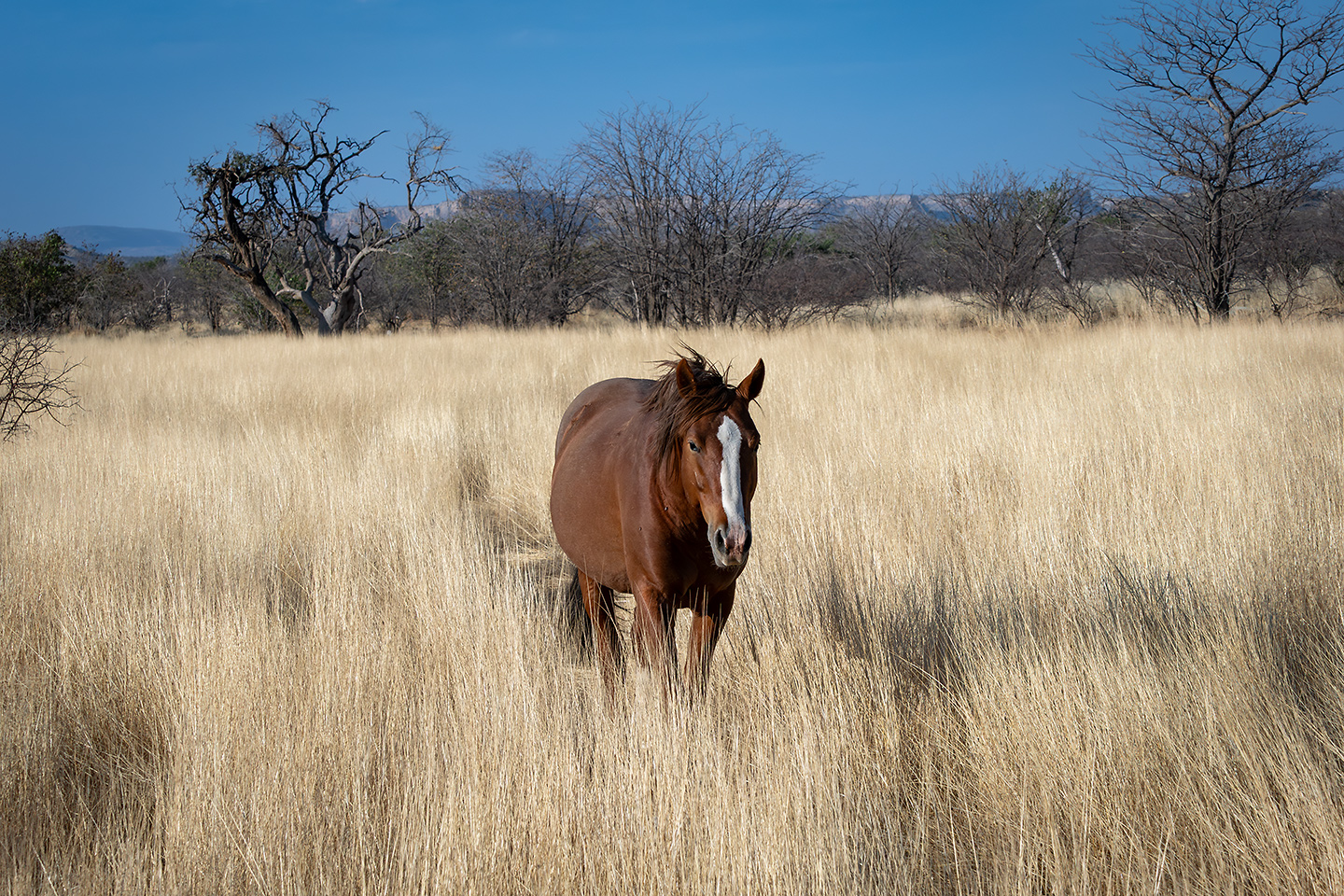
Before sunrise, noises at the terrace wake us — zebras and antelopes at the waterhole. After breakfast, we start the second hike: a loop directly behind the lodge leading to the base of the Vingerklip rock. The path is rocky and hot, but the perspective is worth every step — up close, you can read the geological layers like pages in a book.
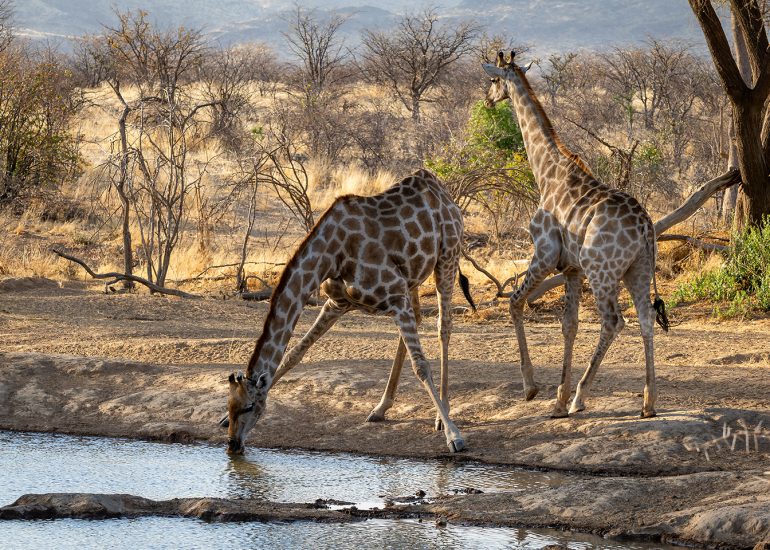
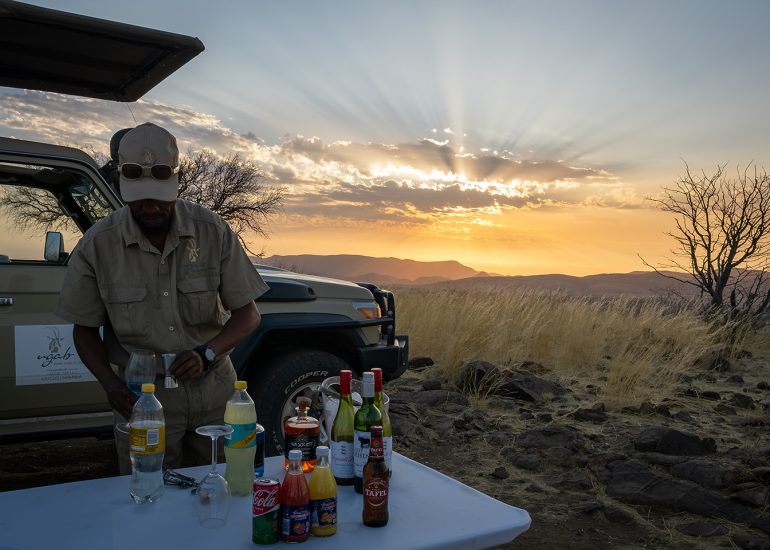
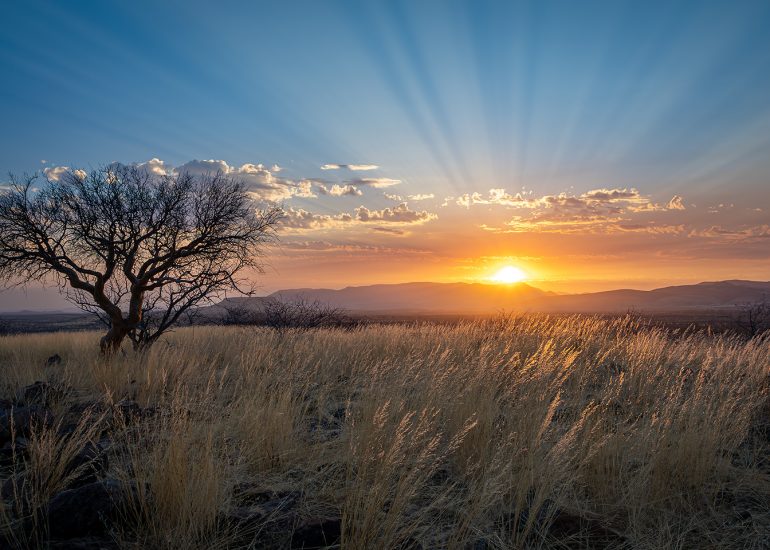
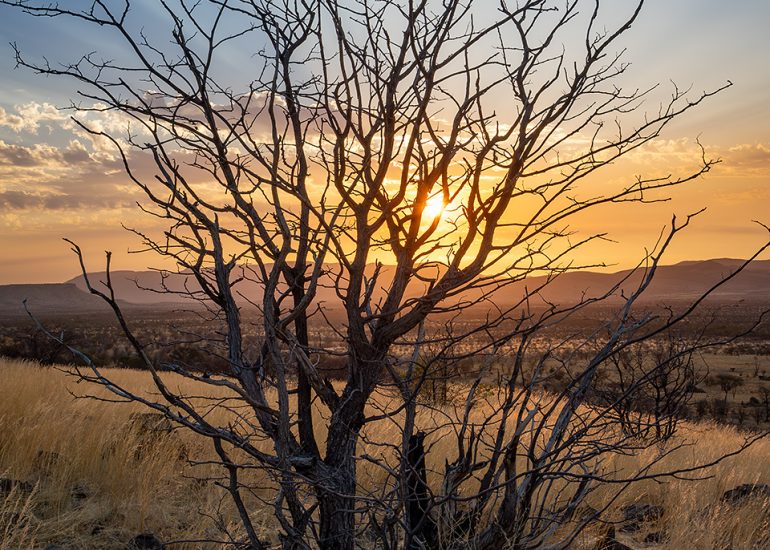
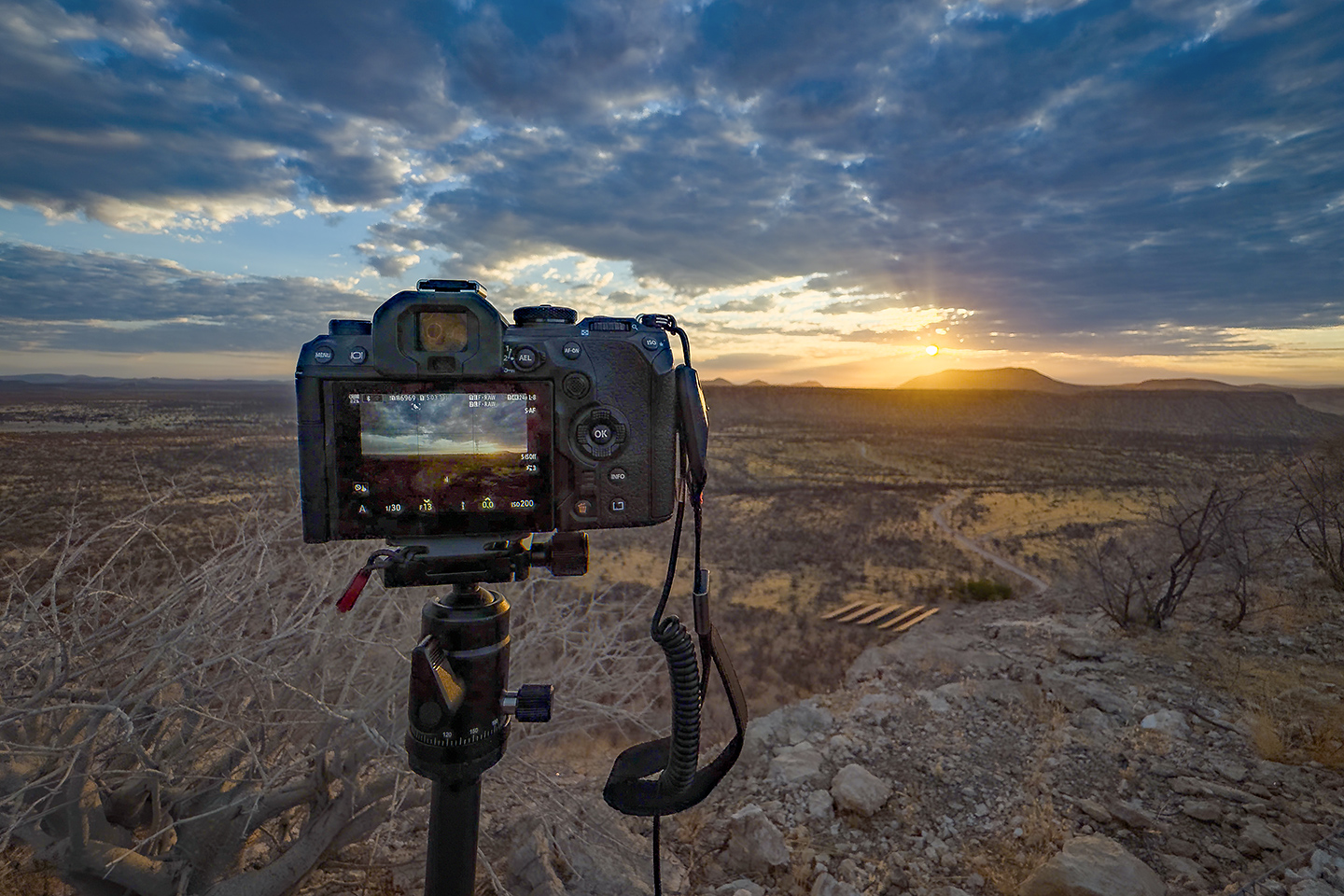
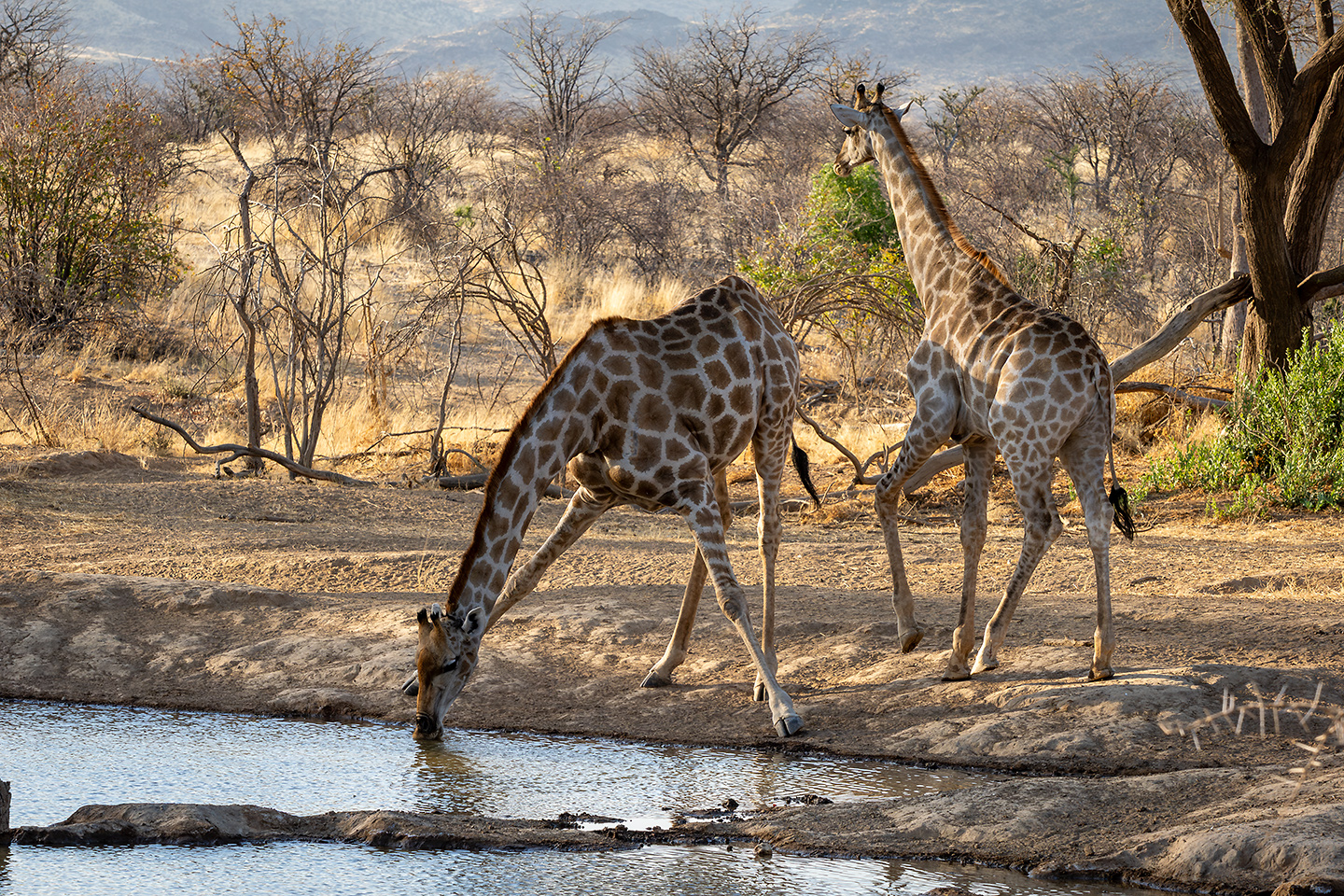
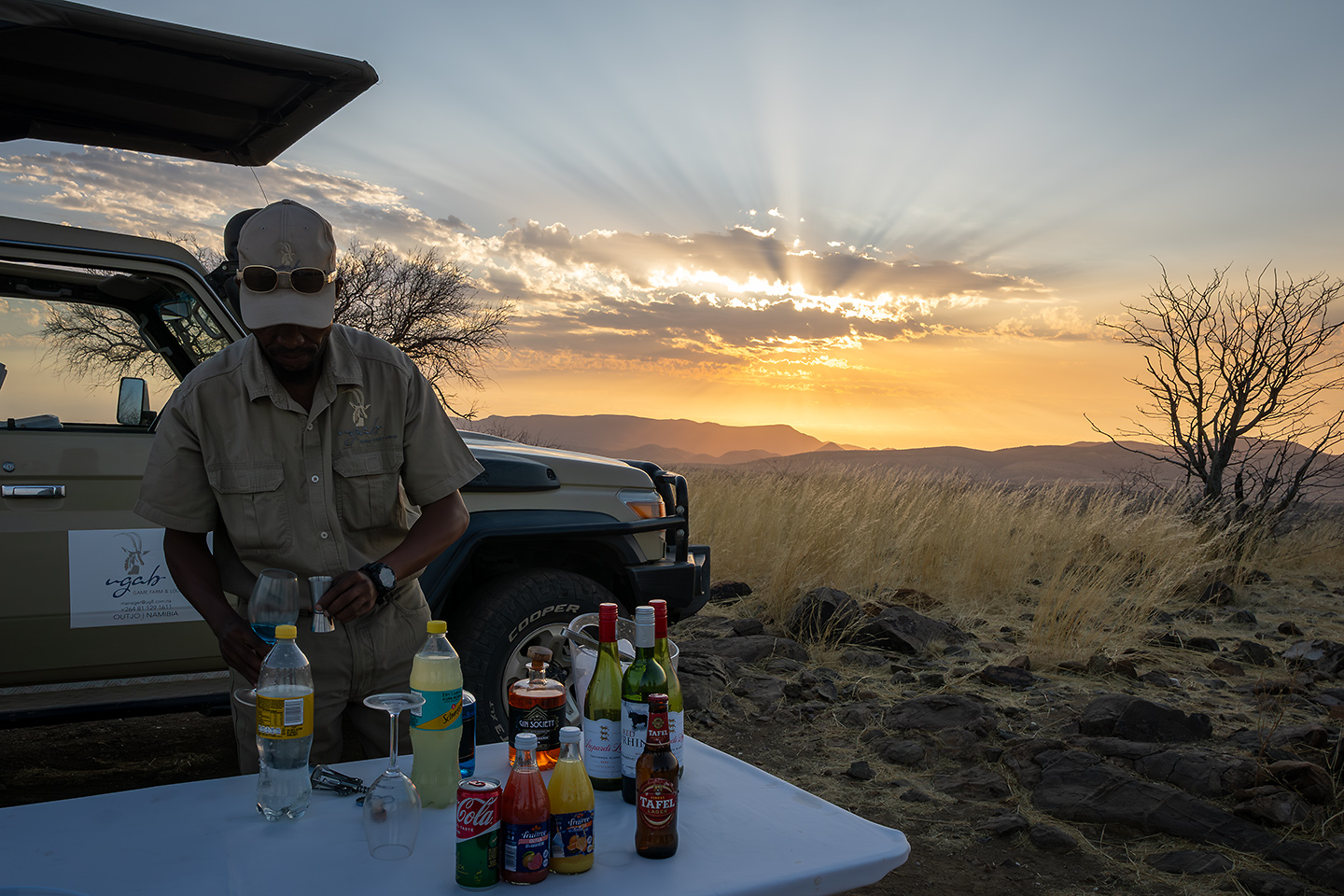
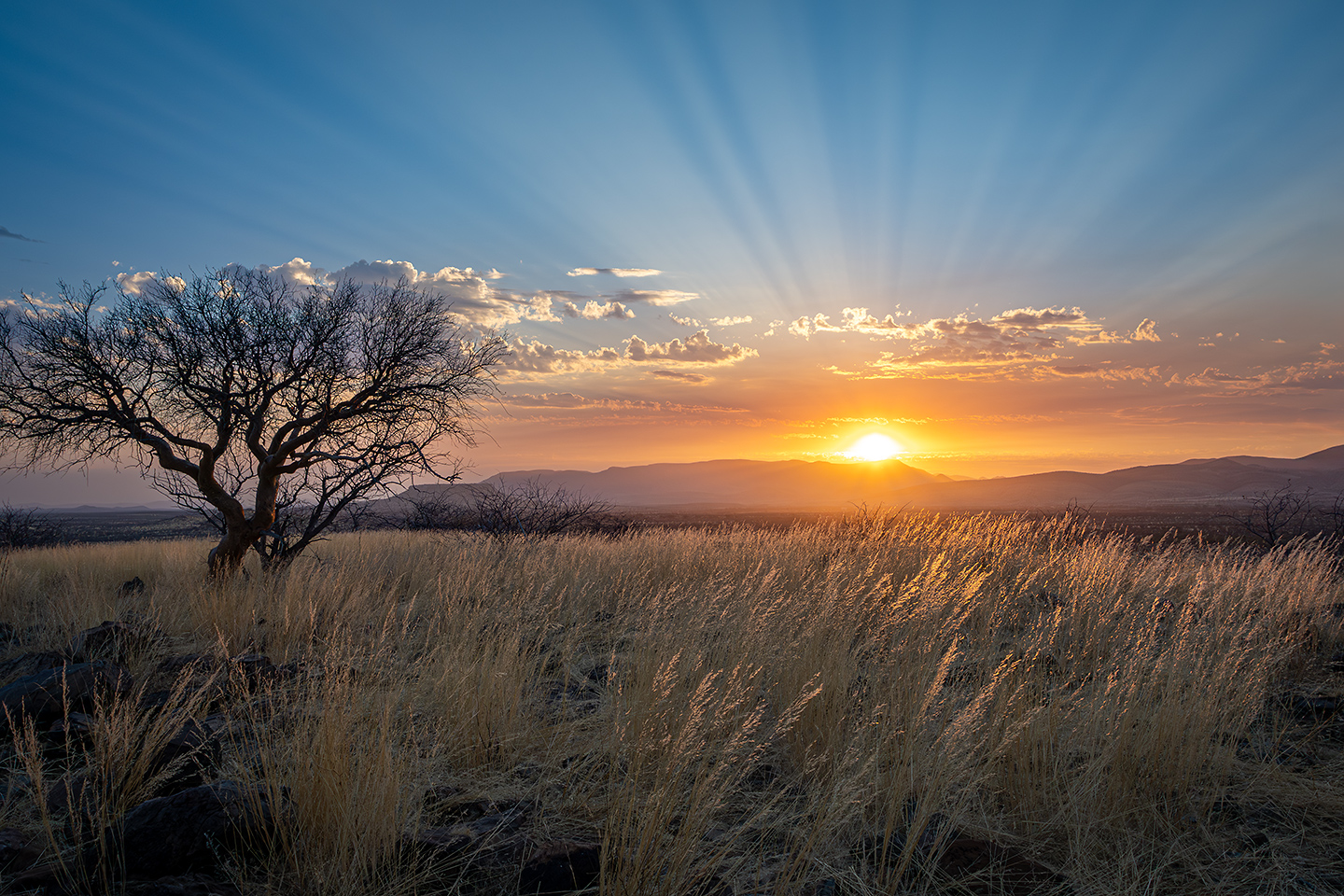
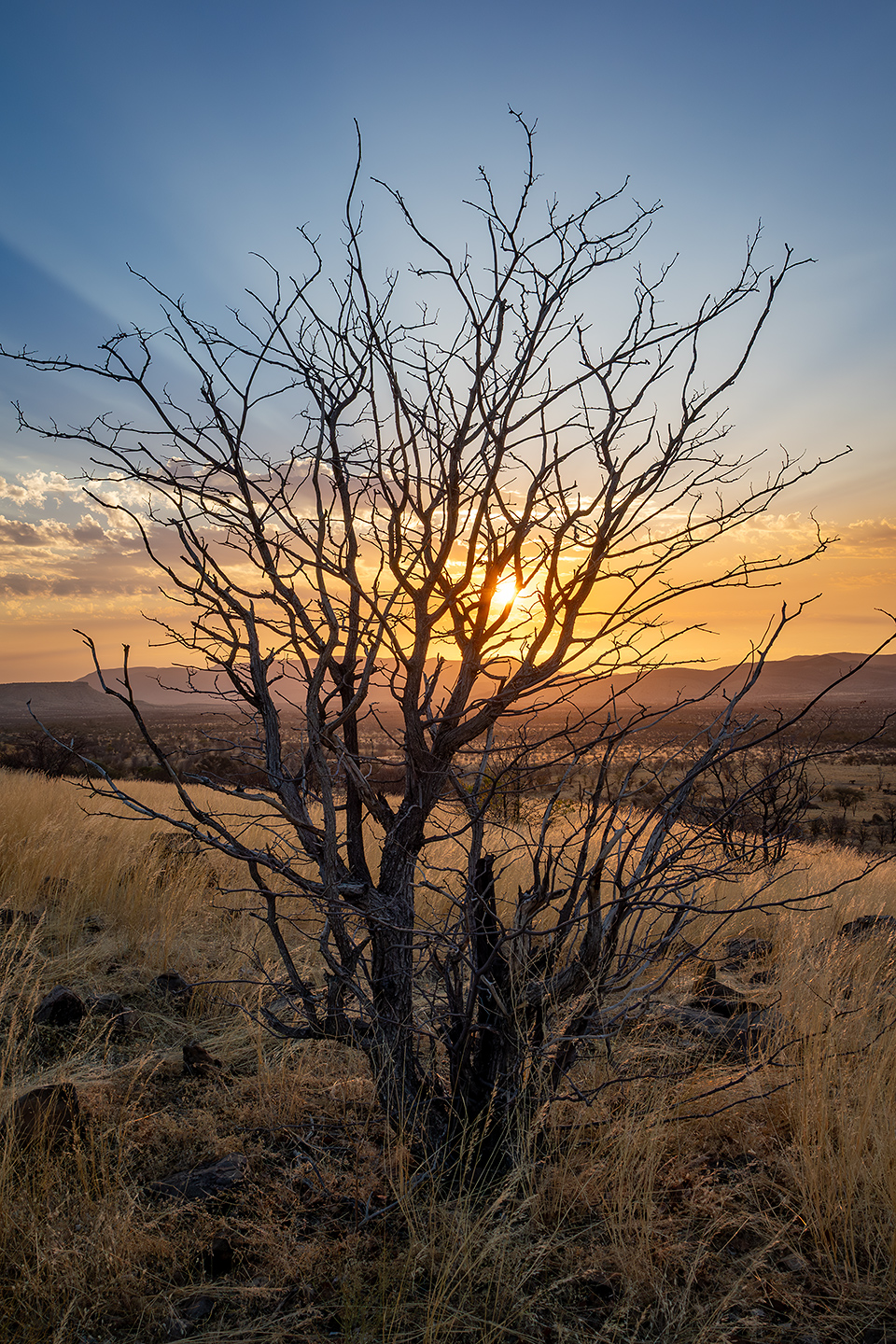
After resting until late afternoon, we join our booked nature drive. A guide takes us through the area, explaining vegetation and geology, pointing out tracks of oryx and giraffes. As the sun sets, he stops on a ridge — a sundowner in the middle of the steppe. The light turns golden, then purple, and the camera fills with images that resist description.

Comments are closed.